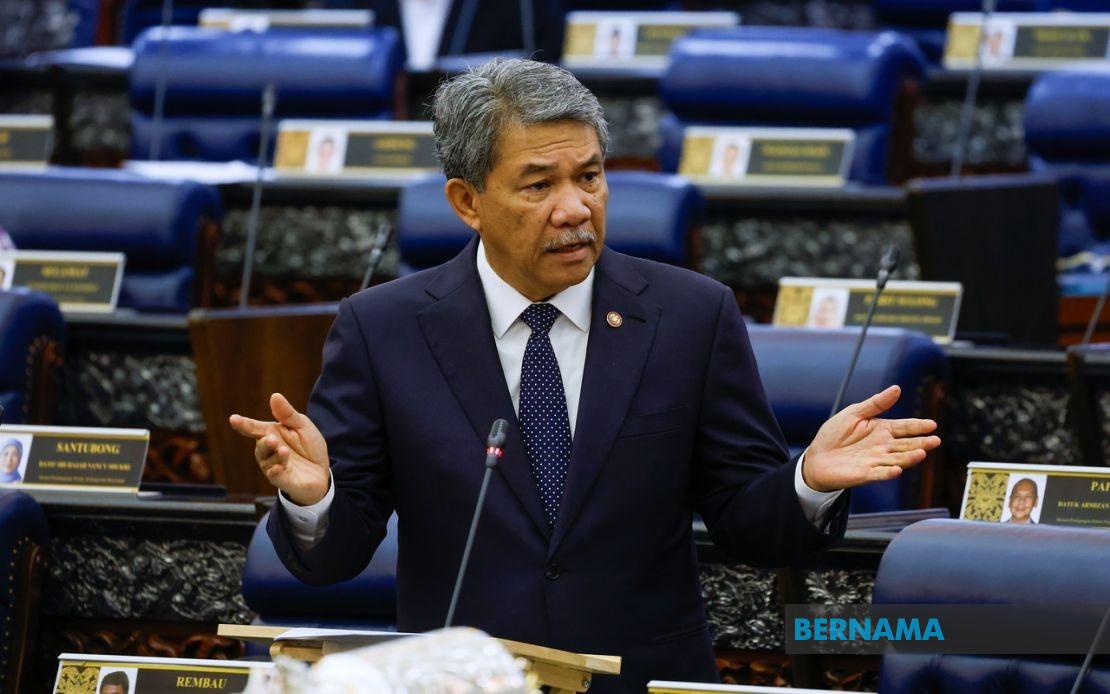
Malaysia's Foreign Minister Datuk Seri Mohamad Hasan has indicated that ASEAN member states are actively reassessing their approach to resolving Myanmar's protracted crisis, acknowledging that the bloc's flagship Five-Point Consensus framework requires strengthened implementation mechanisms. Speaking in Parliament on June 25, Mohamad presented a candid assessment of progress under the framework while signalling the regional grouping's determination to maintain its central role in mediating the conflict.
The Five-Point Consensus, agreed upon by ASEAN leaders as the primary diplomatic instrument for addressing Myanmar's instability, has served as the region's negotiating platform since its adoption. However, Mohamad conceded that despite some positive developments within Myanmar itself, the country has not yet fulfilled the substantive commitments outlined under this framework. This admission reflects ASEAN's growing frustration with the pace of implementation and the challenge of translating diplomatic agreements into tangible ground-level progress.
At the 48th ASEAN Summit held in Cebu, Philippines on May 8, regional leaders reached a significant decision to deploy their foreign ministers in a more hands-on capacity. Rather than relying solely on formal mechanisms, these officials are now tasked with conducting informal engagements directly with Myanmar's leadership to evaluate the current situation and chart a realistic pathway forward. This shift represents a pivot towards more direct diplomatic pressure and sustained engagement rather than distant monitoring.
Mohamad emphasised that the Five-Point Consensus remains the cornerstone of ASEAN's Myanmar policy, yet acknowledged that operational adjustments may be necessary. He stressed that any fundamental alterations to the framework would require approval from ASEAN's highest decision-making body—the heads of state—underscoring both the importance member nations place on the consensus approach and the constraints imposed by ASEAN's consensus-based decision-making culture. The nuance here is critical: ASEAN seeks to strengthen the framework's enforcement without abandoning it entirely.
Malaysia has emerged as a proactive voice within ASEAN, proposing concrete measures to sustain momentum towards peace. Most notably, the government has advocated for extending the six-month ceasefire that Myanmar implemented, which was originally scheduled to expire at the end of July. Malaysia's proposal frames this extension as a "second phase" leading towards a more substantive and wide-ranging peace initiative. This incremental approach aims to build trust between parties while providing the breathing space necessary for dialogue.
Critically, Malaysia has also pressed Myanmar to furnish a detailed roadmap outlining how the peace process will advance beyond the ceasefire period. This roadmap requirement reflects recognition that ceasefires, while valuable, are merely pauses in hostilities rather than permanent solutions. More significantly, Malaysia has insisted that any future peace architecture must incorporate genuinely inclusive dialogue involving all stakeholders—a principle that proves challenging in Myanmar's fragmented conflict environment where multiple armed groups, ethnic organisations, and political entities claim legitimacy.
Underlying ASEAN's recalibration is a strategic concern with profound regional implications: the danger that Myanmar's marginalisation could create a geopolitical vacuum attractive to external powers with competing interests. Mohamad articulated this worry explicitly, noting that allowing Myanmar to drift outside ASEAN's diplomatic orbit could enable third parties to exploit the situation, thereby destabilising not merely Myanmar but the broader Southeast Asian region. This concern reflects historical anxieties about great power competition in Southeast Asia and the potential for Myanmar to become a flashpoint for external interference.
The risk ASEAN seeks to avoid is becoming irrelevant to its own neighbourhood's most pressing security challenge. If ASEAN cannot shape outcomes in Myanmar through sustained engagement and negotiation, other powers—whether China, India, or others with strategic interests—may step into that space with their own agendas, potentially fragmenting Myanmar further and undermining regional stability. Maintaining ASEAN's primacy in Myanmar mediation thus becomes a matter of institutional credibility and regional agency.
Malaysia's comprehensive engagement strategy reflects this calculus. The government has positioned itself as willing to interact with all relevant parties: the Myanmar military government, the shadow National Unity Government claiming legitimacy from deposed civilian leaders, the People's Defence Force that emerged as armed resistance to the coup, and the various ethnic armed organisations that control significant territory. This multi-faceted approach acknowledges Myanmar's byzantine political landscape where no single actor holds decisive power, and sustainable solutions require buy-in from diverse constituencies.
The parliamentary exchange in which Mohamad fielded supplementary questions reveals the domestic political dimension of Malaysia's Myanmar policy. Opposition parliamentarian William Leong Jee Keen pressed the government on whether fundamental rethinking had occurred given Myanmar's apparent non-compliance with the 5PC framework. Such questioning suggests that Malaysian civil society and opposition figures maintain active interest in Myanmar policy, perhaps reflecting both humanitarian concerns and strategic preoccupations about regional stability.
For Malaysian and broader Southeast Asian audiences, these developments signal that ASEAN's Myanmar strategy remains in flux. The bloc is attempting to square a difficult circle: maintaining the diplomatic framework that legitimises ASEAN involvement while making concrete adjustments to increase the likelihood of implementation. Whether ceasefire extensions and intensified foreign minister engagement can catalyse genuine progress towards peace remains uncertain, but the renewed emphasis on inclusive stakeholder dialogue and detailed peace roadmaps suggests ASEAN recognises that incremental approaches alone will not resolve Myanmar's underlying political divisions.
The implications extend beyond Myanmar itself. How ASEAN performs on its most critical security challenge will substantially determine whether member states can effectively shape their own regional destiny or whether they risk becoming peripheral to decisions made by external powers. Malaysia's leadership on proposing concrete measures thus represents an effort to reinvigorate ASEAN's collective agency at a moment when that agency faces genuine strain.

