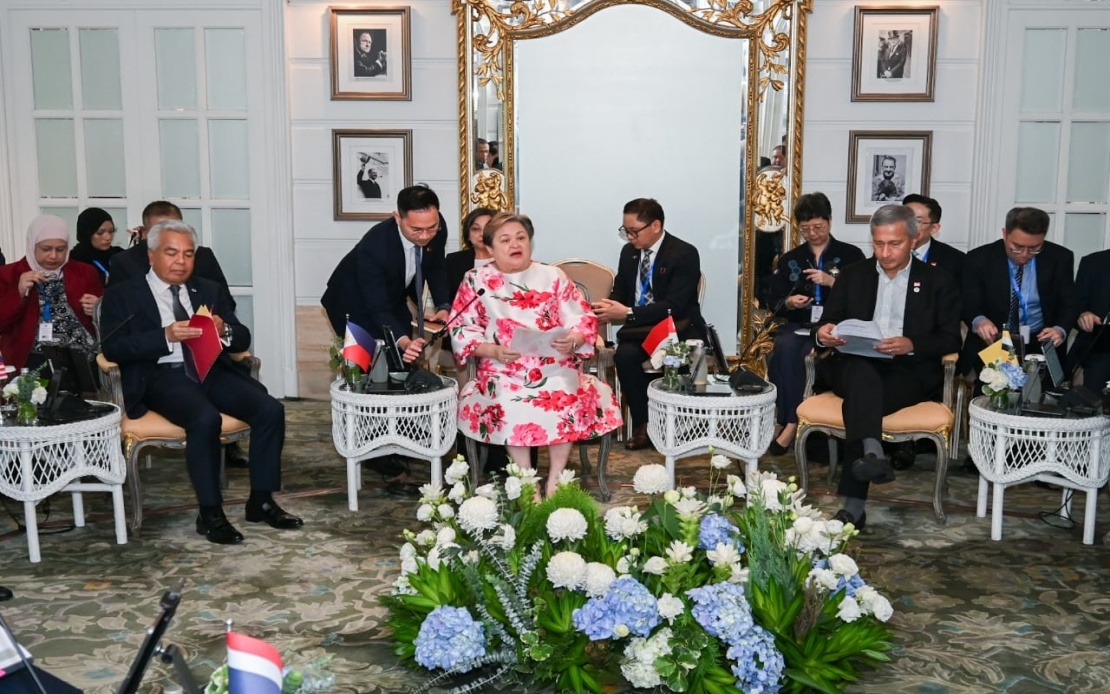
ASEAN has reiterated its commitment to the Five-Point Consensus as the cornerstone of its diplomatic strategy towards Myanmar, even as implementation of the peace framework faces mounting obstacles. The reaffirmation came during meetings in Bangkok involving senior foreign ministers from across the regional bloc, signalling that despite Myanmar's parliamentary rejection of the plan last week, ASEAN members remain unified in their approach to addressing the political and humanitarian crisis that has unfolded since the military coup in February 2021.
Philippine Foreign Secretary Maria Theresa Lazaro, who serves as the ASEAN Chair's Special Envoy on Myanmar, emphasized that the consensus framework underpins all of ASEAN's engagement with Myanmar's government and other stakeholders. Speaking after the Informal Meeting of ASEAN Foreign Ministers, Lazaro stressed that the bloc stands behind its peace blueprint regardless of resistance from Naypyidaw, underscoring ASEAN's determination to maintain diplomatic channels even as the situation on the ground deteriorates. Her remarks reflect the delicate balance ASEAN must strike between engagement and principle as it navigates one of the region's most intractable political crises.
Adopted in April 2021 in the immediate aftermath of Myanmar's military seizure of power, the Five-Point Consensus comprises five interconnected pillars: an immediate cessation of violence, inclusive dialogue among all political parties and stakeholders, humanitarian assistance to affected populations, mediation efforts by an ASEAN Special Envoy, and direct engagement with all parties including the military junta. For Malaysian observers, this framework represents a test of ASEAN's capacity to influence member state behaviour, particularly given Malaysia's own interests in regional stability and cross-border humanitarian concerns. Malaysia's representation at the meeting by Foreign Ministry Secretary-General Tan Sri Amran Mohamed Zin underscored Kuala Lumpur's continued investment in finding a diplomatic resolution.
The meetings marked the first in-person encounter between ASEAN foreign ministers and Myanmar's Foreign Minister since the crisis erupted nearly four years ago, suggesting a partial thaw in what has been an increasingly fraught relationship. However, the meeting's significance must be tempered by the context of Myanmar parliament's recent motion rejecting the peace plan outright, which appears designed to signal defiance towards ASEAN's agenda. This parliamentary action reflects the junta's confidence that it can withstand regional diplomatic pressure and international isolation, posing a fundamental challenge to ASEAN's diplomatic credibility.
Lazaro outlined three concrete expectations that ASEAN had conveyed to Myanmar during the consultations. Foremost among these is the expansion of humanitarian assistance, with the Philippine Chair planning a dedicated mission to explore mechanisms for increasing aid flows to Myanmar's vulnerable populations. The scale of humanitarian need in Myanmar has grown dramatically since 2021, with the United Nations estimating that over half the population faces severe food insecurity and lacks adequate healthcare. For regional countries like Malaysia, which shares a border with Myanmar and hosts significant numbers of Myanmar nationals and refugees, enhanced humanitarian access directly impacts cross-border stability and burden-sharing.
Second on ASEAN's agenda is the reduction of violence, particularly atrocities targeting civilian populations. Myanmar has witnessed escalating armed conflict between military forces and armed opposition groups, with documented reports of indiscriminate attacks on villages, extrajudicial killings, and forced displacement. ASEAN's emphasis on this point reflects growing international concern and the risk that continued violence could create humanitarian catastrophes that destabilize the broader region. Thailand, which hosts the meeting, faces direct security implications from Myanmar's instability, including cross-border incidents and weapon trafficking.
Third, ASEAN is pushing for inclusive political dialogue leading to genuine national reconciliation. This encompasses efforts to establish a political environment conducive to negotiations, securing the release of political detainees held by the junta, and creating space for legitimate civilian participation in governance. The junta has shown little willingness to consider meaningful power-sharing arrangements, instead consolidating control through repression and presenting itself as the guardian against what it characterises as destabilization. ASEAN's call for inclusive dialogue therefore represents an aspirational position rather than a realistic near-term prospect.
Thai Foreign Minister Sihasak Phuangketkeow, whose government hosted the consultations, articulated ASEAN's approach as "calibrated engagement," emphasising that constructive dialogue must be a reciprocal process requiring genuine responsiveness from Myanmar's military leadership. His characterisation of engagement as a "two-way street" highlights ASEAN's frustration with Naypyidaw's apparent dismissal of regional concerns and international expectations. Thailand's particular interest in Myanmar's trajectory reflects its own security challenges and the fact that conflict spillover directly threatens Thai border communities.
A critical question now facing ASEAN is the absence of any enforceable mechanism to ensure Myanmar's compliance with the consensus framework. When asked whether Myanmar had been assigned a timeline for addressing ASEAN's expectations, Sihasak indicated that progress would be assessed at ASEAN's Summit later in the year. This suggests ASEAN will wait several months before formally evaluating implementation, a delay that risks appearing permissive of the junta's intransigence. For Malaysia and other members genuinely committed to crisis resolution, this extended timeframe raises concerns about whether ASEAN possesses adequate leverage to compel meaningful change.
The absence of Cambodia from the ministerial meeting warrants attention, as it signals divisions within ASEAN itself. Cambodia's government has maintained closer ties with Myanmar's junta and has previously blocked or watered down ASEAN statements on Myanmar, reflecting both ideological affinity and Myanmar's strategic importance to Phnom Penh. This internal ASEAN friction undermines the bloc's collective credibility when it attempts to pressure Myanmar, a reality that sophisticated observers in Naypyidaw clearly understand and exploit.
For Malaysia and Southeast Asia more broadly, the stalled implementation of the Five-Point Consensus presents a sobering picture of ASEAN's limitations as a conflict resolution mechanism when member states resist external pressure and internal consensus fractures. While ASEAN's reaffirmation of the framework maintains diplomatic options and prevents complete rupture with Myanmar, it risks becoming a symbolic gesture rather than a genuine pathway to peace. The challenge ahead lies in converting ASEAN's stated commitment into tangible progress on humanitarian access, violence reduction, and political inclusivity, objectives that will require substantially greater leverage than the bloc has demonstrated to date.
The meeting's outcome also reflects broader anxieties within ASEAN about the precedent that Myanmar's intransigence might establish. If the junta can successfully dismiss regional consensus frameworks without consequence, other member states facing international criticism may conclude that ASEAN's non-interference tradition offers protection from external accountability. This dynamic threatens to erode ASEAN's already limited capacity to address intra-regional crises, with implications extending far beyond Myanmar itself. As Malaysia and its ASEAN partners navigate the coming months, they must grapple with whether the Five-Point Consensus represents a viable path forward or whether fundamentally different approaches to the Myanmar crisis require consideration.

