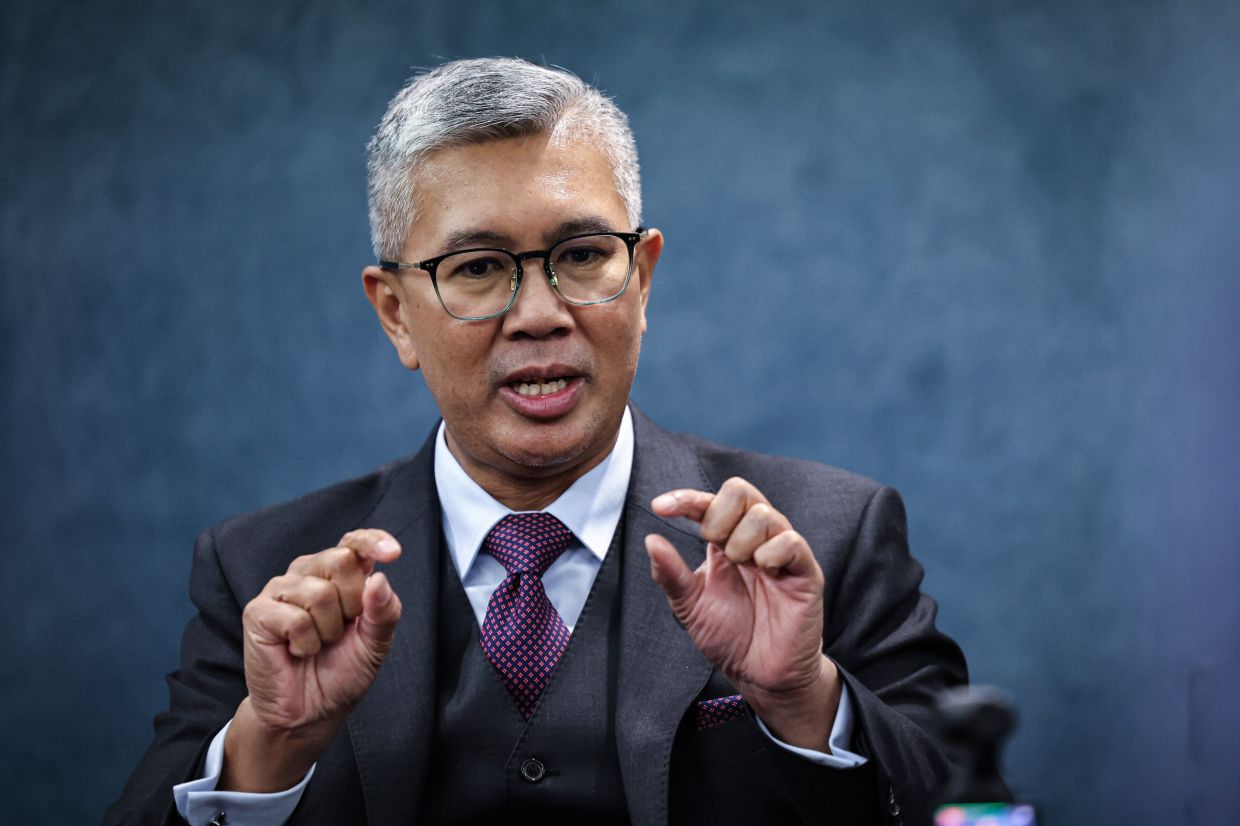
KUALA LUMPUR: Southeast Asia's energy transition hinges not on ambition but on coordinated capital deployment, according to Malaysian Investment Development Authority chairman Tengku Datuk Seri Zafrul Abdul Aziz. Speaking at the 7th International Sustainable Energy Summit (ISES) 2026, he highlighted that while virtually every ASEAN economy has pledged net-zero commitments, fragmented regulatory frameworks, lengthy project approval timelines and inadequate risk-sharing mechanisms are strangling the region's ability to mobilise investment where it matters most.
The scale of the financing challenge is staggering. ASEAN requires approximately US$200 billion annually through 2030—equivalent to RM818 billion at current exchange rates—to fund its energy transition. This figure underscores a fundamental paradox: the region possesses both the political will and the technical capacity to decarbonise, yet institutional and financial architecture remains stubbornly siloed along national boundaries. Tengku Zafrul's framing of this as a "capital coordination problem" rather than an ambition shortfall offers a sharper diagnosis than conventional industry commentary, suggesting that solutions lie in financial engineering and regional governance rather than in securing additional climate pledges.
One cornerstone of his proposed regional architecture is the ASEAN Power Grid, a cross-border electricity network slated for full integration by 2045. The concept is economically elegant: rather than each nation pursuing energy independence through redundant infrastructure, the grid would leverage ASEAN's diverse energy endowments. Laos commands significant hydroelectric capacity, Indonesia possesses geothermal resources unmatched in the region, Vietnam has emerged as a wind energy powerhouse, and Malaysia contributes substantial solar potential. A functioning integrated grid would transform these dispersed assets into a cohesive system where renewable generation in one country can be transmitted to meet demand in another, reducing the need for costly energy storage and fossil fuel backup across the entire bloc.
Beyond the power grid, Tengku Zafrul proposed establishing an ASEAN Green Investment Facility—a pooled capital mechanism drawing from sovereign wealth funds, pension reserves and private investors. This structure addresses a critical market failure: individual national governments often lack the scale or risk appetite to finance massive energy infrastructure projects alone, yet fragmented capital markets prevent private investors from assembling sufficient commitments across borders. By creating a facility that aggregates capital from multiple sources and jurisdictions, ASEAN could de-risk flagship projects, accelerate their bankability and unlock investment currently trapped in domestic silos. His comment that "no single treasury should have to shoulder this alone" reflects the reality that energy transition costs fall heavily on government balance sheets in developing economies, where private capital remains cautious.
Energy security resilience forms the third pillar of his framework. Tengku Zafrul advocated for shared emergency protocols, coordinated fuel reserves, joint crisis communication systems and regional supply-chain monitoring—measures that acquire urgency given recent global energy shocks. The 2022 energy crisis exposed ASEAN's vulnerability to external supply disruptions and price volatility, with some members facing acute shortages while others benefited from windfall gains. A coordinated regional response architecture would distribute the burden of future disruptions more equitably, prevent hoarding mentality among individual members and ensure that crisis management decisions are made through collective rather than purely national interest lenses.
Malaysia's own positioning within this agenda reflects Kuala Lumpur's strategic interests in anchoring Southeast Asia's energy transition. The government is advancing three parallel initiatives: the New Industrial Master Plan 2030, the National Energy Transition Roadmap and a Green Investment Strategy. These frameworks position Malaysia as both a manufacturing hub for clean energy technologies and a financial centre for green finance in the region. By championing regional cooperation mechanisms, Malaysia enhances its influence over how transition proceeds while creating commercial opportunities for Malaysian companies in grid integration, renewable installation and energy financing.
However, regional energy cooperation faces substantial obstacles that Tengku Zafrul's remarks left implicit. Political tensions between some ASEAN members complicate infrastructure development requiring cross-border trust and investment. Regulatory divergence across the bloc—varying grid standards, tariff mechanisms and subsidy regimes—creates technical and financial complications for integrated systems. Wealthier members may resist burden-sharing arrangements perceived as subsidising poorer neighbours' transitions. State-owned energy utilities entrenched in each country view regional competition as a threat rather than opportunity.
The timeline dimension adds pressure to these initiatives. With full ASEAN Power Grid integration targeted for 2045, only nineteen years remain to construct networks, harmonise regulations and establish operational protocols. Meanwhile, the US$200 billion annual financing need begins immediately, not in 2045. Early action is essential: delaying major investment decisions now compounds costs later through stranded fossil infrastructure and accelerated infrastructure replacement cycles. Tengku Zafrul's emphasis on urgency reflects this reality—the region cannot afford protracted consensus-building or piecemeal pilot projects.
From a Malaysian perspective, these proposals carry both opportunity and risk. Success would position Malaysia as an energy transition hub attracting regional investment, expertise and talent while securing reliable, cost-effective electricity supplies for manufacturing-dependent industries. Failure leaves Malaysia exposed to continued energy volatility, higher transition costs and potentially uncoordinated scrambles for green technology that could inflate prices and constrain access. The ASEAN framework also offers Malaysia a platform to shape regional standards in ways favourable to its own development model and industrial structure.
Tengku Zafrul's closing remarks—emphasising that fractured regions remain vulnerable while connected regions become "unbreakable"—carry layers of meaning beyond energy. In an era of great-power competition and geopolitical fragmentation, ASEAN's ability to present unified positions on economic architecture holds implications far beyond energy policy. The region's cohesion on energy transition could set precedent for cooperation on supply-chain resilience, digital infrastructure and financial integration.
For ASEAN policymakers and investors, the challenge now is translating Tengku Zafrul's framework into operational institutions. This requires moving beyond rhetorical commitment to hard institutional design: establishing governance structures for the ASEAN Power Grid, drafting binding protocols for the Green Investment Facility, and negotiating dispute-resolution mechanisms that can survive inevitable tensions between members. The January 2026 summit remarks are valuable, but concrete institutional progress will determine whether regional energy security becomes reality or remains aspirational.

