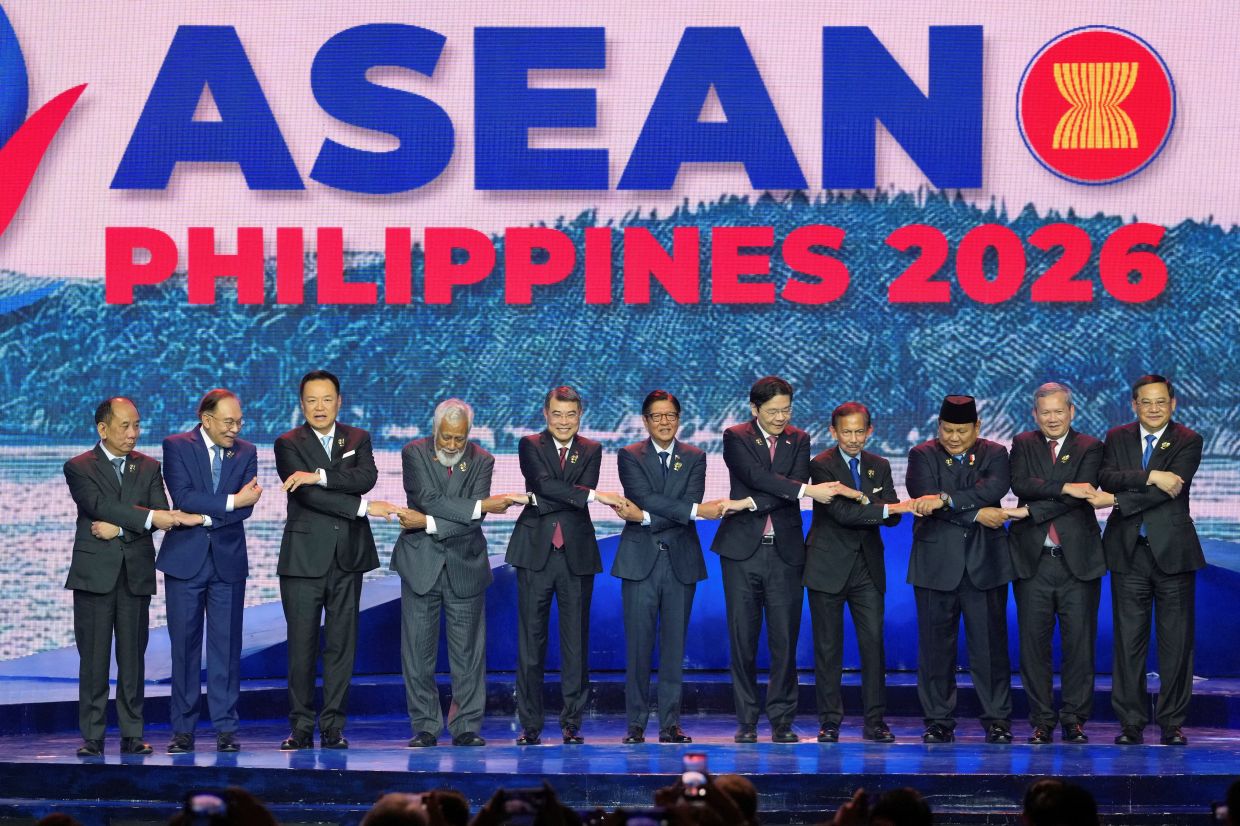
Southeast Asia's diplomatic leadership will descend on Manila this week for a significant regional gathering that underscores the mounting pressures confronting the 11-member Association of Southeast Asian Nations from both external conflicts and internal instability. The three-day ministerial talks, hosted by the Philippines under its current ASEAN chairmanship, will draw an unusually high-profile international audience including U.S. Secretary of State Marco Rubio, Chinese Foreign Minister Wang Yi, Russian Foreign Minister Sergey Lavrov, and representatives from the European Union. The convergence of these major-power diplomats in one venue reflects the growing interconnection between global crises and regional security, a reality that has become inescapable for Southeast Asian policymakers.
The agenda carries the weight of multiple simultaneous challenges. ASEAN ministers will prioritise discussion of intensifying hostilities between the United States and Iran, which have reverberated far beyond the Middle East and triggered anxiety within the region about broader ramifications. The fighting has reignited concerns about potential disruptions to the Strait of Hormuz, a maritime chokepoint through which approximately one-fifth of the world's oil supplies transit. For Southeast Asia, a region encompassing more than 680 million people with substantial reliance on Middle East petroleum and liquefied natural gas, any disruption to energy supplies carries immediate economic consequences. The Philippines vividly demonstrated this vulnerability when President Ferdinand Marcos Jr. declared a national energy emergency in March to manage fuel scarcity and prevent panic buying and profiteering among the population.
Beyond energy security, the region faces a more fundamental strategic concern: whether American attention devoted to Middle Eastern conflicts will come at the expense of Indo-Pacific security commitments. The Trump administration has signalled strong support for Taiwan and pledged to counter Chinese assertiveness in the South China Sea, yet the diversion of significant U.S. military resources toward Iran operations has generated unease among regional capitals. Rubio's attendance at these talks serves partly to reassure ASEAN members that Washington remains invested in their security challenges. The State Department framed his visit as advancing "a clear U.S. priority: a free and open Indo-Pacific that delivers safety, security and prosperity for the region and for the American people."
Rubio signalled openness to meeting with Wang Yi, though no formal engagement had been scheduled before the Manila talks commenced. His public comments struck a diplomatic tone, acknowledging that friction between superpowers is inevitable but emphasising the importance of sustained dialogue. He noted anticipating a September visit from Chinese leader Xi Jinping to Washington, suggesting some movement toward managed great-power competition despite existing disagreements. The potential for bilateral conversations between Rubio and Wang carries significance for ASEAN, as their relationship shapes the broader strategic environment within which Southeast Asian nations must navigate their interests.
The Myanmar crisis constitutes perhaps the most emotionally charged item on the ASEAN agenda, reflecting the bloc's inability to restrain one of its own members despite years of diplomatic effort. Since the military seized power from Aung San Suu Kyi's democratically elected government in February 2021, more than 8,100 people have died in the subsequent conflict, with nearly 22,500 others languishing in detention facilities according to the Assistance Association for Political Prisoners. The 2021 five-point peace consensus issued by ASEAN leaders has proven ineffectual, primarily because Myanmar's military authorities have refused to honour its provisions. This failure prompted ASEAN to exclude Myanmar's senior officials from high-level meetings, though that principled stance recently showed signs of fracturing.
Philippine Foreign Secretary Theresa Lazaro, acting as ASEAN's special envoy, met Myanmar's Foreign Minister Tin Maung Swe in Bangkok for the first time in five years earlier this month, a development that drew sharp criticism from international human rights organisations. These groups argue that the engagement effectively reverses the bloc's principled boycott and rewards military intransigence without extracting meaningful concessions. Lazaro subsequently met with representatives from Myanmar's ethnic armed organisations in Pattaya, attempting to broaden dialogue channels. She defended the diplomatic initiative as necessary pragmatism rather than abandonment of ASEAN's consensus, insisting that "the path to peace can only be obtained through resolute diplomacy with all parties to the conflict." The outcome demonstrates ASEAN's persistent challenge: balancing principles of non-interference, consensus decision-making, and diplomatic leverage when confronting stubborn regional problems.
The South China Sea disputes will feature prominently in discussions between ASEAN members and Wang Yi, particularly regarding progress on negotiating a code of conduct intended to prevent disagreements over territorial claims from escalating into armed conflict. The maritime standoffs involve China, Taiwan, and ASEAN members Brunei, Malaysia, the Philippines, and Vietnam. Recent years have witnessed sharply increased incidents between Chinese and Philippine coast guard and naval vessels, with Manila particularly aggressive in asserting its territorial claims. These confrontations carry direct relevance for Malaysian interests given the nation's own maritime claims and the importance of maintaining freedom of navigation through waters critical to regional commerce.
The South China Sea tensions reflect a broader pattern of Chinese assertiveness that concerns Washington and its regional partners. Chinese expansionism in the disputed waters has accelerated despite the nominal code of conduct discussions, suggesting Beijing's tactical preference for maintaining pressure while appearing to engage in dialogue. For ASEAN members, the challenge lies in achieving consensus on maritime issues when China maintains bilateral leverage over individual member states through economic ties, investment commitments, and infrastructure projects. Malaysia's position within these dynamics carries particular weight given its significant economic relationship with Beijing and its own contested maritime boundaries.
Ukraine's top diplomat, Andrii Sybiha, has been invited to attend Friday's ceremony commemorating ASEAN's 1976 nonaggression treaty but will not participate in the broader ministerial meetings. Notably, Rubio and Lavrov have announced no plans to meet with each other or with Sybiha during the Manila gathering, suggesting that despite Ukraine's ongoing struggle against Russian invasion, the regional focus remains fundamentally on Indo-Pacific rather than European security architecture. This geographical prioritisation reflects ASEAN's pragmatic orientation and its conviction that regional stability depends on managing relationships with both Western and Asian powers rather than taking overt positions on extra-regional conflicts.
The ministerial talks thus represent a delicate balancing act for Philippine diplomatic leadership and the broader ASEAN community. Member states must address the genuine threat posed by external great-power competition and conflict while simultaneously grappling with internal instability in Myanmar that challenges the bloc's collective credibility and effectiveness. The outcomes will likely involve carefully calibrated statements expressing concern about multiple simultaneous crises without committing ASEAN to assertive action that members cannot sustain through consensus. Whether this approach constitutes adequate diplomacy for addressing the magnitude of current challenges remains an open question for Southeast Asian observers concerned with regional stability.

