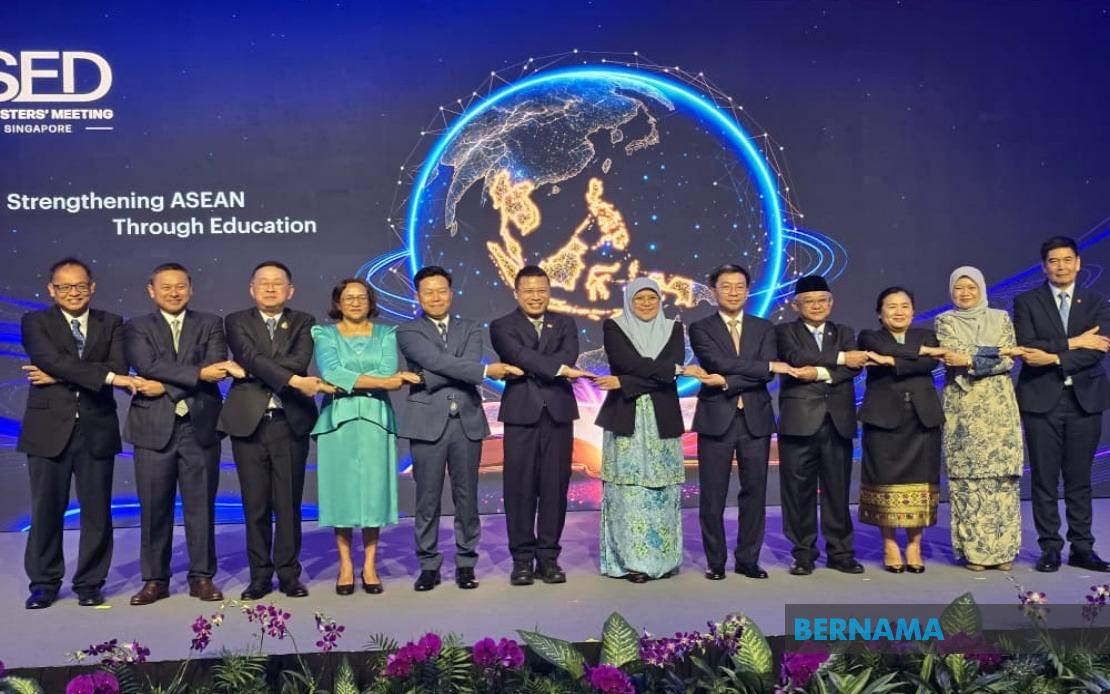
ASEAN's regional education ministers convened in Singapore this week to formally adopt a comprehensive strategic framework that will guide educational priorities across Southeast Asia for the next five years. The Five-Year Work Plan on Education 2026-2030 represents a coordinated regional response to the accelerating demands of globalisation and technological disruption, establishing a shared vision for transforming how the bloc's 600 million people prepare for an uncertain future. The plan's articulation comes at a critical juncture, as economies throughout the region grapple with skills mismatches, youth unemployment, and the rapid displacement of traditional jobs by automation and artificial intelligence.
The initiative envisions education systems that cultivate not merely academic competence but also the psychological resilience, ethical grounding, and adaptive capacity that contemporary societies require. Beyond producing workers equipped for immediate labour market demands, the framework emphasises the development of rounded individuals who can navigate complexity, demonstrate social responsibility, and contribute meaningfully to their communities. This holistic orientation signals growing recognition across ASEAN capitals that sustainable economic development depends on human capital that transcends narrow vocational preparation, encompassing instead the interpersonal, creative, and moral dimensions of human flourishing.
At the 14th ASEAN Education Ministers Meeting held in Singapore, Education Minister Desmond Lee articulated three strategic pillars that will anchor the work plan's implementation. Artificial intelligence in education emerged as a primary focus area, reflecting the region's acknowledgement that AI literacy will become as fundamental as numeracy and reading in the decades ahead. STEM education, the second pillar, addresses the persistent undersupply of specialists in science and technology fields, a constraint that threatens regional competitiveness in high-value manufacturing and digital innovation. The third pillar, holistic development, captures the intention to integrate character formation, civic values, and personal well-being into educational programming, moving beyond the examination-focused approaches that have long dominated Southeast Asian schooling.
For Malaysia, where Education Minister Fadhlina Sidek was present at the deliberations, the work plan offers both opportunity and challenge. Malaysia has made substantial investments in STEM infrastructure and teacher training over the past decade, but student uptake in science and mathematics remains uneven across socioeconomic groups and geographic regions. The regional framework provides an avenue for Malaysian educators to benchmark their AI integration initiatives against peer economies whilst accessing collaborative research networks that can accelerate curriculum innovation. Simultaneously, the emphasis on values education through character development aligns closely with Malaysia's own national education philosophy, which traditionally emphasises moral and civic formation alongside academic achievement.
Singapore's role as chair of the ASEAN Education Sector for 2026-2027 carries particular significance given its established expertise in values-based education. The nation's Centre for Character and Citizenship Education will coordinate a region-wide research network dedicated to advancing common methodologies in values education. This institutional architecture proves crucial because values curricula vary markedly across ASEAN, reflecting divergent historical experiences, constitutional frameworks, and cultural traditions. By establishing a platform for member states to share implementation models and evaluate effectiveness, the network promises to create economies of scale in curriculum development whilst respecting national sovereignty and local contexts.
The equitable access dimension embedded within the work plan acknowledges a fundamental reality: millions of Southeast Asian children remain outside formal schooling systems entirely, whilst many others attend institutions so under-resourced that meaningful learning becomes impossible. ASEAN countries exhibit stark disparities in educational infrastructure and teaching quality between urban centres and rural hinterlands, between wealthy urban schools and those serving plantation workers or indigenous communities. The framework's emphasis on inclusivity and equitable quality access signals commitment to narrowing these gaps, though translating aspiration into resource allocation remains the persistent challenge facing education ministers throughout the region.
Student well-being has assumed unprecedented prominence in the work plan, marking a significant departure from educational paradigms that prioritised examination performance above all else. Rising mental health challenges among Southeast Asian youth, intensified by social media pressures and post-pandemic adjustment difficulties, have prompted policymakers to reconsider what constitutes educational success. An education system optimised solely for test scores whilst producing anxious, disconnected adolescents increasingly strikes planners as ultimately counterproductive. The work plan's incorporation of well-being metrics reflects this recalibration, suggesting that ASEAN capitals are slowly accepting that sustainable human development requires attending to psychological and emotional flourishing.
Regional cooperation mechanisms embedded within the five-year plan address a persistent weakness in Southeast Asian educational development: the tendency for each nation to pursue isolated, nationally-focused reform initiatives rather than leveraging collective capacity. Teacher exchange programmes, curriculum research consortia, and benchmarking exercises become possible when ASEAN provides institutional scaffolding and political endorsement. Vietnam's recent curriculum reforms, Indonesia's teacher professionalization drives, Thailand's technical education initiatives, and the Philippines' language policy adjustments each contain lessons valuable beyond national borders. The work plan's emphasis on strengthening regional cooperation creates incentive structures for knowledge-sharing that might otherwise remain locked within individual bureaucracies.
The overarching theme of "Strengthening ASEAN through Education" reflects an implicit conviction that educational integration reinforces political cohesion and economic interdependence across the bloc. When young people across ASEAN share common understandings of regional identity, sustainability values, and civic responsibilities, the foundation for deepening integration across other sectors becomes sturdier. Education provides the soft infrastructure upon which harder economic and security cooperation can build. This understanding explains why education ministries, historically peripheral to national governance structures, have become more prominent within ASEAN's multilateral architecture in recent years.
Implementing this ambitious agenda will require sustained political commitment and substantial financial mobilisation across often fiscally-constrained education systems. Many ASEAN members dedicate less than six per cent of government budgets to education, constraining their capacity to introduce new technologies, upgrade teacher qualifications, or expand access to underserved populations. The five-year plan's success ultimately depends upon whether it catalyses increased domestic investment in education or remains a well-intentioned framework lacking the resources for meaningful realisation. The coming months will clarify whether ASEAN education ministers can translate rhetorical commitment into budget priorities that reflect educational strategy's centrality to regional development.

