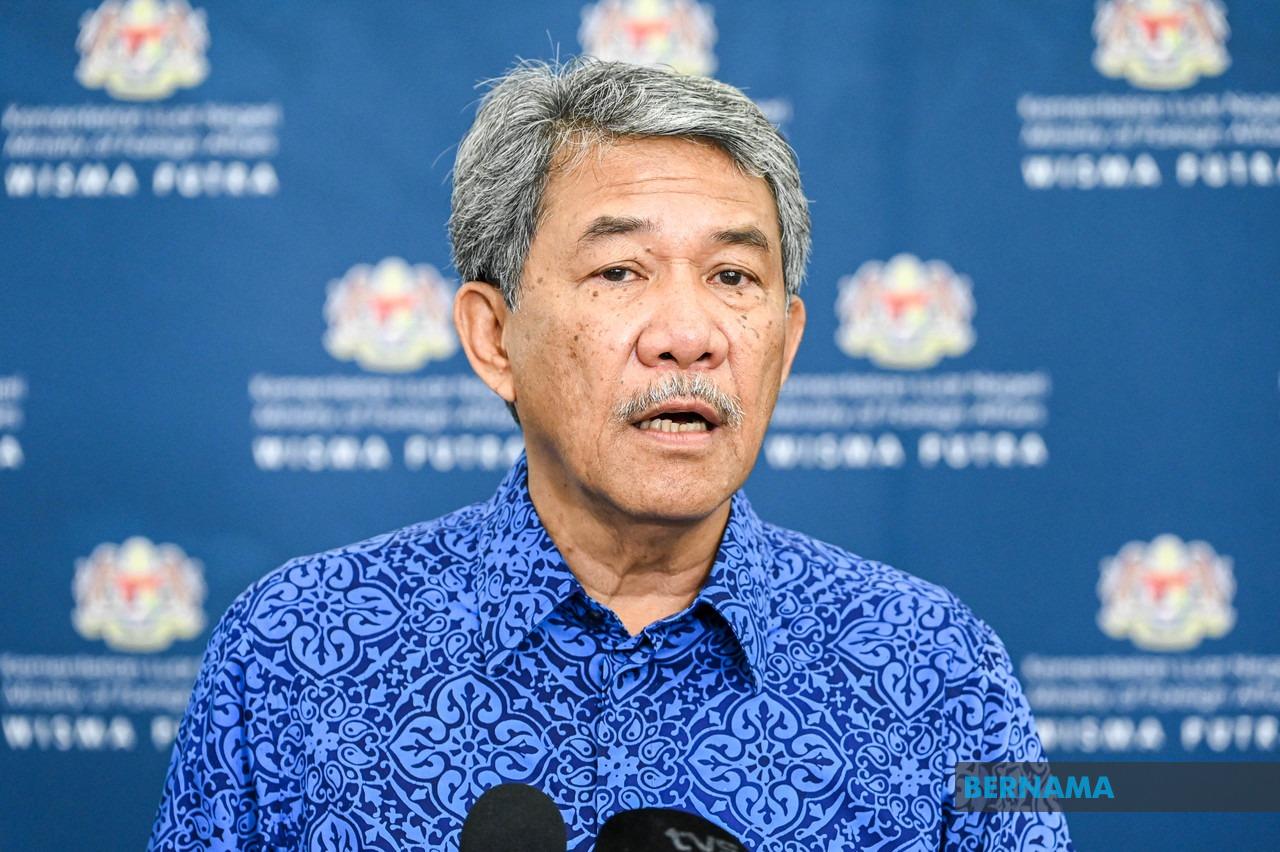
Foreign Minister Datuk Seri Mohamad Hasan has issued a forceful reminder that ASEAN centrality remains the bloc's most valuable asset as the global order deteriorates under the weight of competing superpowers and economic fragmentation. Speaking during the 59th ASEAN Day celebration in Putrajaya, Mohamad framed regional cohesion not as an entitlement but as a privilege requiring constant cultivation and defence. His remarks underscore mounting anxiety among Southeast Asian capitals that the institution faces existential pressures at a moment when its value has never been greater.
The international system ASEAN has long relied upon for stability is undergoing a seismic shift. Major power competition, particularly between the United States and China, shows no signs of abating, while the rules-based order that underpinned global commerce and security arrangements has become contested terrain. For a region of 650 million people with competing interests and vulnerabilities, the erosion of predictable frameworks poses profound challenges. Mohamad's assertion that fragmentation has reached unprecedented levels reflects the sobering assessment shared quietly across Southeast Asian foreign ministries: the postwar consensus that allowed smaller nations to navigate great power rivalry is collapsing.
Central to Mohamad's argument is a paradox: as the world becomes more fractious, ASEAN's unity becomes simultaneously more difficult to maintain and more strategically valuable. Member states face intensifying pressure to align with competing blocs—whether the United States-led Quad framework, China's Belt and Road Initiative, or other emerging partnerships. These centrifugal forces threaten to pull ASEAN apart precisely when the bloc's non-aligned positioning offers maximum leverage. Mohamad warned explicitly that internal divisions would catastrophically weaken collective influence, acknowledging that the political will required to maintain consensus has grown scarcer.
The Foreign Minister's emphasis on ASEAN as an independent voice reflects an increasingly assertive Malaysian position within regional councils. Rather than accepting a subordinate role in great power arrangements, Mohamad advocated for the bloc to engage partners as equals and to author its own narratives rather than appearing as a passive subject of external powers' strategies. This framing has particular resonance for Malaysia, Indonesia, and Vietnam, which harbour distinct concerns about preserving strategic autonomy. The appeal to speak rather than be spoken for suggests growing frustration with external actors—whether Beijing, Washington, or Delhi—treating Southeast Asia as a contested sphere of influence rather than a sovereign region with its own imperatives.
Economic reinvention emerged as the second pillar of Mohamad's vision for regional resilience. He highlighted the digital economy and the ASEAN Digital Economy Framework Agreement as engines for the bloc's next growth phase, signalling that traditional trade arrangements no longer suffice. The modernisation of agreements with China, India, and South Korea reflects efforts to leverage ASEAN's position astride global supply chains while reducing dependence on any single partner. This economic diversification strategy mirrors a broader diplomatic calculation: ASEAN's prosperity—and by extension, member states' ability to resist external pressure—depends on avoiding concentration risk.
The acceleration of the ASEAN Power Grid illustrates how economic transformation and geopolitical positioning interweave in contemporary Southeast Asia. By advancing regional energy interconnection and green transitions, ASEAN simultaneously addresses climate imperatives, attracts capital flows, and reduces individual members' energy vulnerabilities to external suppliers. For Malaysia, with its significant renewable energy ambitions and role as an energy exporter, such frameworks offer opportunities to shape regional standards while securing long-term demand. The emphasis on embedding sustainability reflects international investor expectations but also shrewd recognition that ecological stability underpins long-term security.
Timor-Leste's admission as ASEAN's newest member in October last year, though briefly noted in Mohamad's remarks, carries significant weight in regional calculations. The expansion to eleven members and 500 million additional population reinforces ASEAN's claim to represent a substantial portion of humanity with shared interests in maritime security, trade access, and resistance to domination. However, inclusion of Timor-Leste also brings challenges: the nation's relative poverty, governance vulnerabilities, and geopolitical positioning between Australia and China require careful management. The expansion tests ASEAN's capacity to accommodate diversity while maintaining cohesion.
The 2026 ASEAN chairmanship by the Philippines introduces additional complexities. Manila has pursued a more assertive stance toward China concerning South China Sea disputes compared to some neighbouring countries, creating potential friction within consensus-seeking mechanisms. The theme "Navigating Our Future Together" appears deliberately calibrated to emphasise collective purpose despite varying national interests. For Malaysia, which maintains careful balance between multiple partnerships and has pursued the Comprehensive and Progressive Agreement for Trans-Pacific Partnership, the chairmanship cycle requires deft diplomacy to prevent ASEAN fracturing along geopolitical fault lines.
Mohamad's address represents an effort to reinvigorate ASEAN's foundational principles at a moment when they face genuine erosion. The Bangkok Declaration of 1967 established non-interference and consensus-based decision-making as defining characteristics. Yet nearly six decades later, these principles face pressure from members pursuing divergent strategic interests, from external powers seeking to circumvent ASEAN decision-making through bilateral channels, and from internal political changes that make consensus harder to achieve. The Foreign Minister's invocation of these founding principles constitutes a defensive move, attempting to shore up institutional legitimacy precisely as it becomes most contested.
The broader context of Mohamad's remarks reflects Malaysia's own recalibration of foreign policy under new political leadership. The emphasis on speaking as equals rather than accepting subordinate positions harks back to earlier Malaysian foreign policy traditions of principled independence and South-South cooperation. By articulating a vision of ASEAN centrality grounded in economic integration, strategic autonomy, and multilateral engagement, Mohamad positions Malaysia at the intellectual centre of regional conversation about ASEAN's future. Whether other member states, particularly those with stronger alliance commitments or contested territorial interests, will align with this vision remains uncertain.
For Malaysia and the broader region, the coming years will test whether ASEAN centrality can survive in a world of explicit great power competition. The bloc's success depends not on declarations of unity but on demonstrating tangible benefits to member states from regional cooperation that exceed what bilateral relationships with external powers might offer. Economic integration through digital frameworks and trade modernisation, energy security through grid interconnection, and collective voice in multilateral forums represent concrete mechanisms for sustaining centrality. Yet unless member states consistently prioritise regional interests over narrower national advantage, the compass Mohamad described risks becoming merely decorative.
As ASEAN enters its sixth decade, the stakes for maintaining centrality have never been higher. A fragmented bloc would offer external powers precisely what they seek: bilateral leverage over divided states. Conversely, a cohesive ASEAN that cultivates strategic partnerships across competing power blocs while refusing alignment retains genuine agency in international affairs. Mohamad's address serves notice that Malaysia will continue advocating for the institutional arrangements and collective commitments that make such autonomy possible, even as structural pressures work against it.

