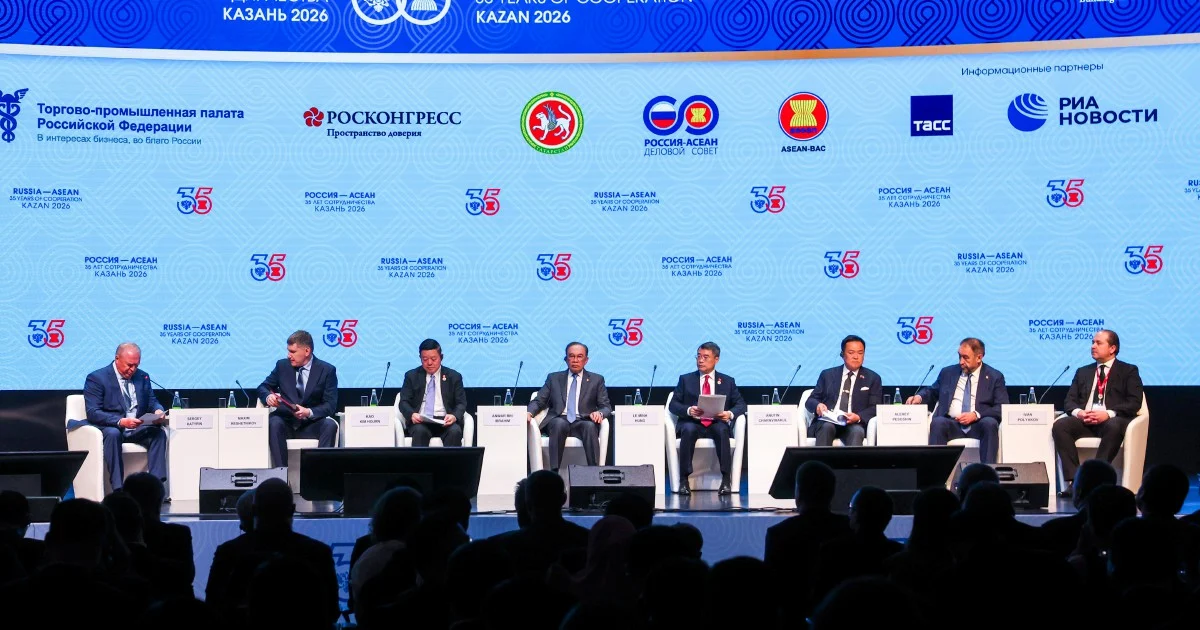
Prime Minister Datuk Seri Anwar Ibrahim has called for a significant expansion of multilateral engagement between the Association of Southeast Asian Nations and Russia, emphasising the strategic importance of collaboration across sectors essential to regional stability and prosperity. Speaking in Kazan, Anwar outlined a comprehensive vision for deepened partnership that extends beyond traditional diplomatic channels to encompass practical cooperation in areas that directly affect the livelihoods and development trajectories of Southeast Asian citizens.
Food security emerges as a paramount concern underpinning Anwar's proposal, reflecting widespread anxiety across Southeast Asia about the sustainability and reliability of agricultural supply chains. The region, home to over 650 million people, faces mounting pressure from climate volatility, population growth, and shifting consumption patterns that complicate domestic production. Russia, as a significant global grain and fertiliser exporter, represents a potential strategic partner in stabilising food systems that remain vulnerable to external shocks. Enhanced cooperation could take multiple forms, from knowledge transfer regarding agricultural innovation to structured trade arrangements that insulate Southeast Asian nations from commodity price fluctuations and geopolitical supply disruptions.
The emphasis on energy collaboration carries particular weight for Malaysian policymakers and the broader region grappling with the transition towards sustainability while meeting growing electricity demands. Southeast Asia remains heavily dependent on imported fossil fuels despite abundant renewable resources in several member states. Russia's extensive experience in energy infrastructure development, coupled with its technical expertise in various extraction and generation methodologies, offers potential avenues for technological exchange and investment. Such cooperation could accelerate the region's capacity to diversify energy portfolios while building resilience against price volatility that has repeatedly destabilised economic planning across multiple Asean economies.
Advanced manufacturing represents another dimension through which Asean nations might benefit from deeper Russian engagement. As global supply chains recalibrate and onshoring accelerates in certain sectors, Southeast Asia competes fiercely to attract production facilities. Russian technological capabilities in specialised manufacturing, combined with Asean's abundant labour resources and geographic advantages, create complementary opportunities. Collaborative ventures could position the region as a preferred destination for complex manufacturing operations while transferring technical knowledge that strengthens the industrial base of individual member states.
Digital technology cooperation carries transformative potential for an Asean region increasingly recognised as a digital frontier. Russia possesses considerable expertise in software development, cybersecurity, and emerging technologies that Southeast Asian economies seek to harness. Strategic partnerships in this domain could accelerate digital infrastructure development, strengthen cybersecurity frameworks protecting critical systems, and facilitate technology transfer that supports local innovation ecosystems. For Malaysia specifically, deepening ties in digital technology aligns with ongoing efforts to position the nation as a regional tech hub and diversify beyond traditional economic dependencies.
Educational exchange constitutes the foundational element enabling all other forms of cooperation to flourish sustainably. Anwar's inclusion of education reflects an understanding that long-term partnership requires building human capital capable of implementing ambitious collaborative initiatives. Expanded scholarship programmes, institutional twinning arrangements, and capacity-building initiatives would cultivate a generation of Southeast Asian professionals equipped with Russian language proficiency and technical knowledge. Such investments create lasting diplomatic networks that transcend governmental cycles and foster genuine people-to-people understanding.
The timing of Anwar's overture reflects evolving geopolitical calculations within Southeast Asia as major powers reassess their strategic priorities. The region has traditionally maintained pragmatic relationships with multiple power centres, and Russia remains a historically significant partner despite shifting international dynamics. Asean's non-aligned ethos and commitment to strategic autonomy create space for diversified partnerships that do not necessitate choosing between competing global powers. Russian engagement offers alternatives to overdependence on traditional Western sources of technology and investment whilst maintaining existing partnerships with other regional and global players.
Malaysia's diplomatic posture under Anwar has consistently emphasised expanding engagement with diverse partners whilst maintaining independent decision-making. This proposal to deepen Asean-Russia cooperation aligns with broader Malaysian interests in maintaining an open international architecture that reflects Southeast Asian agency. For a nation like Malaysia, positioned at the intersection of multiple geopolitical spheres, cultivating relationships across diverse partners strengthens national negotiating leverage and reduces vulnerability to coercion or isolation.
Implementing this expansive cooperation agenda requires overcoming practical obstacles including regulatory harmonisation, currency considerations, and building institutional mechanisms capable of managing complex multilateral projects. Asean's decision-making consensus model, whilst preserving member autonomy, can slow agreement on joint initiatives requiring coordinated implementation. Russia, meanwhile, navigates its own constraints related to international sanctions affecting certain sectors and technology transfer capabilities. Despite these complications, the fundamental logic underlying Anwar's proposal remains compelling—mutual benefit through specialisation and exchange creates incentives for sustained engagement.
The broader implication of Anwar's statement reflects recognition that Asean's strategic autonomy requires cultivating multiple partnerships capable of providing technological spillovers, investment capital, and market access. As global competition intensifies and traditional international arrangements face pressure, Southeast Asian nations benefit from partnerships that expand their options and reduce asymmetric dependencies. Deepening Asean-Russia cooperation in food security, energy, manufacturing, technology and education addresses concrete development challenges whilst demonstrating the region's commitment to principled multilateralism in an increasingly polarised world.