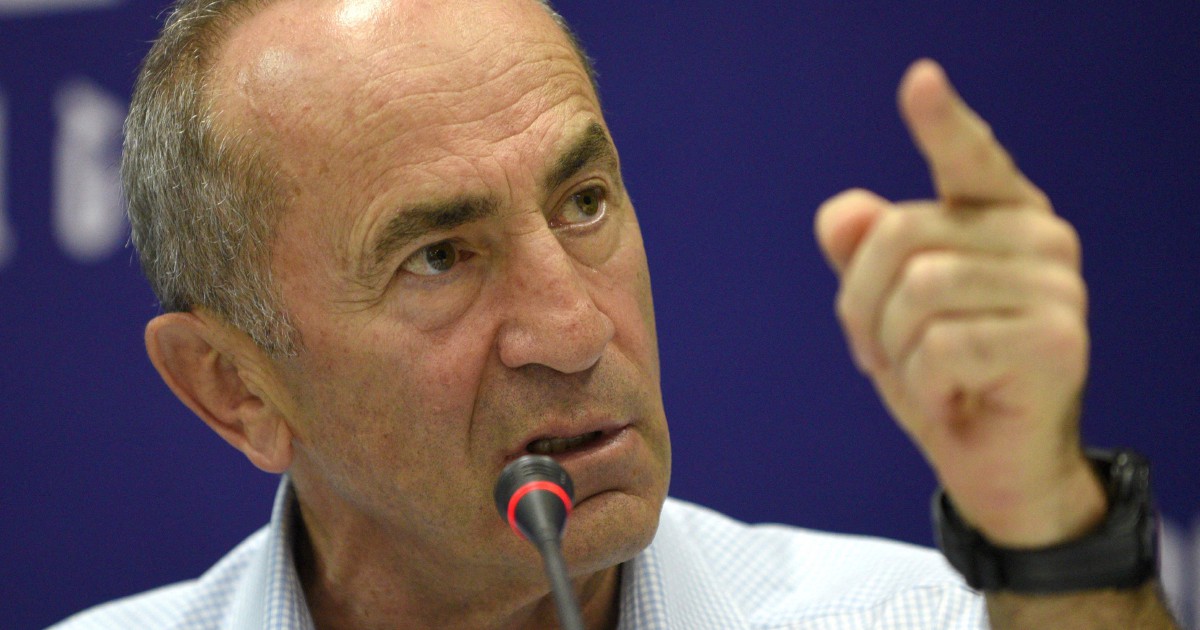
Robert Kocharyan, who served as Armenia's president and has emerged as a significant opposition voice in recent years, was taken into custody by state prosecutors on Tuesday following formal charges related to alleged misconduct during his tenure in the country's highest office.
The detention of Kocharyan marks an escalation in political tensions within Armenia, where governance disputes have intensified following the country's 2020 conflict with Azerbaijan and subsequent leadership changes. As a former head of state who maintained considerable political influence despite leaving office, his arrest signals the government's willingness to pursue legal action against high-profile figures from previous administrations.
Prosecutors have levelled multiple corruption-related offences against Kocharyan, though details of the specific charges remain significant to understanding the scope of the investigation. These allegations centre on actions taken during his presidential term, suggesting that investigators have identified patterns of conduct they believe violated anti-corruption statutes. Such prosecutions of former leaders often prove contentious in post-Soviet states, where questions about political motivation and judicial independence invariably surface.
The timing of Kocharyan's detention reflects Armenia's broader political trajectory following recent years of turmoil. The country faces competing pressures: the need to demonstrate institutional accountability and reform, balanced against concerns that judicial processes might serve partisan political interests. For Southeast Asian observers, this situation illustrates challenges that emerge when former presidents remain politically active opposition figures in nations with developing democratic institutions.
Kocharyan's arrest carries implications for Armenia's international standing and internal stability. His detention will likely galvanise his supporters while potentially escalating confrontation between the ruling coalition and opposition factions. The case will also test whether Armenia's judicial system can handle high-profile prosecutions with sufficient credibility and transparency to maintain public confidence in anti-corruption efforts.
The former president's status as an opposition leader adds complexity to the prosecution. In many post-conflict societies, including several in Asia, authorities face criticism that corruption investigations targeting political opponents lack impartiality. Armenian civil society and international observers will monitor whether evidence-gathering, trial procedures, and sentencing reflect genuine legal processes rather than political calculations.
Armenia's approach to former leaders' accountability reflects regional patterns where transitional justice, anti-corruption initiatives, and political competition intersect. Unlike established democracies with deep institutional traditions, younger post-Soviet republics must simultaneously build credible legal frameworks while managing the practical realities of political succession and rival power centres.
The prosecution carries potential ramifications for Armenian politics heading toward potential future electoral contests. Opposition figures now face tangible risks from criminal prosecution, which could reshape political behaviour and reduce willingness to challenge the incumbent government. Conversely, if investigations prove substantively sound, they may demonstrate institutional capacity for accountability regardless of political affiliation.
For the broader region, Armenia's handling of Kocharyan's case will influence perceptions about judicial independence in the South Caucasus. Countries across Southeast Asia wrestling with anti-corruption campaigns and legacy issues from previous administrations often watch how neighbouring nations balance accountability with institutional credibility. Armenia's approach may either strengthen or undermine confidence in anti-corruption initiatives undertaken by governments elsewhere in the post-Soviet space.
The detention also reflects Armenia's ongoing efforts to consolidate state institutions following the 2020 conflict and subsequent political upheaval. Demonstrating functional anti-corruption capacity serves multiple strategic purposes: strengthening international relations, assuring European and Western institutions of governance improvements, and establishing state capacity to address perceived wrongs from previous eras.
As proceedings unfold, attention will centre on whether prosecutors present compelling evidence, whether Kocharyan receives adequate legal representation, and whether trial outcomes reflect genuine judicial assessment or political motivation. These factors will determine whether the prosecution succeeds in advancing both accountability and institutional legitimacy, or instead deepens divisions within Armenian society.
The case underscores enduring tensions between pursuing accountability for past governance failures and maintaining political stability in transitional societies. For Armenia, navigating this balance while credibly prosecuting a former president represents a crucial test of institutional maturity. Success requires transparent procedures, solid evidence, and demonstrated commitment to equal application of law—standards that remain challenging in any post-conflict environment.

