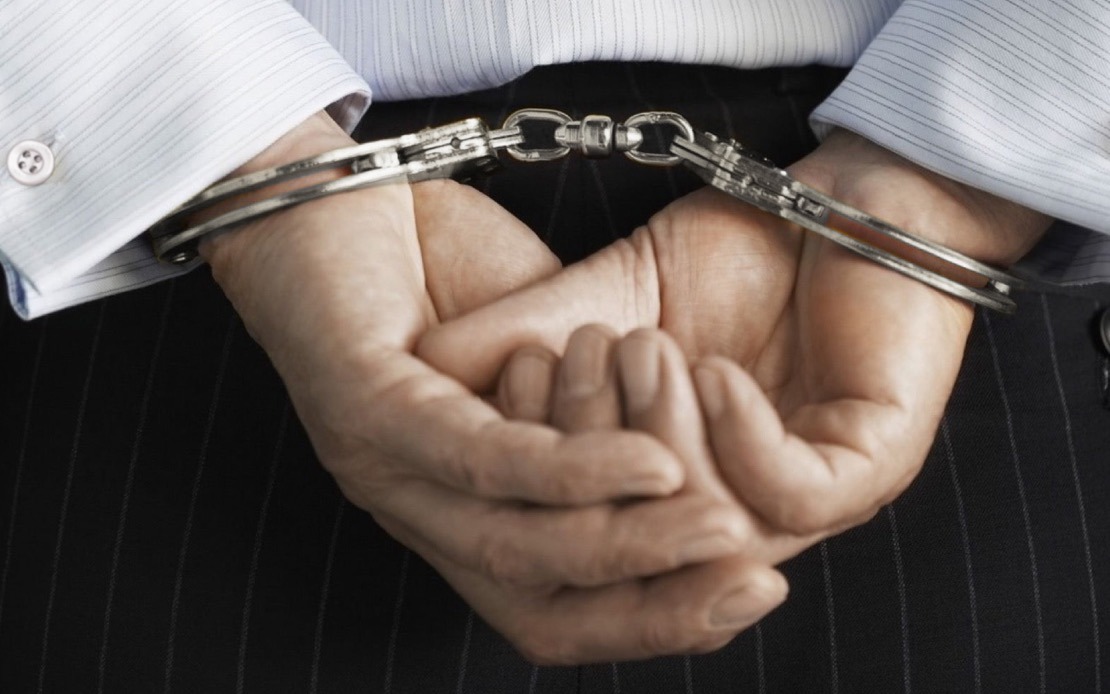
An armed man was taken into custody at Donald Trump's golf facility in California just days before the president was scheduled to appear at a Republican Party fundraising event, according to law enforcement officials who disclosed the arrest on Tuesday. The Los Angeles County Sheriff's Department confirmed that plainclothes officers had detected the individual at Trump National Golf Course in Rancho Palos Verdes on Sunday behaving suspiciously, including photographing and filming the grounds while appearing to closely observe security arrangements and defensive measures in place at the venue.
The arrest marks the latest in a disturbing pattern of security incidents involving the former and current U.S. president, raising fresh questions about the adequacy of protective measures and threat assessment protocols. During the initial apprehension, law enforcement recovered ammunition and a 16-round magazine from the suspect. A subsequent examination of the man's vehicle yielded a loaded handgun and an additional loaded magazine, suggesting a level of preparedness that alarmed investigators. The escalating nature of the discoveries prompted authorities to obtain a warrant and search his residence, where they uncovered a cache of weapons and ammunition, along with tactical body armour, radio signal equipment, and several notebooks filled with statements authorities deemed concerning.
For Malaysian and Southeast Asian observers watching American politics, this incident underscores the volatile environment surrounding Trump as he campaigns and carries out presidential duties. The Trump National Golf Course in Rancho Palos Verdes, situated in an affluent coastal area south of Los Angeles, had been designated as the venue for Tuesday evening's fundraising dinner, a critical event for generating campaign resources. The timing of the arrest—mere hours before Trump's anticipated arrival—demonstrated the genuine immediacy of the threat and the responsive capacity of California law enforcement.
The incident occurs within a troubling historical context of security breaches and assassination attempts that have besieged Trump over recent years. In April, gunfire erupted during a Washington press dinner, forcing Secret Service personnel to evacuate Trump and his wife and terminate the event prematurely. The February shooting at his Mar-a-Lago estate in Florida, where authorities killed an armed intruder, illustrated vulnerabilities even at his heavily secured residential compound. Most alarmingly, during his 2024 campaign rallies, a shooter targeted Trump at a Pennsylvania event, grazing his ear and injuring him before being neutralised by security personnel.
Further underlining the severity of threats facing the former and current president, the Secret Service subsequently engaged an armed individual concealed in vegetation adjacent to Trump's golf course in West Palm Beach, Florida, who investigators believed was preparing to launch an attack. This West Palm Beach incident, occurring later in 2024, demonstrated that such threats persist across multiple locations and extend beyond formal campaign venues into leisure spaces frequented by the president.
The accumulation of these incidents has transformed presidential security architecture into a subject of intensive scrutiny and considerable public debate. Whether current protocols and resource allocations prove sufficient remains contested among security experts, with some arguing that the recurring nature of these incidents reveals systemic deficiencies in threat prevention and early warning mechanisms. The recovery of detailed notebooks from the arrested man's residence suggests that detailed planning and ideological motivation may have preceded the Sunday incident, a pattern that mirrors certain previous cases.
For regional observers, these American security challenges carry implications beyond bilateral relations. As the United States maintains significant strategic interests across Southeast Asia and the Indo-Pacific, political instability or security crises affecting U.S. leadership could influence American reliability as a security partner and strategic ally. Nations including Malaysia and others in the region maintain relationships with Washington that depend partly on the stability and predictability of American governance and decision-making.
The arrest also raises questions about how rapidly law enforcement can respond to suspicious behaviour at high-profile locations. The plainclothes officers' detection of photography and security monitoring on Sunday, followed by the discovery of an arsenal and tactical equipment, demonstrates both the challenge of identifying potential threats among the large numbers of individuals present at such venues and the capability when appropriate attention is directed toward suspicious activity.
Authorities have not yet disclosed specific charges, the identity of the arrested individual, or detailed motivations behind the apparent surveillance and preparation. These details will likely emerge as the investigation proceeds through formal legal channels. The incident adds another chapter to an unprecedented period in which a sitting American president faces recurring security threats, each incident reigniting national conversations about the state of political discourse, access to weapons, and the psychological profile of individuals motivated to violence against political leaders.
As the 2024 campaign cycle intensifies and Trump continues his political trajectory, security protocols will remain under constant refinement. The California golf course incident serves as a stark reminder that even locations associated with leisure and private activity cannot be shielded entirely from determined actors with hostile intentions. For the international community and Malaysian observers closely following American political developments, such incidents underscore the underlying tensions within contemporary American society and the security complexities inherent in protecting prominent political figures operating in an open democratic system.

