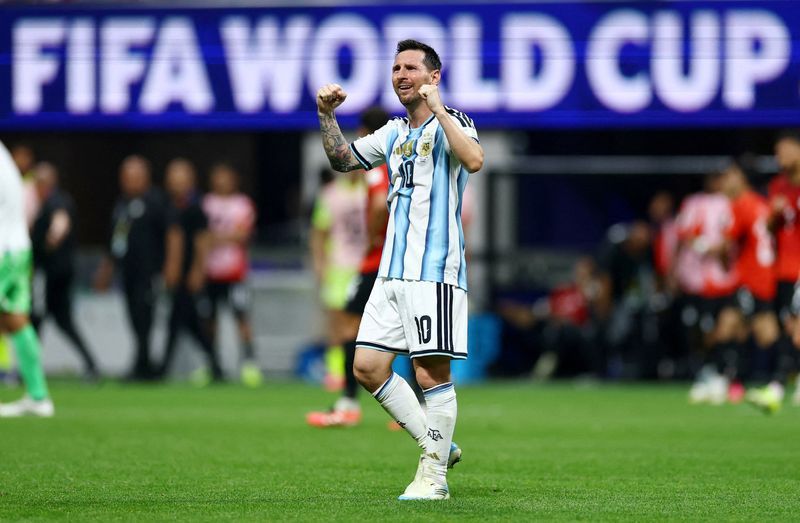
Argentina's path through the knockout stages has proven considerably more treacherous than their commanding performance during the group phase, yet the defending World Cup champions remain in contention after extinguishing another late crisis on Tuesday evening. What appeared to be an insurmountable situation against Egypt—a two-goal deficit with minimal time on the clock—transformed into a defining triumph when Lionel Messi orchestrated a stunning recovery in Atlanta. The 3-2 victory sends Scaloni's squad into Saturday's quarter-final clash with Switzerland in Kansas City, though few would have anticipated such drama would await the team that had glided through their opening matches with near-flawless execution.
The contrast between Argentina's group stage dominance and their knockout struggles reveals an uncomfortable reality for supporters of the South American powerhouse. During the initial phase, the team dispensed with Algeria, Austria and Jordan with consummate ease, establishing themselves as tournament frontrunners through controlled, authoritative performances. Yet their progression has become increasingly fraught, requiring extra time against Cape Verde before Tuesday's narrow escape against the Egyptians. The gulf between these two versions of Argentina—the clinical group stage outfit and the increasingly vulnerable knockout team—suggests vulnerabilities that opposing coaches are beginning to exploit systematically.
Yet within this vulnerability lies an unexpected strength that may ultimately determine Argentina's championship prospects. The refusal to surrender even when facing near-certain elimination has become the thread connecting these recent matches, a psychological attribute that former striker Carlos Tevez emphasized when discussing the team's performance. Speaking on ESPN Argentina, Tevex highlighted not the tactical brilliance or technical proficiency, but rather the hearts the players displayed and their unwavering determination to pursue victory regardless of circumstances. This capacity for redemption, born from adversity, represents a quality that transcends conventional match analysis and speaks to deeper reserves of character within the squad.
Messi himself captured this sentiment succinctly after the Egyptian encounter, reflecting that World Cup competition inherently produces tightly contested matches where the psychological battle becomes paramount. The midfielder articulated a conviction that his teammates genuinely never believed their situation was hopeless, maintaining focus and intensity even when mathematics suggested otherwise. Leandro Paredes reinforced this theme, noting that despite the severity of conceding two unanswered goals, the squad retained faith in their ability to turn the tide. These are not the pronouncements of a team relieved merely to have scraped through, but rather athletes conscious they had discovered something valuable about themselves through the crucible of near-defeat.
The defensive statistics paint a more sobering picture, however, that Scaloni cannot ignore as his preparation intensifies for the Swiss encounter. Argentina's group stage campaign yielded just a single goal conceded, coming against Jordan when the coach rotated personnel and afforded rest to key figures. Yet the knockout phase has already seen them breach four times across two matches, indicating that either opposing teams have identified tactical weaknesses or the intensity of knockout football simply exposes defensive frailties that group stage opponents were unable to exploit. Whether this represents a temporary aberration or a persistent issue will likely determine how far Argentina progresses into the tournament.
Scaloni's assessment of the Egypt match revealed a nuanced reading of events that differed from the catastrophic narrative some observers constructed around the performance. The coach contended that his team created multiple first-half opportunities, suggesting that the underlying football was more respectable than the final scoreline initially implied. Messi's missed penalty epitomized this theme—a team generating chances rather than being completely overwhelmed, but faltering in execution at critical moments. This distinction matters significantly when considering how Argentina should approach Switzerland, as it suggests the fundamental approach may require refinement rather than wholesale reconstruction.
The immediate logistical challenge of regrouping in Kansas City Thursday evening frames Argentina's next phase of preparation within compressed timescales typical of knockout competition. Rather than basking in the Egyptian triumph, Scaloni's attention has already shifted toward a Swiss team he characterizes as formidable opponents possessing extraordinary pedigree within World Cup history and outstanding individual players. This assessment carries genuine weight, reflecting Switzerland's consistent tournament appearances and their capacity to trouble superior sides through disciplined organization and clinical execution. The Swiss represent precisely the kind of technically sound, defensively organized opponent that could exploit the vulnerabilities Argentina has revealed.
The narrative trajectory of Argentina's campaign now hinges upon whether their demonstrated resilience can be sustained and transformed into tournament success. Comebacks from seemingly lost positions develop momentum and confidence that can reverberate through subsequent matches, yet they also risk creating a pattern where teams play with unnecessary desperation and abandon rather than calculated intensity. Switzerland's challenge will be to prevent Argentina from establishing any early momentum while exploiting defensive vulnerabilities that became apparent against Cape Verde and Egypt. For Argentina's supporters across the region and globally, the quarter-final represents a crucial juncture where the lessons of adversity either crystallize into championship mettle or merely represent temporary escapes from elimination.

