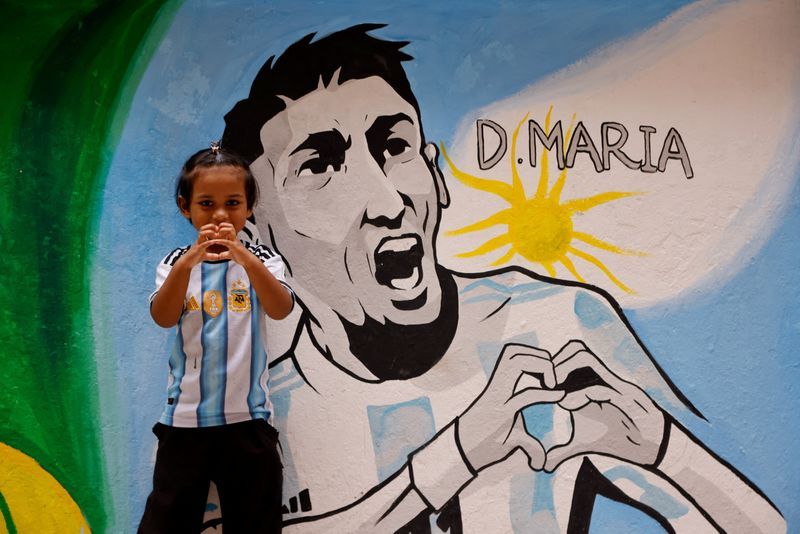
The World Cup spotlight returns to one of the tournament's most captivating storylines this Saturday when Argentina and Switzerland face off in the quarter-finals, marking only the second knockout meeting between these nations in their World Cup history. For the Swiss, this encounter carries the weight of unfinished business—a chance to finally overcome the side that broke their hearts in Sao Paulo 12 years ago, when Angel Di Maria's devastating strike in extra time sent them home in the round of 16. Argentina, meanwhile, arrive as defending world champions with the luxury of experience and recent success, yet they carry their own vulnerabilities into what promises to be a demanding tactical battle.
The passage of a dozen years has reshaped both teams fundamentally. When these nations last met in Brazil 2014, Argentina were on a desperate quest to end nearly three decades without a World Cup title, with Lionel Messi at the absolute peak of his powers shouldering the hopes of an entire nation. Switzerland, conversely, represented a different breed—competent and efficient, yet perpetually unable to break through the quarter-final barrier that had eluded them since 1954. That tournament fixture epitomized their different trajectories: Argentina hungry and hungry-driven, Switzerland fighting with discipline but ultimately succumbing to brilliance they could not match.
The landscape has shifted dramatically in the intervening years. Argentina not only conquered their World Cup drought but went on to claim the trophy at Qatar 2022, followed by a runner-up finish four years earlier. They arrive here as the tournament's most successful recent team, carrying the confidence and lethal sharpness that comes from having already reached the promised land. Yet their path through this competition has not been without drama or defensive fragility. Their resurrection from two goals down against Egypt in the last round, engineered through Messi's inspiration and an indomitable team spirit, revealed cracks that astute opponents might exploit.
At 39 years old, Messi is no longer the physical phenomenon who terrorized defenses in his prime. His presence nonetheless continues to magnetize the tournament, and Argentina's architecture still flows through him in ways that make him central to their competitive identity. After the Egypt comeback, Messi himself acknowledged the perpetual tension that defines their campaign: "We suffered a lot again, but this is the World Cup. Every game is like this. This group never gives up and keeps trying until the end." Those words capture both the resilience and the fragility that has defined Argentina's run.
Switzerland's journey to this quarter-final represents their own historic achievement, breaking a 72-year curse that had haunted Swiss football at the World Cup stage. Manager Murat Yakin steered his side past Colombia through the cruelty of penalties after a goalless draw—a victory earned through resolute defending and composure under pressure. The Swiss have evolved beyond their traditional reputation as merely defensive stalwarts; they now represent a more complete footballing proposition, though injuries threaten to undermine their ambitions. The potential absence of midfielder Johan Manzambi due to a knee complaint is particularly acute, given his creative contributions proved vital during their knockout run.
Only three players survived from that 2014 encounter to grace this rematch. Messi remains the obvious thread connecting the two eras, his presence a bridge between Argentina's unfulfilled past and their triumphant present. Swiss captain Granit Xhaka, now 33, remembers the sting of that defeat and the lessons learned from facing Messi's brilliance. Ricardo Rodriguez, the 33-year-old defender, similarly carries those memories forward. Xhaka spoke with the deference reserved for genuine greatness: "It is a privilege to be in this type of era with him. We played against him when we lost in 2014 in Brazil. We know the quality, what he has, but all the team as well." Rodriguez, meanwhile, offered pragmatic respect: "Argentina are a great team. Very strong players, a good coach. We know how they play. And they have the best one."
Yakin's tactical approach reveals a team that has studied Argentina's vulnerabilities with meticulous attention. The Swiss manager believes recent matches against Cape Verde and Egypt have exposed defensive weaknesses that careful planning might target. "We're up against the defending champions, which is a unique opportunity," Yakin reflected. "At the same time, we've realised that Argentina are not invincible. It should be an interesting match from a tactical point of view." This assessment carries particular weight because it suggests Switzerland will not approach the encounter with mere defensive resignation, but rather with a blueprint designed to create genuine difficulties for the South American champions.
Argentina coach Lionel Scaloni has prepared his team while expecting to retain the core of players who vanquished Egypt, yet he too recognizes the magnitude of the Swiss challenge. He characterized Switzerland as possessing "an incredible World Cup tradition" and "outstanding players"—language that reflects both respect and acknowledgment that complacency would be punished. The match promises to hinge on whether Argentina can maintain possession and control while managing the Swiss team's threat on transition, and whether Switzerland can convert their defensive solidity into genuine scoring opportunities.
The narrative arc of this meeting carries particular poignancy for Swiss football. For 72 years, they had reached the quarter-finals only once in their World Cup history, a distant achievement from 1954. Now, having finally breached that barrier again, they face immediately the team most responsible for their long drought. Messi and Argentina stand between Switzerland and unprecedented success. The defender who spoke of the best player in the world, the captain who remembers Brazil, and the manager who believes his side is not outmatched—all converge on this moment. What unfolds on Saturday will be far more than a simple knockout tie; it will be Switzerland's chance at redemption against the very symbol of the brilliance that has haunted them.

