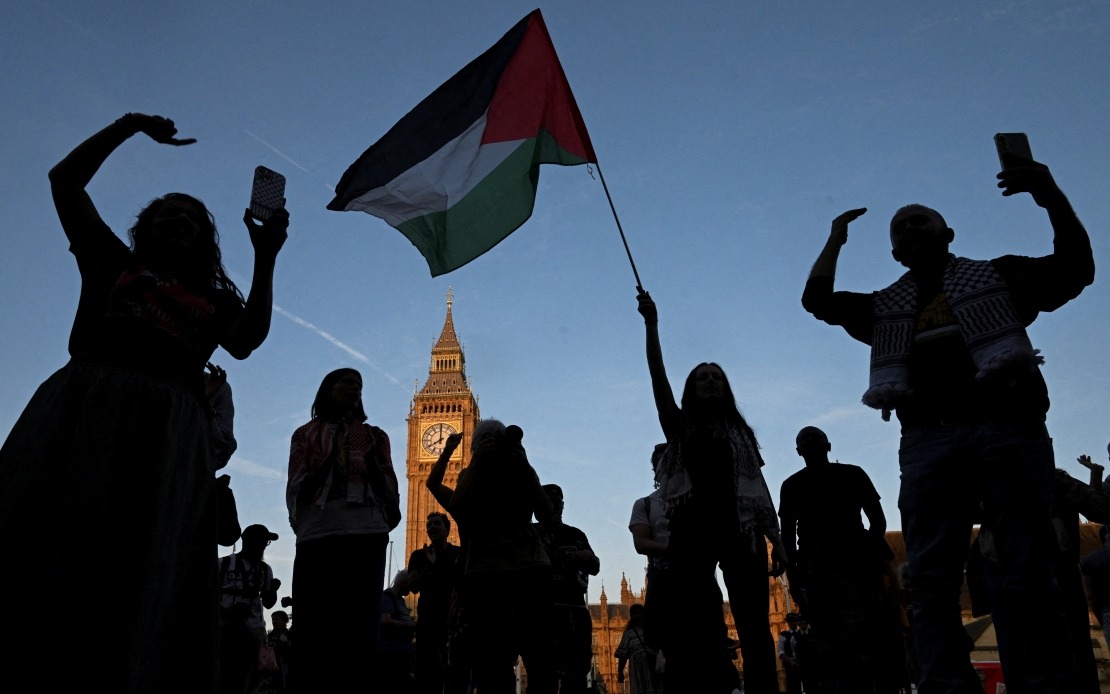
Nabil Fahmy, the Arab League's Secretary-General, used his inaugural press conference at the organization's Cairo headquarters on Monday to underscore an unwavering commitment to the Palestinian question, signalling that the regional bloc will continue prioritizing the long-standing dispute at the centre of Middle Eastern politics. His remarks come as the Arab League faces mounting pressure to demonstrate tangible action on Palestinian affairs amid escalating regional tensions and international scrutiny over the humanitarian situation in occupied territories.
Fahmy articulated a broad mandate for the League's engagement with Palestinian issues, emphasizing that defending what he characterized as the legitimate aspirations of the Palestinian people and working to terminate Israeli occupation would remain cardinal objectives for the organization. This positioning reflects the Arab League's historical role as a collective voice for Arab nations, though it also highlights the persistent challenge of translating rhetorical commitment into coordinated regional policy, given the divergent interests and capacities of member states.
A particular emphasis in Fahmy's opening statement centred on Jerusalem's status and identity. He framed the city as a symbol requiring vigilant protection against what he described as Israeli efforts to alter its character and diminish its Arab heritage. This focus resonates deeply across the Arab world, where Jerusalem holds profound religious and historical significance beyond the Palestinian context, making it a unifying issue even when other regional disputes prove divisive among Arab capitals.
The Secretary-General articulated an exceptionally strong position regarding accountability, asserting that the actions in Gaza and the West Bank constitute ongoing genocide demanding immediate and forceful Arab response. Fahmy went further by invoking international law mechanisms, pledging that the Arab League would support efforts to prosecute perpetrators through legal channels. His emphasis on the absence of statutory limitations for genocide prosecutions—and the certainty that those responsible will face justice—suggests the League's intention to pursue cases through international courts, a stance with significant implications for regional stability and diplomatic relations.
Beyond the Palestinian territories proper, Fahmy's remarks extended the League's purview to encompass broader regional security concerns, particularly highlighting Israeli military operations affecting Lebanon. He characterized these incursions as violations of Lebanese sovereignty and breaches of international law, thereby widening the frame of discussion from the Israeli-Palestinian conflict to encompass Israeli-Arab state interactions more broadly. For Southeast Asian observers, this expansion underscores how the Palestinian issue remains intertwined with Israel's relationship with neighbouring Arab states, complicating any isolated resolution.
The Syrian Golan Heights likewise featured prominently in Fahmy's address, with the Secretary-General reiterating Arab League opposition to Israel's continued presence on the plateau and rejecting attempts to create fait accompli situations through military force. This reference illuminates the interconnected nature of Middle Eastern territorial disputes and the League's view of them as part of a singular framework of resistance to what Arab states perceive as illegitimate Israeli territorial expansion.
Fahmy's broader vision for the Arab League emphasized the necessity of enhanced coordination among member states, calling for what he termed more vigilant and proactive Arab action grounded in protecting collective Arab interests and regional capabilities. This framing suggests awareness that the League's effectiveness depends not merely on rhetorical commitment but on genuine coordination and resource mobilization—areas where the organization has historically struggled given internal divisions and varying national priorities among its 22 member states.
Crucially, the Secretary-General stressed that sustainable progress on Arab regional issues must stem from internal Arab consensus rather than external pressure or influence. This emphasis on Arab-led solutions and self-determination in addressing regional problems carries particular weight given historical experiences with great power intervention in Middle Eastern affairs. For Malaysia and ASEAN nations, Fahmy's insistence on autonomous Arab action reflects a principle of regional autonomy that resonates with Southeast Asian concepts of non-interference and regional self-determination.
The timing of these remarks carries significance, arriving amid an exceptionally fraught period marked by humanitarian concerns in Gaza, ongoing Israeli military operations, and international diplomatic efforts to establish ceasefires and humanitarian corridors. Fahmy's inaugural statement thus functions both as a reaffirmation of the League's foundational commitments and as a signal to Arab publics that the organization remains engaged with their primary grievances, even as member states navigate competing domestic priorities and bilateral relationships.
For Malaysian policymakers and observers of regional affairs, Fahmy's pronouncements illuminate how the Palestinian cause continues to command rhetorical centrality within Arab League discourse, even if implementation capacity remains constrained by the organization's structural limitations and member state divisions. The League's emphasis on legal accountability mechanisms also suggests a potential shift toward pursuing international legal avenues for addressing grievances, which could have ramifications for international courts and multilateral justice frameworks.
Looking ahead, the practical implications of Fahmy's commitments will depend significantly on whether the Arab League can translate its stated priorities into coordinated diplomatic and institutional action. The organization faces the enduring challenge of maintaining unity around Palestinian issues while managing divergent member state interests, particularly as some Arab nations have pursued normalization agreements with Israel—a contradiction that will likely continue testing the League's coherence and effectiveness in advancing its declared priorities.

