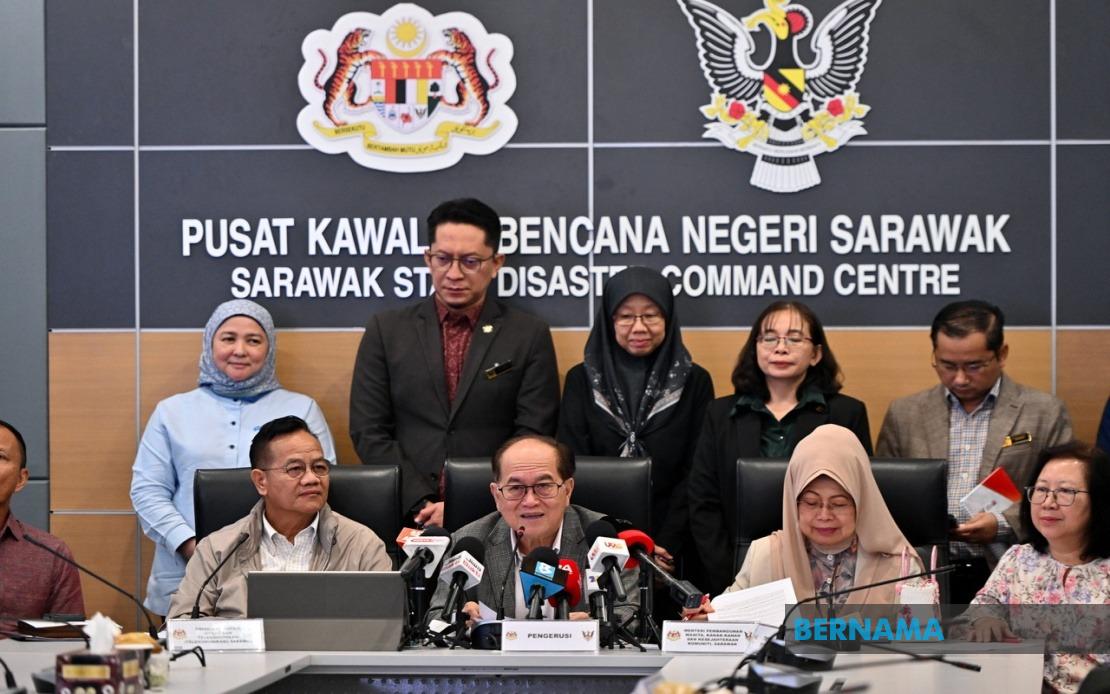
Sarawak will declare a state of emergency once air pollutant readings reach an API of 500, according to Sarawak Deputy Premier Datuk Amar Douglas Uggah Embas, signalling a threshold at which the state's disaster management protocols would be fully activated. Speaking after chairing a meeting of the Sarawak State Disaster Management Committee in Kuching on August 31, Uggah outlined the escalation procedures that would unfold should pollution levels climb to that critical mark.
Once such a declaration takes effect, the matter moves beyond state jurisdiction into the federal arena. Uggah confirmed that the situation would be escalated to the National Disaster Management Agency in Kuala Lumpur, which would then coordinate the national response in accordance with established disaster management protocols. This tiered approach reflects Malaysia's structured emergency response system, where state-level authorities identify the trigger points and federal agencies assume coordination duties for cross-border or nationwide impacts.
The implications of an emergency declaration extend across the economic and social fabric of affected areas. Uggah stated that all government offices, as well as both public and private sector workplaces in the impacted zones, would be ordered to close their doors. The only exception would be essential services deemed critical to public safety and welfare, which would continue operating under special arrangements. Such comprehensive shutdowns represent the most severe measure in Sarawak's air quality response toolkit, underscoring the serious health risks posed by extreme pollution levels.
The cross-border nature of the haze phenomenon requires a fundamentally different approach than purely domestic environmental management. Uggah emphasised that addressing the smoke and pollution drifting into Sarawak demands involvement from neighbouring countries through formal regional diplomatic channels. This acknowledgement reflects the reality that unilateral action by Sarawak or even Malaysia alone cannot resolve an issue whose origins lie across national borders, primarily in Indonesia.
Recognising this constraint, Sarawak's disaster management committee has engaged with Natural Resources and Environmental Sustainability Minister Datuk Seri Arthur Joseph Kurup, who serves as deputy chairman of the committee. The committee's strategy is to ensure that current haze conditions and their impact on Sarawak are communicated through established ASEAN institutional frameworks rather than through ad-hoc or bilateral channels. This approach leverages regional cooperation mechanisms designed specifically for transboundary environmental challenges.
The federal government maintains the primary responsibility for diplomatic outreach to Indonesia and other neighbouring nations. Sarawak's role, through JPBN, is to ensure the state's concerns are articulated clearly to Kuala Lumpur so that they can be incorporated into Malaysia's broader ASEAN engagement strategy. Any assistance offered to Indonesia to help control source fires or reduce transboundary smoke would similarly be coordinated through formal government and diplomatic channels rather than through independent state-level initiatives.
Beyond reactive emergency measures, Sarawak is pursuing proactive interventions to mitigate haze impacts and address broader environmental challenges. Cloud seeding operations were scheduled to commence from September 3 to 5, contingent on weather conditions cooperating. While cloud seeding is commonly understood as a tool to suppress haze by drawing moisture and particles from the atmosphere, Uggah highlighted that the operation serves a dual purpose within Sarawak's current context.
The region has been gripped by an extended dry spell that has depleted water reserves across multiple critical catchment areas. Four water catchment zones—Simunjan, Lingga, Spaoh and Lijok—are currently experiencing significant depletion. Cloud seeding operations, therefore, serve the additional function of replenishing dams and municipal water supply sources. This multifaceted approach allows the state to address two concurrent environmental challenges: reducing air pollution while simultaneously alleviating water scarcity affecting essential supplies to residents and industries.
Sarawak's experience with transboundary haze underscores broader Southeast Asian vulnerabilities to regional environmental crises. The state's preparedness measures, including clearly defined API thresholds triggering emergency protocols and coordinated responses through ASEAN channels, represent best practices in crisis management. However, the ultimate resolution of recurrent haze episodes depends fundamentally on cooperation between Malaysia and Indonesia in addressing the underlying causes, particularly agricultural burning and forest fires in Indonesian border regions.
For Malaysian readers and policymakers, the Sarawak framework offers insights into how subnational governments can effectively communicate environmental concerns to federal authorities and regional bodies. The emphasis on established institutional channels—NADMA at the federal level and ASEAN mechanisms regionally—reflects a recognition that environmental crises transcending national boundaries require multilevel governance responses. The challenge moving forward remains translating these institutional structures into tangible reductions in transboundary pollution reaching Malaysian soil.

