Prime Minister Datuk Seri Anwar Ibrahim used a traditional poetic form to convey a message about cohesion and fellowship, sharing a four-line Malay pantun on his official Facebook page that stressed the relevance of unity, discipline and collective resolve. The symbolic gesture arrived during a particularly delicate phase in Malaysia's political landscape, where the distinction between coalition partnership and electoral competition has become increasingly pronounced at both federal and state levels.
The post, which accompanied vintage footage from an 1980s musical performance, generated substantial engagement across the digital platform within hours of publication. Observers noted that the response—comprising over 11,500 interactions and more than 1,700 comments in the opening phase—reflected public receptiveness to messaging that emphasised concord rather than division. Many respondents participated in the discourse by composing their own pantun responses, suggesting the Prime Minister's choice of medium successfully resonated with audiences familiar with traditional Malaysian literary forms.
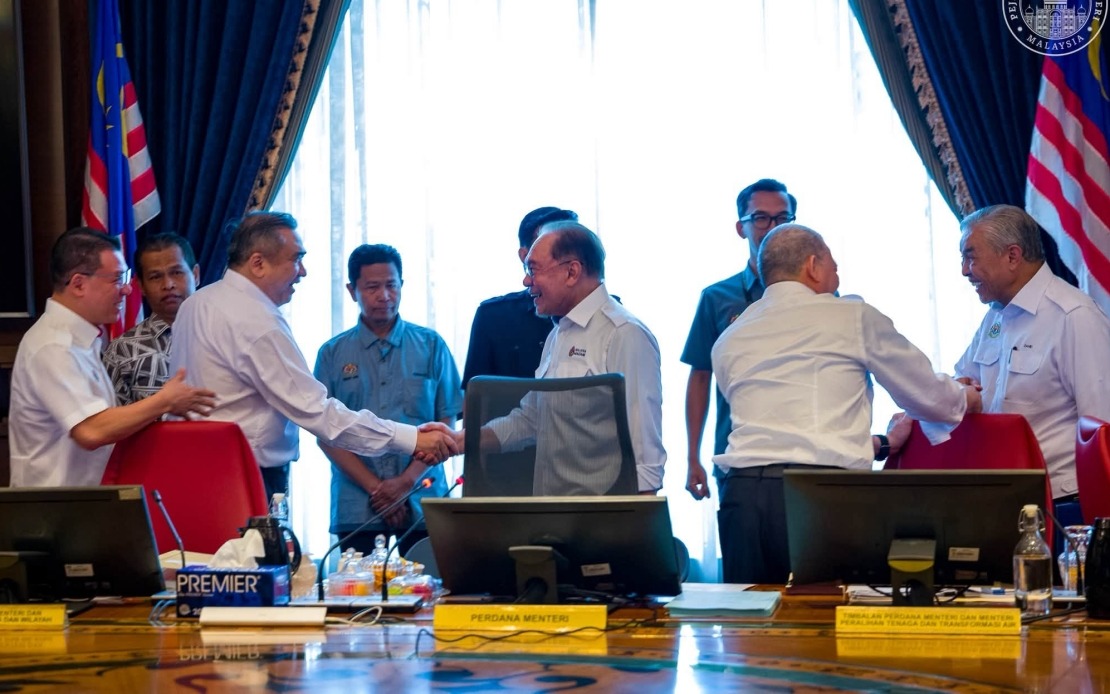
Photographs released alongside the statement displayed members of the Cabinet in an apparently relaxed setting, including Deputy Prime Minister Datuk Seri Dr Ahmad Zahid Hamidi and Transport Minister Anthony Loke. The imagery served to reinforce the visual narrative of governmental camaraderie, with participants presented as unified and at ease. Such carefully curated documentation has become standard practice in contemporary political communication, where symbolic representations of harmony carry equal weight to formal statements.
The timing of Anwar's intervention carries considerable significance given the concurrent electoral developments in Negeri Sembilan. The state assembly dissolution on June 5 initiated a sequence of events culminating in the scheduled polling date of August 1, with early voting designated for July 28. This compressed timeframe compressed intensified political activity at the state level precisely when questions about the durability of the Federal Unity Government continued to preoccupy political analysts and public discourse.
Pakatan Harapan, under Anwar's chairmanship, has committed resources to contesting all 36 state seats, positioning the coalition for a comprehensive statewide campaign. Barisan Nasional, directed by Ahmad Zahid, is fielding candidates across 25 constituencies while simultaneously negotiating an electoral arrangement with Perikatan Nasional. This bifurcated approach—where federal coalition partners adopt adversarial stances in subnational contests—has characterised Malaysian politics since the formation of the Unity Government, creating tensions that require ongoing diplomatic management.
The pantun format represented a deliberate communicative choice. Traditional Malaysian poetry forms carry cultural weight and historical resonance, conveying messages that transcend the literal text. By adopting this idiom, Anwar signalled respect for Malaysian heritage whilst simultaneously reinforcing themes of shared identity and collective purpose. The strategic deployment of cultural symbolism in political messaging has emerged as a sophisticated tool for leaders navigating complex coalition arrangements.
Commentary across digital platforms interpreted the intervention as a stabilising gesture directed at multiple audiences simultaneously. Federal coalition partners received an implicit reminder of the importance of preserving governmental coherence, whilst state-level competitors encountered a more subtle suggestion that electoral engagement need not undermine fundamental institutional relationships. The layered messaging reflected the complexity of managing simultaneous cooperation and competition within Malaysia's multi-level governmental structure.
The juxtaposition of electoral competition with coalition continuity represents a defining characteristic of contemporary Malaysian governance. The Negeri Sembilan contest exemplifies this dynamic, where two components of the federal partnership contest aggressively for state-level dominance whilst maintaining their national-level entente. Such arrangements demand exceptional political skill and institutional tolerance, as leaders must navigate between promoting their own constituencies' interests and preserving overarching system stability.
For Malaysian observers and regional commentators, the episode underscored the ongoing challenges facing the Unity Government construct. The formation of this administration in late 2022 represented an unprecedented political alignment, bringing together ideologically distinct coalitions in service of institutional stability. However, sustaining such arrangements whilst accommodating legitimate competitive impulses at subnational levels presents recurring difficulties that require constant reinforcement through symbolic and substantive means.
The substantial public engagement with Anwar's message suggested appetite among Malaysian citizens for political rhetoric emphasising harmony and collective endeavour. In an environment frequently characterised by adversarial positioning and divisive messaging, the reception accorded to this unity-focused communication indicates space for political leaders to promote inclusive narratives. However, the ultimate test of such messaging lies not in immediate digital metrics but in whether the underlying commitments to institutional cohesion can withstand the pressures of state-level electoral competition and longer-term political realignments.
As the Negeri Sembilan election approaches, the Federal Government's capacity to maintain visible unity whilst facilitating genuine democratic competition remains under observation. Anwar's poetic intervention serves as both genuine expression of political philosophy and tactical reinforcement of coalition commitments at a critical juncture. Whether such messaging proves sufficient to sustain the Unity Government through the challenging terrain ahead remains an open question that will substantially influence Malaysian politics throughout the remainder of 2024 and beyond.

