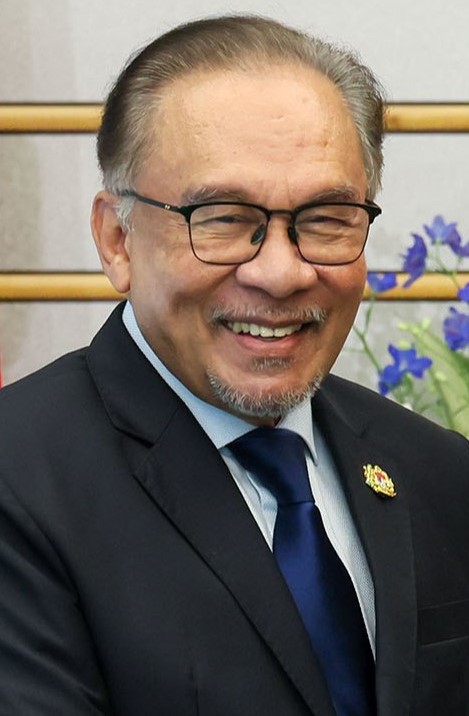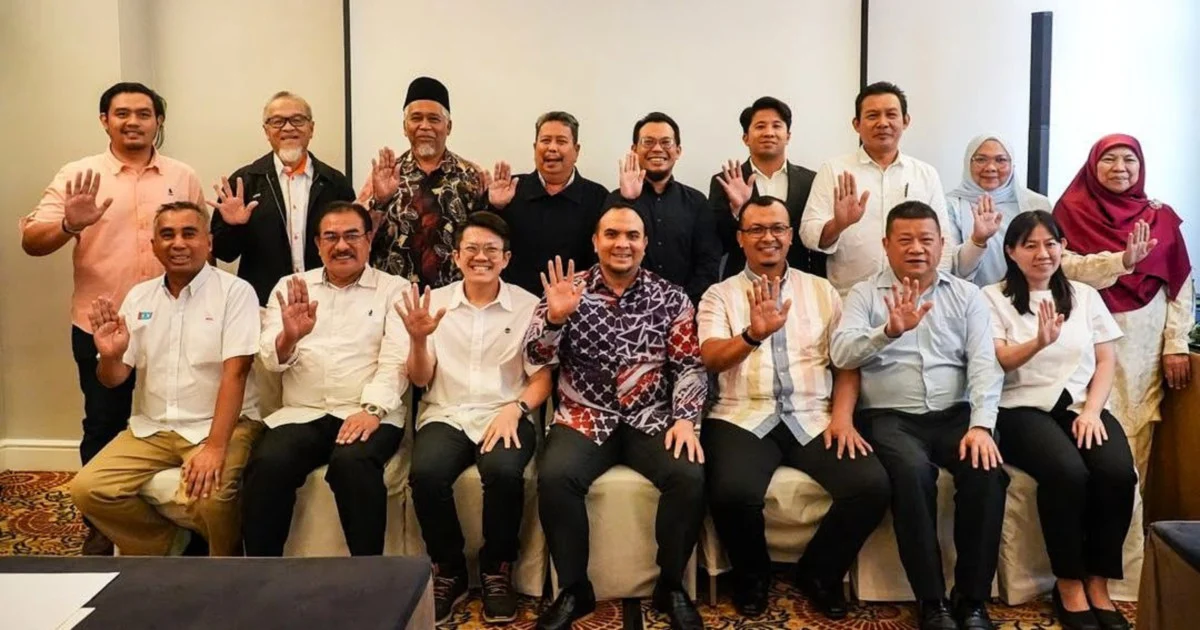
Prime Minister Datuk Seri Anwar Ibrahim's trusted political secretary, Datuk Ahmad Farhan Fauzi, has been installed as the new chairman of Pahang Pakatan Harapan, a move that underscores the federal leadership's growing involvement in shaping grassroots coalition politics ahead of crucial state-level contests. The appointment places a figure with direct access to the Prime Minister at the strategic helm of one of the country's most politically contested states, where the coalition's grip has historically remained fragile despite federal-level electoral gains.
Ahmad Farhan's elevation to the Pahang PH leadership represents a significant recalibration of power dynamics within the coalition at the state level. As the Prime Minister's political secretary, he occupies one of the most sensitive positions in government, serving as a conduit between the federal executive office and the party machinery. This background positions him uniquely to coordinate messaging, resource allocation, and strategic planning across the coalition's member parties operating in Pahang, where multiple political factions must work in concert to maintain unity.
Pahang holds particular strategic importance for Pakatan Harapan and the broader political landscape. As Malaysia's largest state by area and home to significant rural constituencies, the state wields considerable influence in national coalition dynamics. The PH's performance in Pahang has been inconsistent, and recent years have witnessed internal tensions as different party components within the coalition jostled for prominence and resources. By deploying Ahmad Farhan to the chairmanship, Anwar's administration signals determination to impose greater coherence and discipline across the state coalition's operations.
The Prime Minister's office has long recognised that state-level coordination challenges can undermine national political narratives. Party machinery at ground level often operates with considerable autonomy, sometimes pursuing local interests that conflict with broader coalition strategy. Ahmad Farhan's appointment suggests the federal leadership intends to tighten this feedback loop, ensuring that grassroots activities in Pahang align with the administration's medium-to-long-term political objectives, particularly as the next general election cycle draws closer.
For the member parties of Pakatan Harapan operating in Pahang—primarily the Parti Keadilan Rakyat, Democratic Action Party, and Parti Amanah Negara—Ahmad Farhan's leadership will require careful navigation. Each party maintains its own regional interests and constituency networks, and tensions over candidate selection and resource distribution are endemic to coalition politics. A chairman perceived as beholden primarily to the federal administration rather than balancing the various member parties' interests could potentially exacerbate existing fractures, or alternatively, enforce necessary discipline if consensus-building proves insufficient.
The appointment also reflects broader patterns in Malaysia's federal-state relations. When ruling coalitions control both national government and state assemblies, they frequently use administrative mechanisms and party apparatus to consolidate power and pre-empt opposition challenges. Pahang's mixed political composition—where opposition forces remain competitive—makes such coordination particularly important from the ruling coalition's perspective. Ahmad Farhan's installation as chairman equips the federal administration with a dedicated mechanism to monitor, coordinate, and where necessary, intervene in state-level political activities.
From a governance perspective, Ahmad Farhan brings professional competence to the role. His tenure in the Prime Minister's office implies exposure to high-level decision-making processes and administrative complexity. However, his primary credential remains proximity to Anwar rather than deep roots in Pahang's political culture or history of electoral success in the state. This outsider status could prove advantageous in overcoming local factional divisions, though it may also generate resentment among veteran Pahang politicians who view themselves as more organically embedded in the state's political ecology.
The timing of this appointment warrants attention. As Malaysia enters a period of relative political stability following the previous administration's controversial tenure, various factions within the coalition face pressure to demonstrate unity and capacity for effective governance. Pahang's political complexion matters significantly in any eventual electoral contest. The state's mixed demographic composition—encompassing urban centres, industrial zones, rural agricultural areas, and indigenous communities—makes it a bellwether for broader national trends. Ahmad Farhan's role thus carries implications beyond state-level politics alone.
Looking ahead, the appointment likely signals the administration's intention to contest the next state elections from a position of strength, with a unified coalition command structure that can rapidly mobilise resources and messaging. Whether Ahmad Farhan proves effective in this role depends substantially on his ability to maintain credibility across the member parties while executing directives from the Prime Minister's office. Coalition leadership positions require constant calibration between competing loyalties, and his success will largely determine whether Pahang PH enters the next electoral cycle as a cohesive force or fractured entity.