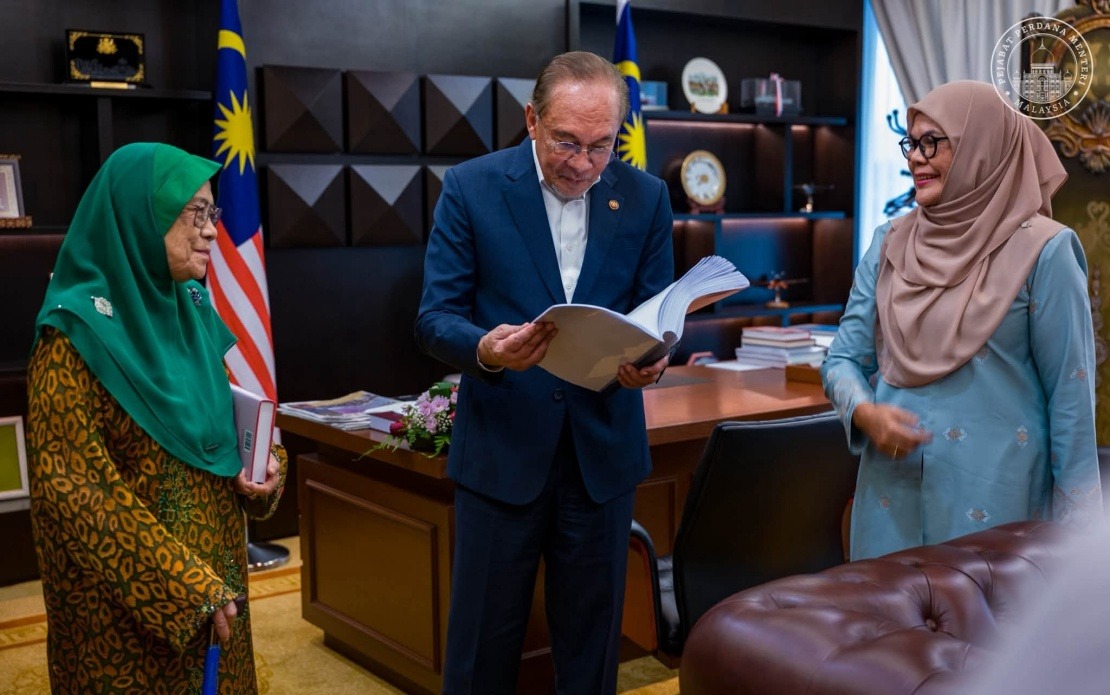
Prime Minister Datuk Seri Anwar Ibrahim has expressed optimism that a forthcoming biographical work will become a lasting resource for understanding his approach to governance and personal values. Announced via social media on July 1, the initiative reflects an effort to systematically preserve and communicate the philosophical foundations that have shaped Malaysia's current political leadership during a period of significant institutional reform.
The book, authored by Professor Dr Salinah Ja'afar from the Academy of Malay Studies at Universiti Malaya, represents a collaborative scholarly undertaking. Anwar personally participated in the documentary process, having reviewed and commented on the manuscript during its development. This hands-on involvement underscores the prime minister's commitment to ensuring accurate representation of his intellectual framework and policy thinking across decades of public service.
The project has been guided by academic rigour through the participation of Professor Emeritus Datuk Dr Nik Safiah Abdul Karim, a distinguished linguist and scholar who served as the work's academic adviser. Her involvement lends scholarly credibility to the enterprise, suggesting the book aims for intellectual substance rather than mere hagiography. Nik Safiah's reputation in Malaysian academia indicates an intention to ground the work in serious analytical foundations, likely appealing to researchers, policymakers, and students of contemporary Malaysian politics.
Anwar's direct participation included exclusive interviews with both the author and academic adviser, ensuring comprehensive coverage of his intellectual development. This methodology reflects contemporary biographical practice where subjects actively shape how their legacies are documented, allowing the prime minister to contextualise his ideas within the lived experiences and intellectual influences that have defined his trajectory. The emphasis on his reading habits and personal formative experiences suggests the book will explore not merely his policy positions but the philosophical underpinnings that inform them.
The timing of this publication initiative holds particular significance for Malaysia's political landscape. With Anwar currently serving as prime minister following a complex series of political transitions, documenting his ideas represents an attempt to establish an authoritative narrative during his tenure. For a leader whose political journey has encompassed periods of dramatic reversal and reinvention, a scholarly work offers an opportunity to explain continuities in his thinking alongside documented changes in perspective.
From a broader Southeast Asian perspective, Malaysia's political establishment increasingly recognises the value of institutional memory and documented governance philosophy. As regional governments confront complex challenges from economic transformation to democratic renewal, having recorded intellectual frameworks from sitting leaders serves several functions: it provides future policymakers with documented reasoning behind major decisions, creates a resource for academic study of leadership development, and potentially influences how successors interpret their institutional inheritance.
The book's stated focus on nation-building and personal values development touches on enduring Malaysian concerns. Nation-building remains contested terrain in a multicultural society where different political actors propose competing visions of national identity and social cohesion. By positioning his work as a reference on these matters, Anwar is staking a claim to shaping how future generations understand these foundational questions. The emphasis on personal values also reflects a strand of thinking that links individual ethical development to effective governance.
For civil society observers and political analysts in Malaysia, the publication raises questions about how contemporary political legacies are constructed and legitimised. The involvement of independent academics rather than political operatives suggests an attempt at distancing the project from partisan machinery, though the prime minister's direct participation ensures his voice remains central. This balance between scholarly independence and political purpose reflects a sophisticated understanding of how institutional credibility can be leveraged.
The book's positioning as a future reference tool indicates ambitions beyond immediate circulation. Malaysian libraries, universities, and public institutions are likely intended audiences, suggesting the work aims for permanence within Malaysia's intellectual infrastructure. This reflects a recognition that how political leaders are remembered depends significantly on documented interpretations of their thinking, which become embedded in institutional memory and educational curricula.
For Malaysian policymakers and political practitioners currently formulating responses to regional challenges, access to systematically articulated thinking from the sitting prime minister offers practical value. Rather than reconstructing Anwar's philosophy from scattered speeches and policy announcements, a comprehensive written work permits more rigorous engagement with his intellectual approach. This may prove particularly useful as Malaysia navigates technological disruption, economic restructuring, and evolving geopolitical relationships in Southeast Asia.
The scholarly apparatus surrounding the book's development—involving established academics and institutional affiliations—suggests aspirations toward academic legitimacy beyond political circles. This approach mirrors how some regional leaders have sought to establish intellectual influence extending beyond their formal political tenure. By contributing to Malaysian scholarly discourse, Anwar positions himself within conversations about governance, leadership, and national development that will continue after his presidency concludes.
The emphasis on documenting "way of thinking" rather than merely listing achievements implies the book will attempt philosophical coherence. This matters for how political legacies are understood and potentially applied. If the work succeeds in articulating underlying principles that connect disparate policy positions, it may influence how successors approach governance challenges. Conversely, if inconsistencies emerge between documented philosophy and implemented policies, the book may become a resource for critical analysis of the gap between political ideals and practical governance.

