The MADANI Government under Prime Minister Datuk Seri Anwar Ibrahim has garnered acknowledgment across multiple sectors for its track record on investment generation, economic management, and currency stability, according to Datuk Azman Abidin, the Prime Minister's political secretary. Azman, speaking in Kuala Lumpur on August 19, contended that these accomplishments demonstrate Anwar's administrative competence and provide sufficient grounds for voters to grant him a fresh mandate to lead the country for another term. The assertions align with recent commentary from political observers who have credited the administration with robust economic stewardship and suggested it deserves latitude to pursue its reform programme further.
In detailing the government's strategic direction ahead of key national occasions and fiscal announcements, Azman indicated that the administration intends to broaden the reach of its policy successes to encompass all demographic groups within society. He flagged that several fresh initiatives and policy pronouncements from the Prime Minister are anticipated before Malaysia's dual patriotic celebrations in August and September, as well as ahead of the parliamentary submission of Budget 2027. These announcements are widely expected to address citizen concerns and demonstrate tangible governmental benefits across communities. The timing of such measures during a pre-election calendar suggests deliberate political choreography designed to showcase achievements and maintain momentum with the electorate.
Azman expressed optimism that voters will make considered judgments regarding the government's demonstrated accomplishments and track record when they next cast their ballots. His confidence hinges on the belief that citizens will weigh objective performance metrics—investment inflows, macroeconomic indicators, and currency performance—against any competing narratives. This assessment reflects a broader governing strategy predicated on the notion that strong economic fundamentals and measurable progress in priority areas will resonate with voters across different income brackets and regions. The political calculation appears to position economic stewardship as the primary differentiator for the administration heading into electoral competition.
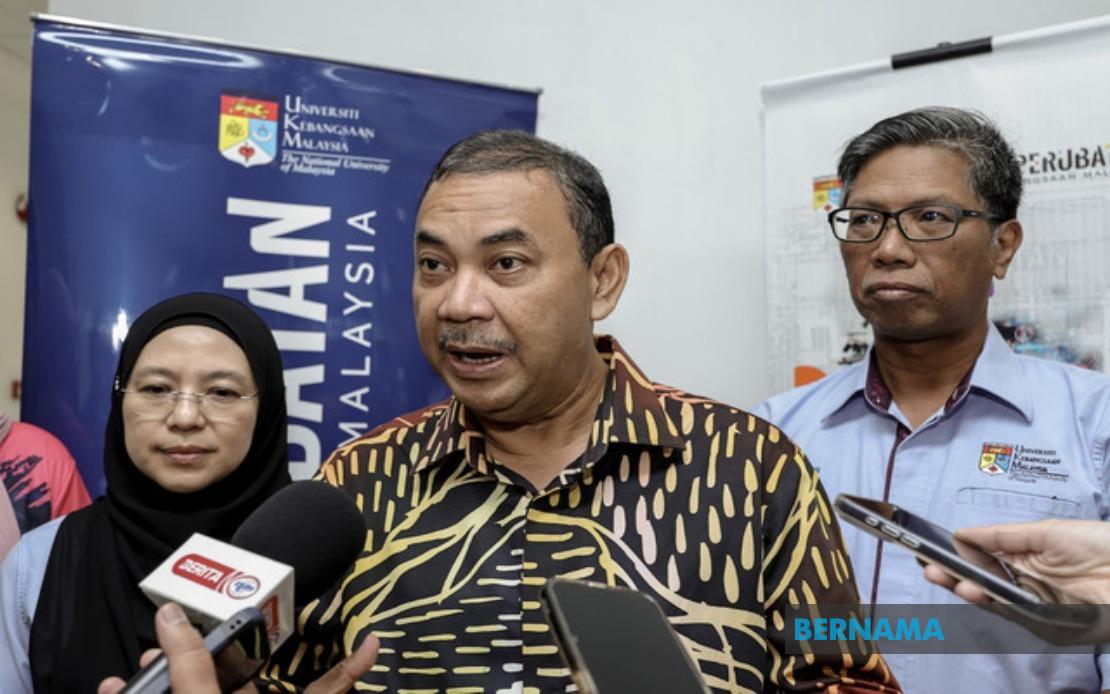
Beyond economic scorecard discussions, Azman's remarks touched on educational priorities that illustrate the government's broader developmental vision. Speaking at the inauguration of STEM Exploration 2.0 at Universiti Kebangsaan Malaysia, a programme jointly coordinated by the institution's Department of Tissue Engineering and Regenerative Medicine, he framed science and technology education as foundational to national competitiveness. The initiative brought together 200 Form Three students from the federal territory and surrounding states to engage with practical scientific exploration through microbiology work, immunology and cardiovascular system instruction, and demonstrations of three-dimensional printing applications in medicine. These hands-on engagements aim to spark vocational interest among younger learners and build an informed pipeline of talent for advanced scientific fields.
Azman advocated for a fundamental reorientation of how STEM subjects are integrated into Malaysia's education system. Rather than remaining peripheral electives, he argued that science and technology education must become integral to curriculum architecture if the nation is to navigate escalating demands posed by rapid technological change globally. This educational philosophy underscores recognition that Malaysia's long-term economic dynamism depends on cultivating human capital proficient in emerging technologies and scientific disciplines. The statement carries implicit acknowledgment that regional competitors are aggressively building similar talent pools, and Malaysia risks falling behind without corresponding investment in science literacy from secondary levels upward.
The timing of Azman's participation in the STEM programme reflects broader governmental messaging about competence in forward-looking policy domains. By associating the administration with education initiatives focused on future skill-building, the political messaging extends beyond current economic data to encompass longer-term visionary governance. This dual narrative—current achievements combined with future-oriented policy—constructs a comprehensive case for continuity of leadership. It suggests voters should consider not merely recent performance but also the government's demonstrated capacity to think strategically about structural challenges confronting the nation.
The programme's second iteration is slated for expansion beyond its current geographic footprint of Kuala Lumpur, Selangor, and Negeri Sembilan, with plans to scale nationwide. This expansion signals commitment to democratising access to scientific learning opportunities across the country, addressing potential regional disparities in educational exposure. For states outside the Klang Valley and its immediate vicinity, such initiatives could offer meaningful engagement with hands-on STEM instruction that might otherwise remain inaccessible. The nationwide rollout also represents a soft power investment in constructing political goodwill in constituencies beyond the federal capital and economically dominant zones.
Azman's exhortation to participating students—to view the programme as an initial stepping stone toward larger aspirations in science and governance—carries resonance within Malaysian educational discourse. His assertion that statesmen and scientists are not created instantaneously but through incremental knowledge-building acknowledges the protracted nature of talent development. This framing positions the government as an institutional actor invested in mentoring younger generations toward leadership and innovation-oriented careers. In doing so, it constructs a narrative of continuity between present governance and future-generation stewardship.
The overlapping themes in Azman's statements—economic performance, educational investment, and visionary leadership—form an integrated political message directed toward multiple constituencies. Urban voters and investors receive reassurance about macroeconomic competence; parents and educators encounter evidence of commitment to quality learning environments; younger citizens encounter opportunities for hands-on engagement with future-facing skill domains. This segmented messaging strategy allows the government to address diverse voter priorities simultaneously while maintaining consistent overarching themes about administrative effectiveness and strategic foresight.
For Malaysian observers and regional analysts monitoring electoral politics in Southeast Asia's third-largest economy, the statements reflect anticipated pre-election positioning. As the nation moves toward its next general election—the timing of which remains subject to constitutional parameters but could occur within the coming year—the governing coalition's messaging will increasingly emphasise achievements, future-oriented policy, and leadership continuity. The emphasis on economic gains and educational initiatives suggests a governing strategy predicated on delivering demonstrable benefits rather than primarily on ideological appeals or partisan messaging. Whether such a programme-focused approach successfully translates into electoral mandate renewals will depend substantially on how deeply voters across different regions and socioeconomic strata perceive these accomplishments as relevant to their immediate circumstances and future prospects.

