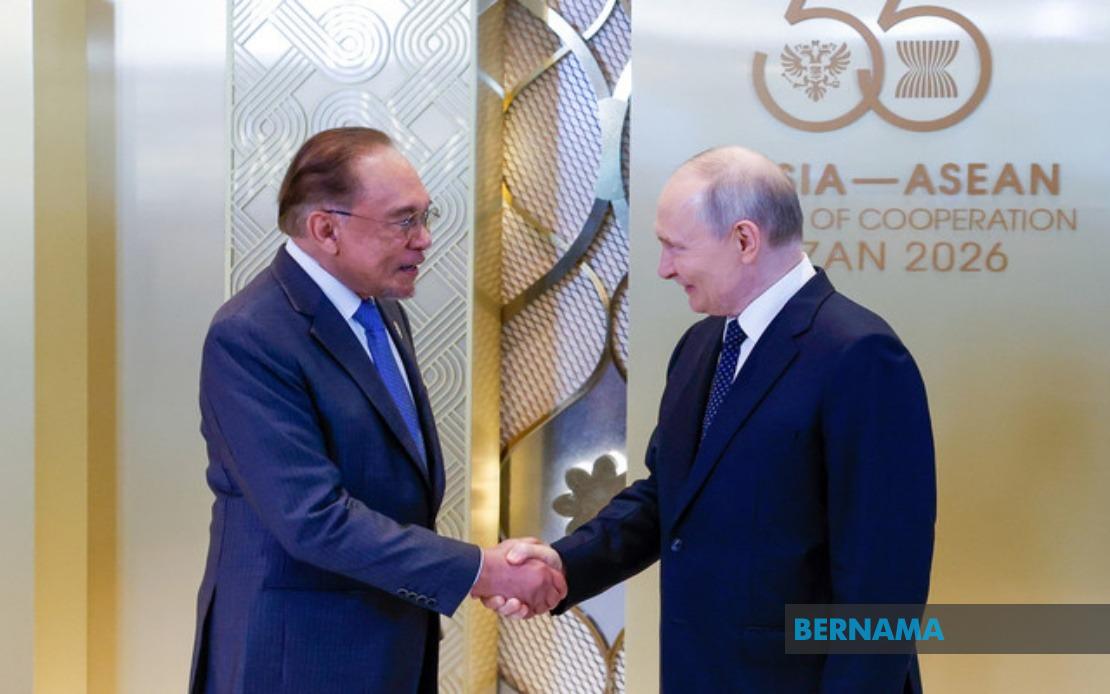
Prime Minister Datuk Seri Anwar Ibrahim's international engagement strategy is receiving strong public endorsement, with observers crediting his diplomatic missions to Russia and Turkmenistan as pivotal moves to fortify Malaysia's economic position amid global uncertainties. The leadership consensus reflects growing confidence that Malaysia's ability to navigate complex geopolitical relationships translates directly into tangible benefits for the nation's prosperity and standing in international commerce.
Dr Mohd Ramlan Mohd Arshad, a senior lecturer at Universiti Teknologi MARA's Faculty of Administrative Science and Policy Studies, emphasizes that these diplomatic overtures open substantive pathways for diversifying Malaysia's economic footprint across multiple sectors. By expanding engagement into new geographic markets, particularly resource-rich regions, the nation can reduce its vulnerability to concentrated trade dependencies and insulate itself against sudden shifts in global supply chains. The academic contends that Anwar's methodology reflects a pragmatic worldview—one that prioritises Malaysia's strategic positioning rather than ideological alignment, a critical distinction in an era when nations compete fiercely for investment and resource access.
The diplomatic itinerary has specifically unlocked opportunities spanning trade, direct investment, energy infrastructure, agricultural cooperation, and technological collaboration. Each sector represents potential employment generation and revenue streams for Malaysia's economy. The energy dimension, in particular, holds strategic weight given Malaysia's position as a developing economy with consistent energy demands. By establishing long-term partnerships with established energy suppliers, Malaysia can enhance its industrial competitiveness and provide businesses with greater cost certainty for their operations.
Siranjeev Ram, Policy and Think Tank Exco member at the Malaysian Indian Youth Council, frames international respect as a multiplier effect—when Malaysia's premier commands deference among global powers, that standing cascades into opportunities for Malaysian entrepreneurs and enterprises seeking to establish themselves internationally. This soft power advantage becomes especially valuable for small and medium enterprises attempting to penetrate new markets, as they benefit from the credibility and open doors that a well-regarded national leadership provides. Ram stresses that genuine foreign policy must remain independent and pragmatic, avoiding entrapment in rigid ideological camps while remaining sensitive to Malaysia's diverse domestic constituencies and their varied economic interests.
The concrete outcomes from Anwar's travels demonstrate how diplomatic engagement translates into sectoral wins. His two-day working visit to Kazan for the ASEAN-Russia Commemorative Summit resulted in Russia committing to supply petroleum, oil, and gas to Malaysia under a more durable arrangement than previous annual or seasonal contracts. This agreement, currently undergoing final refinement and involving strategic coordination between Petronas and Tatarstan, represents a significant shift toward supply stability. For Malaysian manufacturers and power generators, stable energy pricing and guaranteed supply availability reduce operational risk and capital expenditure volatility.
Parallel developments in Turkmenistan underscore Anwar's ability to leverage Malaysia's state-owned energy major into expanded operations within Central Asia's hydrocarbon sector. Petronas's achievement in securing a 100 per cent participating interest in the exploration of oil and gas resources in Offshore Blocks 19 and 20 in the Caspian Sea extends Malaysia's economic reach into one of the world's most resource-endowed regions. The company simultaneously signed a Long-Term Framework Agreement to investigate development possibilities in the Galkynysh Gas Field, recognized globally as one of the largest gas reserves, alongside downstream and gas-processing ventures. These arrangements promise substantial returns and technological knowledge transfer that benefit Malaysia's energy sector expertise.
Dr Lim Yu Xiang, commenting from a business perspective, voices confidence that extracting favourable contractual terms through strong negotiating positions creates lasting competitive advantages. The Prime Minister's visible global credibility, he suggests, enhances Malaysia's bargaining capacity and attracts serious proposals from reputable counterparts. This reputational dimension matters considerably when nations and corporations evaluate potential partnerships; they assess not only the technical and financial merits of a deal but also the reliability and judgment of the partner nation's leadership. Anwar's international profile consequently translates into better terms available to Malaysian entities in negotiations.
Fiona Lim, a media marketing specialist, articulates how international visibility reshapes global perceptions of Malaysia's potential. When a nation's leader garners recognition and respect on the world stage, that esteem extends to the entire country's brand value. International investors and trading partners view Malaysia more favourably, perceiving it as a stable, forward-thinking destination worthy of capital commitment. This perception shift may prove decisive for Malaysia in competing against regional neighbours for foreign direct investment, particularly in high-technology and high-value manufacturing sectors where investor confidence carries outsized importance.
The broader context underscores why these diplomatic initiatives matter for Malaysia's medium-term economic strategy. Global geopolitical fragmentation is intensifying, with traditional trading blocs realigning and new power structures emerging across Asia, Europe, and beyond. Malaysia, positioned at a critical juncture between major economic zones, stands to benefit disproportionately from leaders capable of maintaining productive relationships across ideological and structural divides. Anwar's approach—engaging Russia and Central Asia without abandoning traditional Western partnerships or ASEAN solidarity—preserves Malaysia's flexibility and maximizes available opportunities.
The consensus among observers reflects an understanding that economic resilience flows partly from political acumen and diplomatic skill. Anwar's initiatives are not merely symbolic gestures but strategic moves designed to address genuine economic challenges. Energy security, access to emerging markets, and technology partnerships represent pressing priorities for a middle-income nation aspiring to higher-income status. By pursuing these objectives through systematic diplomatic engagement, Anwar positions Malaysia to navigate the next decade's economic transitions more successfully than competitors lacking similar international standing.
Public backing for these efforts suggests Malaysians grasp the connection between effective leadership and tangible prosperity. As long as international engagement translates into employment opportunities, competitive industries, and improved living standards, the public appetite for continued diplomatic activism appears robust. The test now lies in whether the agreements forged translate swiftly into visible economic benefits that reach ordinary Malaysians, cementing the virtuous cycle between respected leadership and shared prosperity.
%22%2F%3E%3C%2Fpattern%3E%3C%2Fdefs%3E%3Crect%20width%3D%22100%25%22%20height%3D%22100%25%22%20fill%3D%22url(%23ph17rgmg)%22%2F%3E%3Crect%20width%3D%22100%25%22%20height%3D%22100%25%22%20fill%3D%22url(%23ph17rgmp)%22%2F%3E%3Ctext%20x%3D%2250%25%22%20y%3D%2250%25%22%20text-anchor%3D%22middle%22%20dominant-baseline%3D%22central%22%20fill%3D%22rgba(255%2C255%2C255%2C0.95)%22%20font-family%3D%22Georgia%2C%20'Times%20New%20Roman'%2C%20serif%22%20font-weight%3D%22700%22%20font-size%3D%22320%22%20letter-spacing%3D%22-0.02em%22%3EPM%3C%2Ftext%3E%3C%2Fsvg%3E)