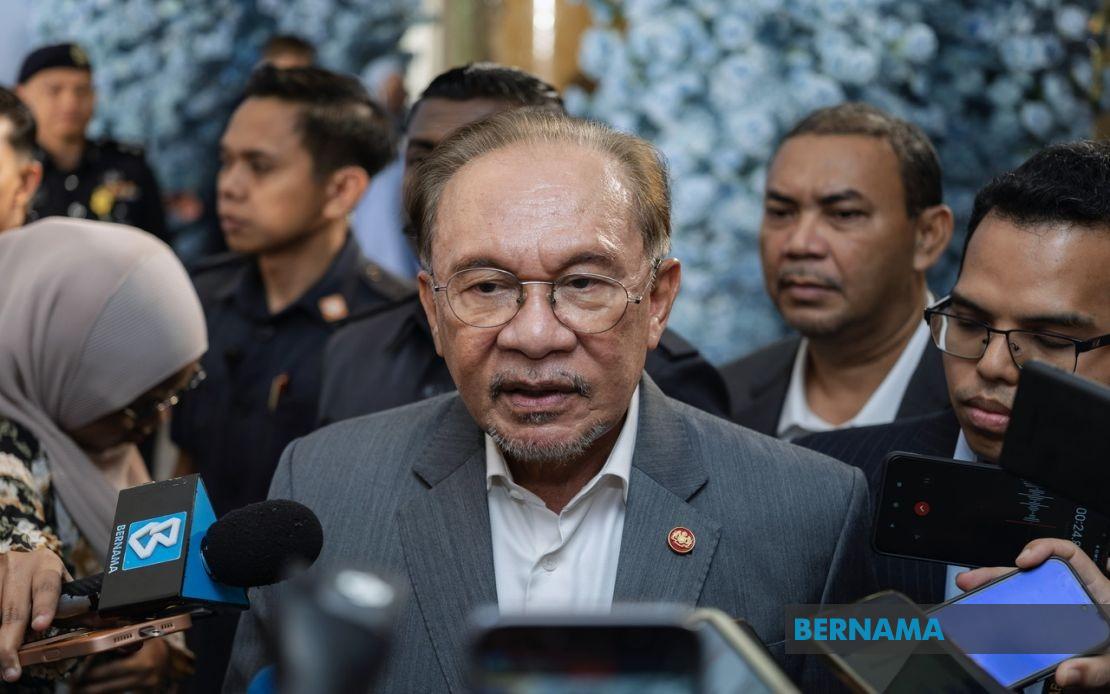
Prime Minister Datuk Seri Anwar Ibrahim acknowledged on Monday that he has not yet received detailed information regarding the internal disputes that led to four Melaka DAP state assemblymen stepping down from their positions in the state government. Speaking to reporters in Kuala Lumpur, the Pakatan Harapan chairman indicated that the coalition's senior leadership would soon investigate the matter and determine what follow-up steps are necessary to address the situation.
The four lawmakers—Allex Seah Shoo Chin from Kesidang, Low Chee Leong from Kota Laksamana, Leng Chau Yen from Banda Hilir, and Kerk Chee Yee from Ayer Keroh—announced their immediate departure from the state government the previous day. Their withdrawal came in response to constitutional amendments passed by the Melaka State Legislative Assembly that would enable the appointment of nominated state assemblymen, a move that sparked significant discontent within the DAP faction.
The constitutional amendments represent a contentious shift in the state's governance framework, introducing a mechanism for nominated members to join the assembly without undergoing democratic elections. This development has evidently triggered substantial internal friction within the DAP, whose representatives have traditionally championed democratic principles and grassroots representation. The party's emphasis on electoral legitimacy stands in tension with the appointment-based system now authorised in Melaka's legislative framework.
On the same day the lawmakers announced their departure, Anwar had made a public appeal to the Melaka DAP to reconsider their decision, urging them to prioritise the state's development agenda and the welfare of citizens over internal political disputes. His statement reflected an attempt to contain what has become an embarrassing fracture within the government coalition just when unity and stability are critical for the government's broader reform agenda.
The situation underscores growing tensions within Pakatan Harapan's component parties in certain states, particularly regarding governance structures and internal decision-making processes. The DAP's withdrawal from Melaka's state government raises questions about the coalition's ability to maintain cohesion and manage disagreements without resorting to dramatic public exits that undermine governmental continuity.
For Malaysian observers, the Melaka crisis illustrates the fragility of coalition administrations, especially in states where one component party holds significant legislative strength. The appointment of nominated assemblymen, while legally permissible under constitutional amendments, represents a departure from purely electoral principles and has evidently created an ideological rift within DAP ranks, between those willing to work within the amended framework and those viewing it as compromising democratic standards.
The timing of this withdrawal is particularly significant given the government's ongoing efforts to stabilise the nation's political environment following previous transitions. Any breakdown in coalition discipline, particularly when component parties abandon state governments, threatens to diminish public confidence in the administration's capacity to deliver governance effectively. The four DAP assemblymen's decision signals that internal disagreements are reaching a threshold where some representatives feel compelled to take dramatic action rather than engage in prolonged negotiation.
Anwar's acknowledgment that he remains uninformed about the full details of the situation suggests a potential communication gap between federal party leadership and state-level representatives. This knowledge deficit raises broader questions about the Pakatan Harapan coalition's internal coordination mechanisms and whether grievances at the state level are being adequately escalated and addressed at the central level before they result in public departures.
The broader implications for the Melaka state government remain uncertain. The loss of four DAP assemblymen potentially alters the balance of power in the state assembly, depending on whether these departures affect the government's ability to maintain a working majority. Should the government's stability be genuinely threatened, pressure might mount for early intervention or restructuring, further destabilising the region's politics and setting a concerning precedent for other state administrations within the Pakatan Harapan coalition.
Moving forward, the Pakatan Harapan leadership faces pressure to address not only the immediate circumstances of the Melaka situation but also to examine the underlying issues that precipitated the walkout. Whether the coalition can reconcile differing positions on appointed representation systems and rebuild trust among component parties will likely determine whether this incident remains an isolated state-level crisis or signals a broader erosion of coalition unity.
The episode also highlights the delicate balance required in managing multi-party coalitions, where component parties maintain distinct ideological positions and organisational autonomy even while sharing government responsibility. The willingness of the four DAP representatives to exit rather than compromise suggests that certain fundamental principles remain non-negotiable for significant party factions, a reality that the central leadership cannot ignore without risking further fractures.

