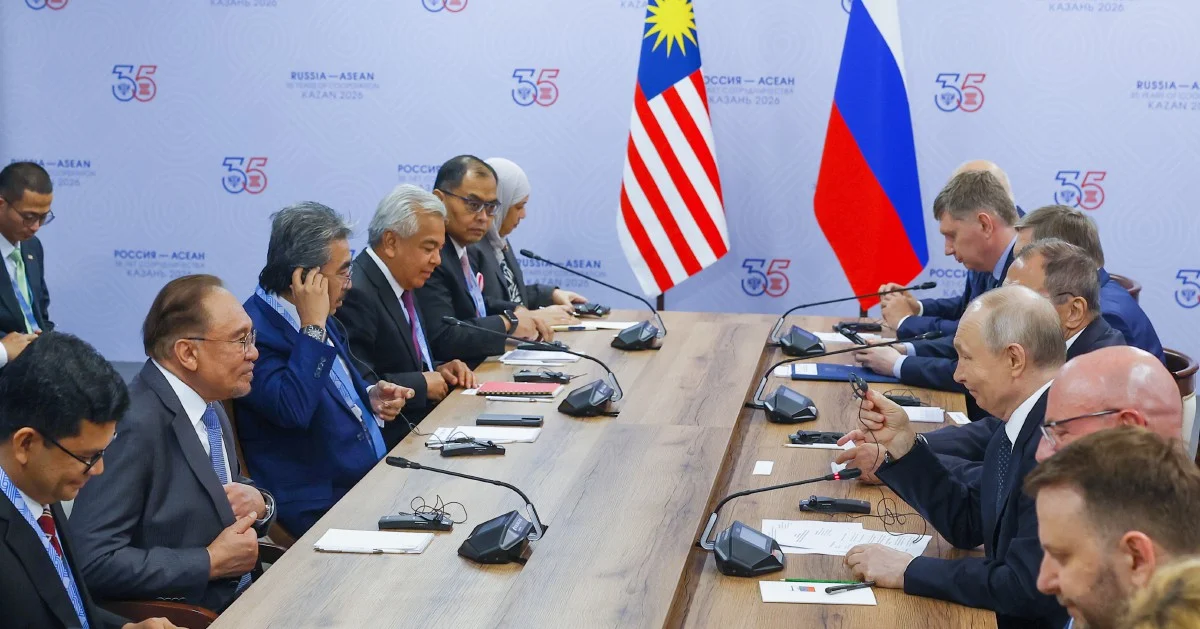
Prime Minister Datuk Seri Anwar Ibrahim has publicly thanked Russian President Vladimir Putin for backing Malaysia's efforts to deepen energy cooperation, particularly through Petroliam Nasional Bhd (Petronas), the national oil and gas giant. The remarks, made during a bilateral engagement in Kazan, underscore Malaysia's strategic pivot towards diversifying its energy partnerships beyond traditional Western allies, a move that carries significant implications for the nation's long-term resource security and foreign policy positioning in an increasingly multipolar world.
The appreciation extended to Putin reflects Malaysia's recognition of Russia's strategic importance as an energy supplier and technology partner, especially as global energy markets face significant disruption from geopolitical tensions and the transition towards renewable sources. For Petronas, which operates across multiple continents and manages Malaysia's substantial hydrocarbon reserves, collaboration with Russian energy firms opens opportunities for technological exchange, exploration expertise, and potential joint ventures in unconventional energy extraction. This mirrors a broader trend across Southeast Asia, where national oil companies are seeking partnerships that enhance operational capacity and provide access to advanced techniques for maximising resource productivity.
The energy sector represents a cornerstone of Malaysia's economic strategy, contributing substantially to government revenues and employment across the supply chain. Petronas, as the custodian of national hydrocarbon resources, plays a crucial role in maintaining energy security whilst generating foreign exchange through crude oil and liquefied natural gas exports. Any expansion of cooperation with Russian counterparts could involve technical assistance in offshore exploration, deepwater drilling operations, or enhanced oil recovery methods—areas where Russia possesses considerable expertise from its operations in challenging environments such as the Arctic and Eastern Siberia.
From a geopolitical standpoint, Malaysia's engagement with Russia on energy matters reflects the country's deliberate balancing act on the global stage. Despite facing pressure from Western nations regarding their relationships with Moscow, Malaysia has maintained pragmatic diplomatic ties, prioritising economic interests whilst avoiding alignment with any single bloc. This approach has allowed Malaysia to benefit from partnerships with the United States, China, Russia, and the European Union simultaneously, a delicate equilibrium that serves national interests even as international divisions harden over numerous issues.
The timing of Anwar's expression of gratitude to Putin also carries significance within Malaysia's domestic political landscape. The Prime Minister has consistently championed a vision of Malaysia as a bridge-building nation capable of maintaining productive relationships across ideological and geopolitical divides. By publicly acknowledging Russian support for energy cooperation, Anwar reinforces this narrative and demonstrates to domestic stakeholders that his government can secure beneficial partnerships regardless of international pressures or sanctions regimes affecting Moscow.
For Malaysian energy security, the importance of cultivating diverse partnerships cannot be overstated. The nation remains heavily dependent on fossil fuels, with natural gas playing a vital role in electricity generation and industrial processes. Diversifying energy cooperation partners reduces vulnerability to supply disruptions and ensures that Malaysia can negotiate favourable terms for technology transfer and resource access. Russian expertise in natural gas processing and pipeline infrastructure could prove particularly valuable as Malaysia seeks to optimise its LNG export capabilities and maintain competitive advantage in Asian energy markets.
Petrolas itself has a track record of international collaboration, operating in more than 30 countries across five continents. The company's success in challenging environments and its capacity to manage complex offshore operations make it an attractive partner for international companies. Collaboration with Russian firms could enhance Petronas' technological capabilities, particularly in areas where Russian companies have pioneered innovative solutions for energy extraction in difficult geological or climatic conditions. Such partnerships also create opportunities for Malaysian engineers and technicians to acquire new skills transferable across projects globally.
The energy cooperation between Malaysia and Russia occurs within a broader context of Asia-Pacific energy dynamics. Across the region, nations are grappling with rising energy demand, climate change imperatives, and the need to maintain stable, affordable supplies. Malaysia, as a significant energy producer and consumer within ASEAN, has strategic weight in regional energy discussions. Its ability to forge partnerships with major global energy powers like Russia contributes to energy security not only domestically but potentially across Southeast Asia, particularly if cooperation leads to increased supplies available to the regional market.
Looking forward, the appreciation expressed by Anwar suggests that substantive discussions regarding energy cooperation frameworks may already be underway or in advanced stages of development. Whether these translate into formal agreements on joint exploration projects, technology sharing arrangements, or increased bilateral trade in hydrocarbons will determine the practical impact of this diplomatic gesture. The Malaysian public and energy sector stakeholders will be watching closely for announcements of specific projects that could generate employment, revenue, and technological advancement for the nation's energy industry.
Ultimately, Anwar's acknowledgement of Putin's support reflects a pragmatic approach to international relations that prioritises Malaysia's economic interests and energy security. In an era of intensifying great power competition and shifting global alliances, Malaysia's ability to maintain productive relationships with multiple major powers, including Russia, enhances its strategic autonomy and provides flexibility in pursuing national objectives. The energy sector, as a cornerstone of Malaysia's economy and geopolitical influence, naturally becomes a focal point for such diplomatic engagement, promising potential benefits for Petronas, Malaysian workers, and the broader national interest.