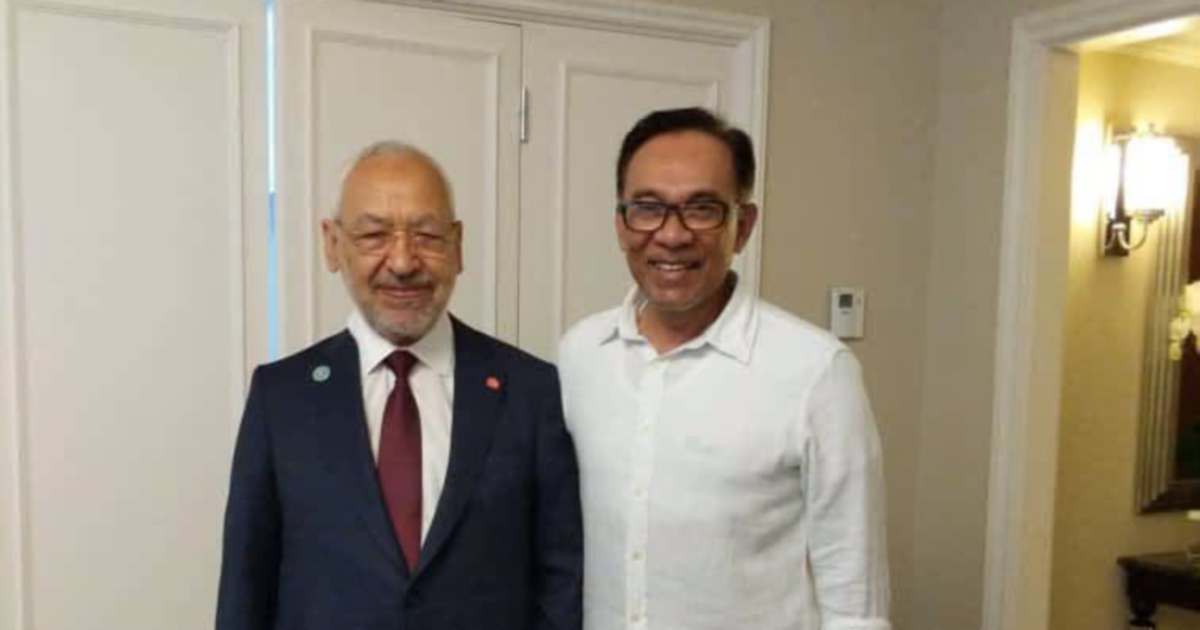
Prime Minister Datuk Seri Anwar Ibrahim has stepped into an increasingly sensitive political dispute within Tunisia by appealing directly to President Kais Saied for the release of Sheikh Rached Ghannouchi, a prominent Islamist political leader currently held in detention. The intervention, communicated through a formal letter from Malaysia's chief executive to the Tunisian head of state, signals Anwar's willingness to engage in delicate diplomatic outreach on behalf of imprisoned political figures, particularly those perceived to represent Islamic political movements.
Ghannouchi's detention and prosecution within Tunisia have drawn international scrutiny, placing Kais Saied and his government under considerable pressure from various quarters. The Tunisian president, who consolidated power through extraordinary measures during 2021, has faced mounting criticism from rights organisations and international observers concerning the treatment of political opponents and the state of judicial independence within the North African nation. Ghannouchi, as a founding figure of Ennahda, Tunisia's major Islamist party, represents a significant opposition voice that has been systematically marginalised under Saied's increasingly authoritarian administration.
Anwar's diplomatic move carries particular weight given Malaysia's own complicated history with Islamist politics and governance. The Malaysian prime minister, who himself endured imprisonment during the final years of the Mahathir administration and has navigated complex relationships with Islamic parties throughout his political career, understands the tensions between secular governance and Islamist participation in democracy. His appeal on humanitarian grounds rather than on strictly political or ideological bases reveals a calculated approach designed to emphasise universal principles of fair treatment and dignity rather than partisan considerations.
The humanitarian angle that Anwar has chosen to emphasise likely reflects genuine concerns about Ghannouchi's condition and treatment within the Tunisian prison system, where reports have indicated difficult circumstances for political detainees. By framing the request around human welfare rather than political grievance, Anwar's letter arguably stands a better chance of gaining traction with Saied's government, which remains deeply defensive about international criticism of its human rights record. This diplomatic framing also allows Anwar to make the appeal without explicitly endorsing Ghannouchi's political positions or appearing to challenge Tunisia's sovereign right to prosecute individuals for crimes under its own laws.
The broader regional implications of this intervention cannot be overlooked. Malaysia, as a Muslim-majority nation with significant Islamist political movements of its own, occupies a unique position within the Southeast Asian and Arab diplomatic landscapes. Anwar's engagement with Tunisia's political crisis suggests that Malaysian foreign policy intends to actively champion humanitarian concerns affecting Muslim populations and Islamic political actors globally, positioning the country as an advocate for those facing persecution on grounds perceived to be related to their religious or political identity.
Tunisia's political trajectory under Kais Saied has represented a dramatic departure from the country's relatively progressive post-2011 constitution and the inclusive approach to Islamist participation that characterised the immediate post-Ben Ali era. Ghannouchi's imprisonment must be understood within this context of democratic backsliding and the concentration of executive authority. The detention of figures like Ghannouchi has effectively eliminated meaningful opposition voices and transformed Tunisia from a model of democratic transition in the Arab world into an increasingly personalised autocracy.
The relationship between Malaysia and Tunisia, though historically limited in intensity compared to ties with Arab states closer to the Mediterranean, has nonetheless included diplomatic engagement on matters affecting the Muslim world. Malaysia's approach to international relations has consistently emphasised solidarity with Muslim communities and concerns while attempting to maintain balanced relationships with the broader international community. Anwar's letter thus fits within a pattern of Malaysian foreign policy that seeks to leverage the country's unique position as a democratic, Muslim-majority nation with genuine international credibility.
From a practical diplomatic perspective, the success of Anwar's appeal remains uncertain. Kais Saied has demonstrated considerable resistance to international pressure campaigns and has presented his actions as necessary measures to protect Tunisia from what he characterises as threats to national stability and constitutional order. The Tunisian president, having previously dismissed international concerns about democratic deterioration and judicial independence, may view an appeal from a foreign leader as unwelcome interference in domestic affairs, regardless of the humanitarian framing employed.
Nevertheless, the act of sending the letter itself carries symbolic importance within broader international discourse surrounding Tunisia's political situation. It demonstrates that the deteriorating conditions faced by political prisoners in Tunisia are generating concern among significant regional actors, particularly those with their own sensitivity to issues of political imprisonment and abuse. Anwar's intervention, whether ultimately productive or not, sends a clear message that Malaysia views the humanitarian treatment of detainees as an issue warranting diplomatic attention at the highest levels.
The appeal also reflects evolving norms within Malaysian foreign policy regarding the defence of Islamist and Muslim political actors facing persecution. Whether Ghannouchi is ultimately released or whether additional international pressure contributes to improvements in his treatment, the Malaysian government's engagement signals a commitment to advocating for the rights and dignity of imprisoned political figures whose situations align with Malaysia's broader strategic interests in supporting Muslim voices within the international system.

