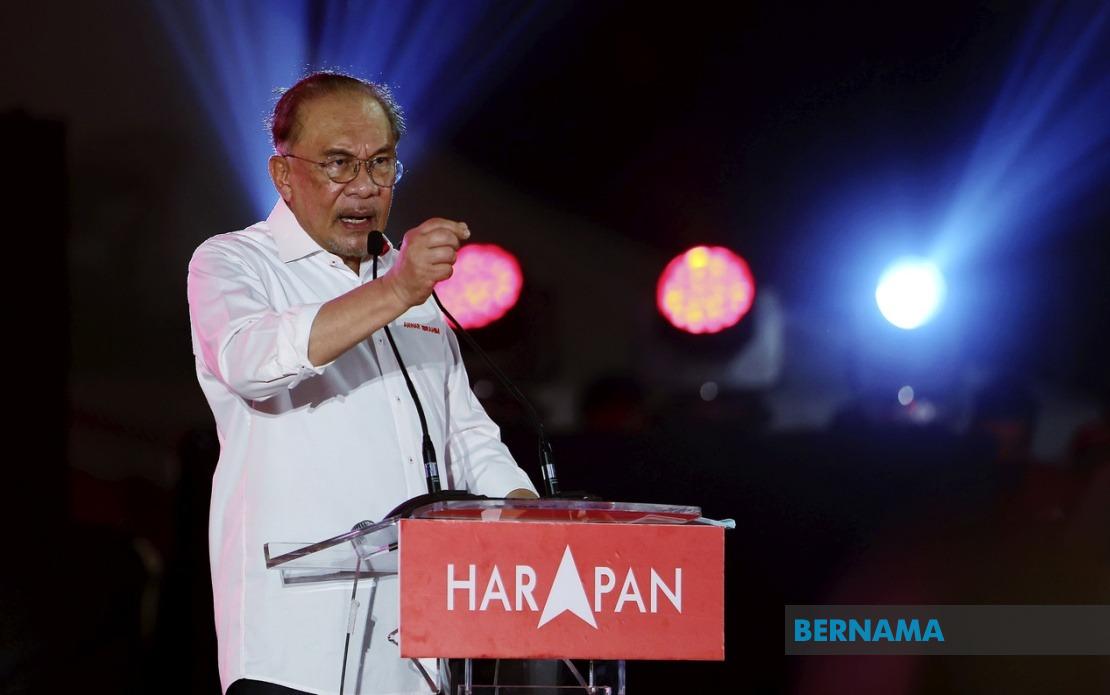
Prime Minister Datuk Seri Anwar Ibrahim has issued a pointed call for political restraint ahead of the 16th Negeri Sembilan State Election, warning all contenders against weaponising contentious matters related to the country's royal institutions and constitutional framework. Speaking at a Pakatan Harapan candidate announcement ceremony in Kuala Pilah on July 14, Anwar underscored the distinction between legitimate political competition and inflammatory rhetoric that could fracture social cohesion. His message signals growing concern within the ruling coalition about the tenor of state-level campaigns and the risk that electoral battles might spill into territory that threatens foundational national institutions.
Anwar's intervention reflects a broader tension in Malaysian politics: how to balance competitive electoral dynamics with the need to protect institutions considered sacred under the constitutional settlement. The Prime Minister framed his warning within a call for responsible democracy, acknowledging that differing political viewpoints are inevitable and indeed necessary in a functioning system. However, he drew a clear line between disagreement and the deployment of slander or deliberate divisiveness, suggesting that certain redlines remain off-limits even in the heat of campaign season. This distinction carries particular weight given Malaysia's history of communal sensitivity around constitutional matters and the position of the Malay-Muslim majority within the federal compact.
The timing of Anwar's remarks carries significance for Negeri Sembilan specifically. As a state with a reigning Ruler, questions of royal prerogative and state-level constitutional arrangements are never far from political consciousness. The incumbent Menteri Besar Datuk Seri Aminuddin Harun, whom Anwar praised as a cooperative and effective administrator, leads a state government that must navigate both federal oversight and local royal considerations. By front-loading warnings about institutional respect, PH appears to be inoculating its campaign against any opposition attempts to stoke controversy around governance structures or decision-making processes that involve the Negeri Sembilan Darul Khusus administration.
The composition of PH's candidate slate—36 nominees representing a mix of fresh talent and seasoned operatives from PKR, DAP, and Amanah—suggests the coalition is pitching itself as a vehicle for generational renewal within institutional bounds. Notably, Aminuddin will seek re-election in the Linggi state seat while DAP secretary-general Anthony Loke contests the Chennah seat, signalling central party commitment to the state contest. This concentration of senior figures underscores the stakes: PH's continued control of Negeri Sembilan is not incidental to the broader federal governing coalition's stability. State-level losses could reverberate in perceptions of federal political momentum, particularly if they occur on grounds that the ruling coalition allowed its institutional credibility to be damaged.
For Malaysian voters in Negeri Sembilan, Anwar's message carries a secondary implication about leadership style and governance philosophy. His insistence on integrity and clean administration speaks to a core PH campaign narrative established since the 2018 general election. By elevating questions of institutional respect alongside promises of development and generational opportunity, Anwar is positioning democratic responsibility as an asset rather than a constraint. This framing matters in a state where concerns about whether government serves public interest or narrow factional interests have periodically destabilised administrations. The emphasis on working harmoniously between state and federal tiers suggests a vision of governance that prioritises functional cooperation over constitutional gamesmanship.
The presence of DAP's Anthony Loke, Amanah's Datuk Seri Mohamad Sabu, and communications director Datuk Seri Fahmi Fadzil at the event underscores that Anwar's cautionary words carry the weight of the entire coalition leadership. This is not a unilateral PH-specific instruction but a coordinated statement of coalition values. For the smaller component parties, particularly Amanah, Anwar's emphasis on protecting religious and constitutional sensitivities—areas where Amanah cultivates distinct positioning—validates their participation within the PH structure. The message effectively communicates that coalition politics need not mean erasing the separate identities of member parties.
The emphasis on development and forward momentum in Anwar's speech reveals an underlying PH strategy: concentrate the Negeri Sembilan campaign on tangible delivery rather than constitutional shadowboxing. By calling for restraint while simultaneously promoting Aminuddin's leadership and promising continued state progress in tandem with federal initiatives, PH is attempting to reset the campaign agenda around governance performance. This approach assumes that voters respond primarily to pocketbook issues and quality-of-life improvements rather than abstract constitutional disputes. It also signals confidence that PH can defend its record on substance without being drawn into opponent-initiated controversies around institutional matters.
The warning about slander and divisive tactics may also carry implicit reference to opposition strategies in previous electoral cycles. In Malaysian state elections, Opposition parties have occasionally attempted to mobilise grievances around constitutional interpretation, fiscal transfers from the federal government, or perceptions of institutional imbalance. By pre-emptively establishing a no-go zone around such tactics, Anwar raises the reputational cost of opposition campaigns that venture into this terrain. Any attempt by rival coalitions to press constitutional issues can now be framed as irresponsible politicking that Anwar, as Prime Minister, had already flagged as beyond the pale of acceptable democratic competition.
Looking forward, the trajectory of the Negeri Sembilan campaign will test whether Malaysian politics can indeed sustain competitive elections without escalating tensions around core institutions. Success would validate the model Anwar is advocating—elections as a venue for choosing among competing development visions and leadership teams, rather than as referendums on the constitutional order itself. Conversely, if opposition parties or disruptive voices choose to press sensitive constitutional buttons, the outcome will reveal the limits of such appeals in contemporary Malaysian electoral politics and whether institutional reverence remains a decisive factor in voter calculations.
For Southeast Asian observers, Malaysia's ongoing experiment in balancing institutional protection with democratic competition carries broader regional relevance. Many nations in the region grapple with similar tensions between democratic practice and the preservation of revered institutions. Anwar's framing—that democracy thrives when participants respect foundational institutions—offers one model for managing this tension, though whether it proves durable will depend on consistent reinforcement and genuine adherence across the political spectrum during the Negeri Sembilan polls and beyond.

