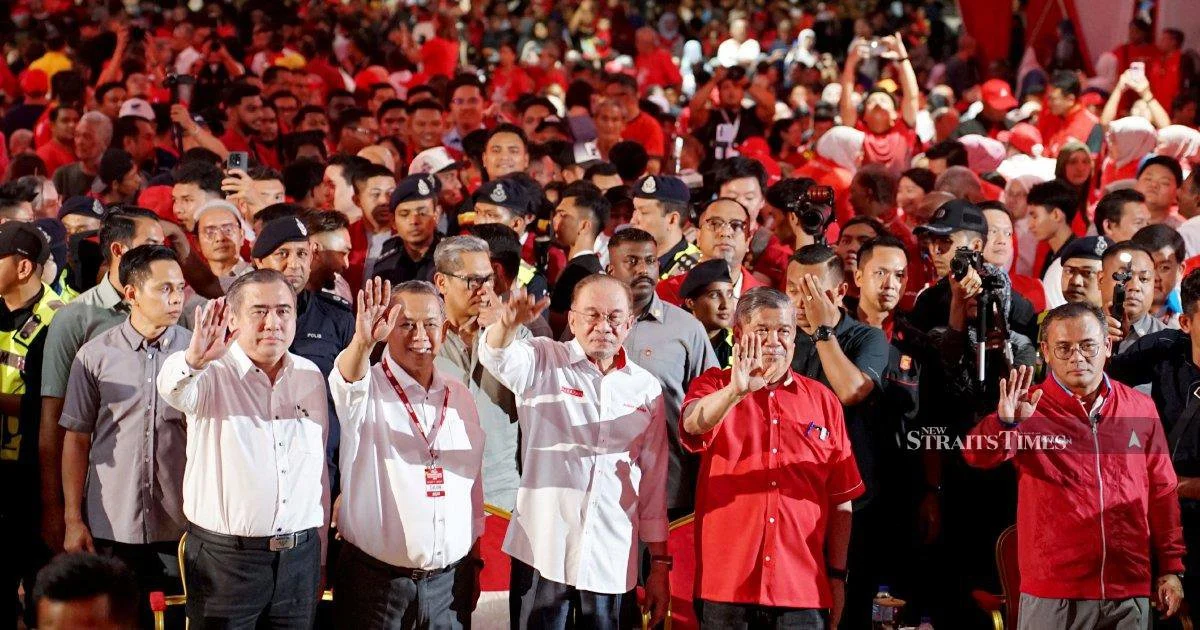
Prime Minister Datuk Seri Anwar Ibrahim has sounded a firm warning to Malaysia's political establishment, particularly those competing in Negri Sembilan's upcoming state election, against weaponising the royal institution for partisan gain. Speaking in Kuala Pilah, the premier underscored the sacred nature of the monarchy and its constitutional role as a unifying symbol for the nation, separate from the rough-and-tumble dynamics of electoral competition.
Anwar's cautionary remarks reflect a longstanding tension within Malaysian politics: the temptation for rival camps to invoke the prestige and legitimacy of the crown to bolster their own standing and undermine opponents. The monarchy occupies a uniquely revered position in Malaysia's constitutional framework, serving as the embodiment of national unity and custodian of Islam for the federation. This elevated status makes the institution inherently attractive to those seeking to add moral weight to their political messaging, yet equally vulnerable to instrumentalisation if safeguards are not maintained.
The timing of Anwar's intervention suggests growing concern within government circles about the conduct of campaigning in Negri Sembilan. State elections, though more localised than national contests, often become proxy battles between national political coalitions and can become flashpoints for inflammatory rhetoric. The premier's decision to address the matter personally underscores the seriousness with which the administration views potential encroachment upon the Crown's neutrality and institutional independence.
Historically, Malaysia has maintained a delicate equilibrium between parliamentary democracy and constitutional monarchy. The Negeri Sembilan state election occurs within this carefully constructed framework, where the Yang di-Pertuan Agong and state rulers are expected to remain above partisan conflict. When political actors attempt to appropriate royal symbolism or claim special proximity to the throne for electoral purposes, they risk destabilising this equilibrium and potentially tarnishing the institution's carefully nurtured image of impartiality.
Anwar's warning carries particular significance given his position as Prime Minister and de facto leader of his coalition. His willingness to rebuke potential abusers of royal imagery, including those within his own political sphere, signals a commitment to democratic propriety and institutional respect. Such self-restraint, though commendable, underscores the pervasive nature of the temptation to breach these boundaries during competitive elections.
The prime minister's intervention also reflects Malaysia's multi-ethnic and multi-religious composition. The monarchy serves as a crucial stabilising force that transcends communal divisions and political polarisation. By insisting that the Crown remain sequestered from campaign activities, Anwar is effectively defending an institution that has proven indispensable to national cohesion during periods of political turbulence and social tension.
For Negri Sembilan specifically, the warning represents a call for elevated campaign standards. The state has a unique constitutional position, with the Yamtuan Muda serving as the constitutional head and the overall Negeri Sembilan federation governed by its own protocols. Any campaign activity that strays into territory concerning the state's royal household or attempts to exploit royal endorsements would therefore constitute a particularly egregious breach of protocol.
The implications of Anwar's statement extend beyond the immediate electoral cycle. Establishing strong norms against royal instrumentalisation sets important precedents for future elections and helps reinforce institutional boundaries that protect democratic governance. When political leaders consistently demonstrate respect for constitutional conventions, they cultivate a political culture that privileges the rule of law and institutional integrity over short-term electoral advantage.
Election campaigns in Malaysia have occasionally witnessed fringe attempts to invoke royal authority or claim spurious associations with the Crown to gain credibility. While mainstream political parties generally observe stricter boundaries, the pressure to succeed electorally can sometimes tempt actors toward calculated boundary-pushing. Anwar's preemptive warning serves as both a reminder of existing norms and a deterrent against violations.
The statement also carries implicit acknowledgment that safeguarding democratic institutions requires consistent reinforcement from senior political figures. The monarchy in constitutional systems depends partly upon the voluntary restraint of elected officials who could, in theory, challenge its legitimacy or appropriate its symbolic capital. Anwar's intervention represents the kind of institutional stewardship that underpins stable democratic governance in societies with ceremonial heads of state.
Looking forward, whether political actors heeding Anwar's counsel will demonstrate genuine adherence to the principles he has articulated remains to be seen. Campaign dynamics can shift rapidly, and the competitive intensity of electoral politics sometimes overwhelms considered restraint. Nevertheless, the prime minister's clear articulation of expectations establishes a clear benchmark against which campaign conduct can be evaluated.
The broader message conveyed is that Malaysia's political system functions most effectively when democratic competition respects certain institutional red lines. The royal institution, serving functions that transcend partisan affiliation, must remain protected from the transactional calculations of electoral strategy. By demanding such respect from all competitors in Negri Sembilan, Anwar has reinforced a principle essential to Malaysia's constitutional monarchy and the stability it provides to the nation's democratic processes.

