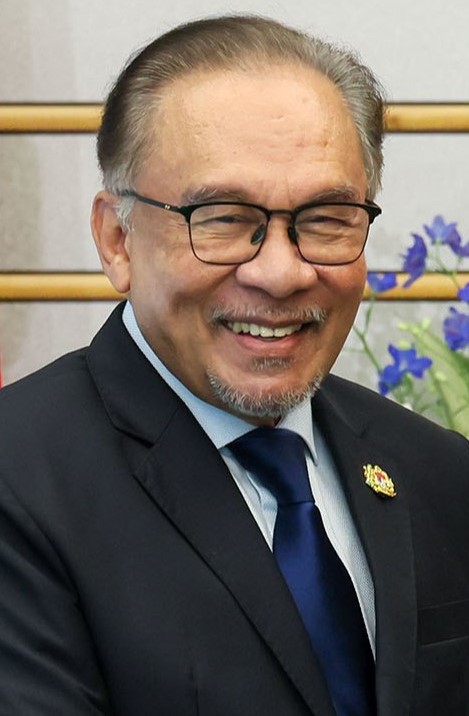
Datuk Seri Anwar Ibrahim, steering Pakatan Harapan through a complex political landscape, has dispatched a clear message to the coalition's grassroots machinery and senior figures operating in Johor: concentrate on substantive work rather than engage in acrimonious exchanges with coalition partners involved in the federal administration. Speaking in Tangkak, the Pakatan Harapan chairman emphasised that internal harmony and focused effort should take precedence over disputes that drain resources and diminish the coalition's effectiveness.
The directive reflects growing recognition within Pakatan Harapan that public squabbling undermines the coalition's standing and complicates the complex power-sharing arrangements underpinning Malaysia's federal government. Since Pakatan Harapan returned to federal office in November 2022, the coalition has operated within a framework requiring negotiation and compromise with other political parties, a situation that frequently generates tension between coalition partners holding divergent policy preferences and competing electoral interests.
Johor occupies particular significance in Malaysian politics, representing a substantial electoral constituency and a traditionally influential state within the country's federal structure. The state has historically served as a testing ground for national political movements, and success or failure in managing internal party dynamics at the state level often carries implications for coalition cohesion at the national level. Anwar's intervention in Johor thus carries symbolic weight beyond the immediate state context, signalling his determination to establish discipline within coalition ranks.
The emphasis on avoiding bickering points to a broader strategic calculation within Pakatan Harapan leadership. Public disputes between coalition members provide ammunition for opposition parties seeking to undermine government credibility and sow doubt about the administration's competence. By directing party members to abstain from visible conflict, Anwar seeks to present a unified facade that protects the coalition's political capital, particularly important as the administration confronts challenges ranging from economic management to service delivery that require sustained public confidence.
Anwar's insistence on industrious engagement addresses a second concern: ensuring that party cadres dedicate themselves to grassroots organisation, service delivery, and community engagement rather than expending energy on internal feuding. Electoral success depends substantially on effective machinery at the local level, and disputes between party leaders distract volunteer workers and create confusion about party priorities. By redirecting focus toward productive work, Anwar reinforces the practical necessity of maintaining organisational momentum.
The coalition structure within Malaysia's current political arrangement creates inherent tensions that Anwar's directive does not eliminate but rather seeks to manage more effectively. Pakatan Harapan comprises multiple parties with distinct organisational cultures, leadership structures, and regional strongholds. Johor, with its particular political history and demographic composition, generates specific pressures and opportunities for coalition management. Anwar's message essentially acknowledges these tensions whilst establishing acceptable boundaries for how disagreements should be conducted.
Contextualising this directive within the broader trajectory of Malaysian politics reveals Anwar's appreciation for lessons learned from previous coalition experiences. The original Pakatan Harapan victory in 2018 unravelled partly because coalition partners failed to manage internal disputes effectively, with public bickering eroding voter confidence and enabling opposition parties to present themselves as a more stable alternative. The subsequent years witnessed fragmentation and recalibration that ultimately led to the current federal arrangement. Anwar's emphasis on disciplined conduct reflects determination to avoid repeating those mistakes.
From a Southeast Asian perspective, Anwar's approach demonstrates how coalition governments operating in competitive multiparty democracies must develop institutional and cultural mechanisms for containing intra-coalition conflict. Malaysia's political system, with its complex interplay of federal and state power, ethnic representation requirements, and multiple political parties, creates conditions where coalition management becomes integral to governance effectiveness. Anwar's Johor directive exemplifies the operational challenge of maintaining coalition discipline across dispersed party organisations.
The directive also addresses practical questions about resource allocation and attention. In Johor specifically, coalition machinery requires clear priorities and unified messaging to compete effectively against opposition parties that may exploit any appearance of disorganisation. By instructing leaders to focus on work whilst avoiding bickering, Anwar provides a framework that allows disagreement on policy matters whilst restricting how those disagreements are publicly expressed and escalated.
Moving forward, the test of Anwar's directive lies in implementation. Party members and leaders in Johor must translate the chairman's guidance into actual behavioural change, suppressing the impulse to air grievances publicly and instead channelling concerns through internal mechanisms. Success requires buy-in from mid-level party leadership who communicate priorities to grassroots members and set examples through their own conduct. The sustainability of coalition unity depends on whether this discipline can be maintained across multiple tiers of party organisation.
Ultimately, Anwar's message reflects the reality that maintaining coalition government in Malaysia demands constant attention to internal dynamics. The chairman's emphasis on diverting energy from bickering toward productive work acknowledges that coalition governments survive through competent administration and effective party organisation rather than through the absence of disagreement. For Malaysian voters assessing coalition performance, the relevant question becomes not whether internal disputes exist but whether parties manage them maturely whilst delivering on public responsibilities.