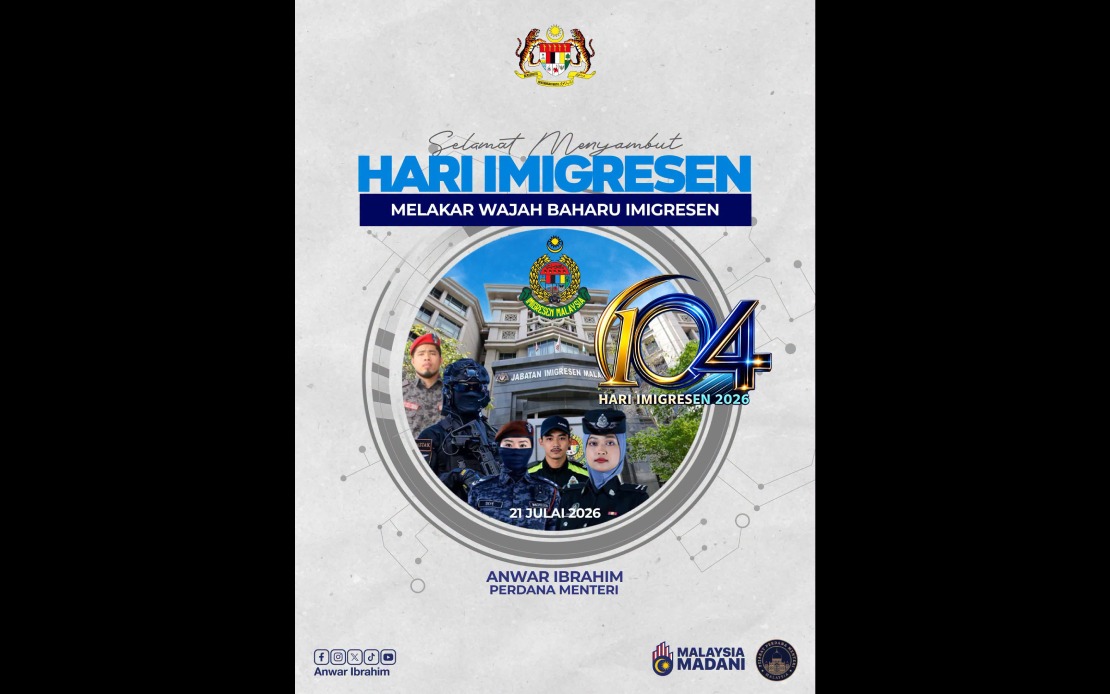
Prime Minister Datuk Seri Anwar Ibrahim has issued a direct appeal to the entire workforce of the Immigration Department (JIM) to execute their mandates with rigorous integrity while maintaining an uncompromising stance against misconduct and corrupt practices. Speaking through a Facebook statement marking Immigration Day on July 21, Anwar underscored that ethical conduct must form the bedrock of departmental operations across all levels and functions.
The call arrives at a moment when Malaysian institutions face ongoing scrutiny regarding internal governance and ethical standards. Immigration departments worldwide serve as critical gatekeepers for national security and border integrity, making the character and conduct of personnel fundamentally important to public trust and operational effectiveness. Anwar's emphasis on integrity reflects broader government efforts to reinforce anti-corruption mechanisms and restore public confidence in state institutions handling sensitive portfolios.
Beyond the demand for ethical standards, Anwar articulated a vision where JIM personnel must simultaneously cultivate compassion in their interactions with the public. This dual imperative—strict adherence to rules paired with empathetic service delivery—represents a nuanced management philosophy that acknowledges both the regulatory rigour required of border authorities and the human considerations inherent in immigration matters affecting families, businesses, and livelihoods.
The Prime Minister's statement emphasizes that professional and courteous service must characterize all departmental touchpoints with the public. For a country that depends substantially on tourism, foreign investment, and skilled migration inflows, the quality of immigration service delivery carries direct economic implications. Inefficient or discourteous processing creates barriers that discourage legitimate travel and investment, potentially affecting Malaysia's competitiveness as a regional destination.
Anwar expressed confidence that JIM will persist in excelling at its core mission of protecting the nation's sovereignty through vigilant border management. This framing connects individual employee conduct to the broader national security imperative, suggesting that integrity at the individual level translates to institutional strength at the national level. The sovereignty protection mandate requires that officers maintain ethical boundaries, resist inducements that might compromise border security, and enforce regulations consistently regardless of external pressure.
The 2026 Immigration Day celebration carries the thematic designation "Charting a New Face for Immigration," signalling an institutional commitment to transformation and modernisation. This theme suggests the department is actively reimagining its operational approach, potentially incorporating technological advancement, process reform, and renewed emphasis on ethical culture. Such initiatives gain credibility when reinforced through statements from highest leadership, as Anwar's message provides institutional weight to departmental transformation efforts.
For Malaysian citizens and residents, these statements carry practical implications. Strengthened integrity mechanisms and professional standards within JIM should theoretically translate into faster processing times, more transparent decision-making, and reduced exposure to corruption that might complicate legitimate immigration matters. Whether through visa applications, travel documentation renewal, or residency processing, ordinary Malaysians interact frequently with immigration services, and institutional integrity directly affects their experience.
Regionally, Malaysia's approach to immigration governance influences perceptions across Southeast Asia. As a middle-income country positioned as both a transit hub and destination, Malaysia's immigration practices set standards that neighbouring nations observe. Public statements emphasizing anti-corruption commitment and professional service standards contribute to Malaysia's positioning as a rule-governed jurisdiction in an increasingly competitive region.
The reference to elevating Malaysia's name on the world stage connects departmental excellence to national reputation management. Efficient, corruption-free immigration administration becomes a soft power asset, signalling to potential investors, tourists, and skilled migrants that Malaysia operates institutional systems of integrity and professionalism. This extends beyond border administration into broader considerations of rule of law and institutional reliability that affect foreign direct investment decisions and talent attraction.
Anwar's framing further suggests that institutional corruption within immigration functions carries particular reputational damage because it directly undermines national security and public safety objectives. Citizens expect that those charged with border protection prioritize national interest above personal advantage; breaches of this trust generate disproportionate public concern and international notice. The Prime Minister's elevated focus on this specific portfolio reflects recognition of its heightened sensitivity.
The Immigration Department faces perpetual operational challenges balancing efficiency with security, courtesy with rules enforcement, and accessibility with sovereignty protection. Anwar's message implicitly acknowledges these tensions while insisting they must be managed within ethical boundaries. This suggests departmental leadership should be equipped with frameworks enabling staff to navigate these competing demands without resorting to corrupt shortcuts or ethical compromises.
Moving forward, the effectiveness of Anwar's appeal will depend on whether accompanying institutional mechanisms—training programmes, oversight structures, whistleblower protections, and consequence management—provide substance to the leadership message. Public statements carry limited impact without supporting infrastructure that enables ethical conduct, addresses systemic vulnerabilities, and holds individuals accountable. The theme of charting a new face for immigration suggests such institutional work may already be underway within JIM.

