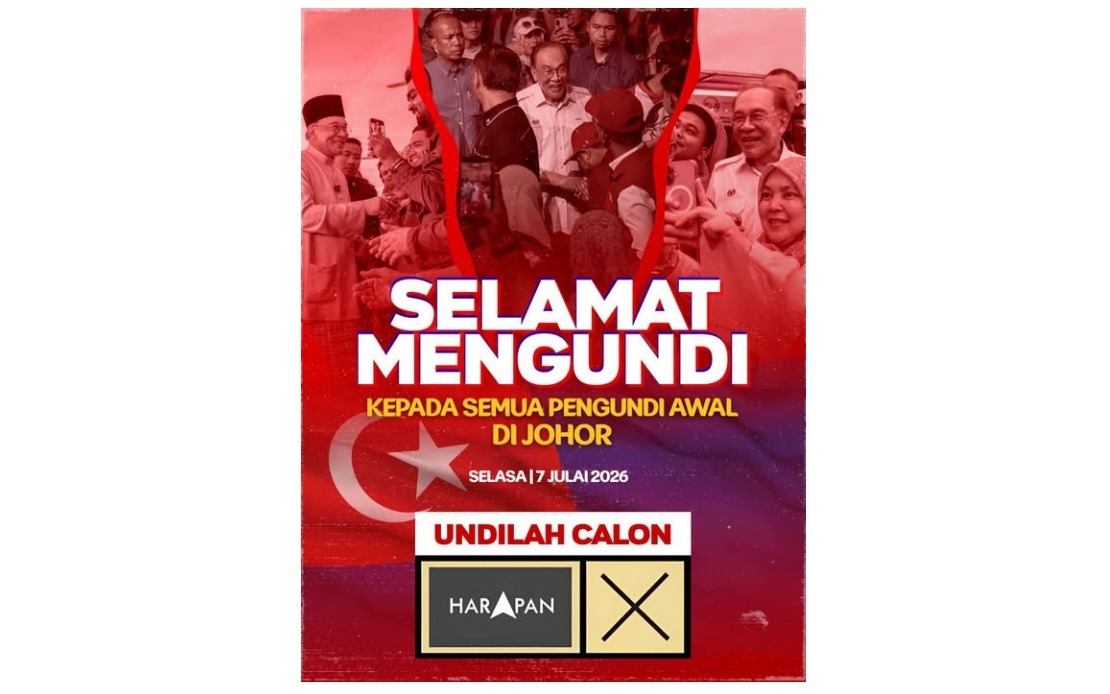
Prime Minister Datuk Seri Anwar Ibrahim has made a direct appeal to early voters in Johor to back Pakatan Harapan candidates, as the coalition gears up for the 16th state election with polling stations opening across the southern state. In a Facebook message posted on July 7, Anwar, who leads the PH coalition, encouraged all eligible voters to utilise their voting rights and contribute to securing stronger governance for Johor. The messaging reflects the coalition's broader campaign strategy of positioning itself as the vehicle for economic and administrative improvements in the state, a region that has traditionally been politically competitive and economically significant to Malaysia's overall development.
The early voting process saw 24,751 registered voters across 64 polling centres in Johor, representing a segment of the electorate granted special voting privileges due to their professional commitments. This cohort primarily comprised 12,041 personnel from the Malaysian Armed Forces and their spouses, complemented by 12,710 from the Royal Malaysia Police and General Operations Force alongside their family members. The inclusion of these security and defence personnel in early voting arrangements reflects standard electoral procedures designed to accommodate those whose professional duties may prevent them from voting on the main polling day. These early voting phases are strategically important in any election as they often set the tone for campaign momentum and provide initial indicators of voter sentiment.
The polling infrastructure was distributed strategically, with 53 dedicated centres established for police and paramilitary personnel and an additional 11 for military voters. Operations commenced simultaneously at 8 am, though closing times varied between noon and 6 pm depending on individual centre locations and the number of registered voters stationed at each facility. This staggered closing arrangement, whilst operationally complex, ensures that the electoral process accommodates the varied shift patterns and deployment schedules of security personnel across different regions of Johor. The coordination required for managing such a dispersed voting operation demonstrates the logistical sophistication expected of Malaysia's electoral management bodies.
Pakatan Harapan's fielding of candidates across all 56 state seats underscores the coalition's commitment to contesting for control of the state legislature comprehensively. The coalition's candidate distribution reflects internal power-sharing arrangements among its three constituent parties: PKR fielded 20 candidates, Amanah contributed 19, and DAP provided 17 representatives. This allocation reflects both the relative organisational capacity of each party and their negotiated positions within the broader coalition framework. For Malaysian voters, particularly in Johor, this distribution signals how PH intends to govern should it secure the state mandate, with the balance of representation suggesting that governance would be shared across multiple parties rather than dominated by any single faction.
The broader electoral contest involves 172 candidates competing for the 56 state assembly seats, creating a competitive landscape across the Johor political arena. Approximately 2.7 million voters were registered for the main polling day, scheduled for the Saturday following the early voting phase. This substantial voter base positions Johor as one of Malaysia's electorally significant states, where the outcome carries implications not only for state-level governance but also for the broader political balance that influences federal policymaking. The size of the electorate and the number of candidates competing reflect the state's importance within Malaysia's political economy and its status as a demographically diverse region with competing political narratives.
Anwar's personalised appeal carries particular weight given his position as Prime Minister and PH's chief strategist. His messaging, delivered through social media rather than formal campaign platforms, represents a strategic decision to speak directly to voters in accessible language whilst emphasising the connection between voting choices and tangible outcomes for Johor's future. The emphasis on voting for a "better future" is a common rhetorical device in Malaysian politics, yet it resonates differently depending on local economic conditions, governance performance, and voter demographics. In Johor's context, where issues such as infrastructure development, economic diversification, and educational services carry significant weight, such messaging taps into voter concerns about whether the state is progressing as rapidly as peers like Selangor or receiving adequate federal support.
The strategic importance of early voting turnout extends beyond the immediate numbers. Security and defence personnel represent a distinct voter demographic with particular interests in matters such as service conditions, pension arrangements, and security sector funding. Their early participation provides PH with an opportunity to assess whether its messaging resonates with this traditionally important constituency, which historically has shown varied political preferences across elections. The outcome among early voters often provides campaign teams with preliminary data about voter sentiment and allows them to calibrate messaging for the main polling day accordingly.
Johor's electoral significance reflects its historical and contemporary political importance within Malaysia. The state has alternated between different political administrations, and its outcome influences perceptions about national political momentum and governance effectiveness at the state level. For Malaysian observers and policymakers, Johor elections serve as bellwethers for broader political trends, particularly regarding whether incumbent coalitions are maintaining voter confidence or whether opposition forces are gaining traction. The 2024 election cycle, occurring within the broader context of Malaysia's post-2022 political realignment, carries added significance for understanding how voters are responding to the current federal government's performance and policy agenda.
Packaging electoral appeals through platforms like Facebook represents contemporary Malaysian political communication, where traditional media presence remains important but direct digital engagement provides parties with opportunities to shape narratives without journalistic mediation. Anwar's approach reflects the PH coalition's understanding that mobilising not just votes but active engagement from voters requires meeting constituents across multiple communication channels. For voters, particularly younger demographics more engaged with digital platforms, such direct messaging from political leaders carries credibility and creates a sense of personal connection that traditional campaign rallies may not achieve as effectively.
The security forces' early voting, whilst administratively necessary, also symbolises the coordination required between electoral authorities and state institutions to ensure democratic processes function smoothly. Malaysia's electoral system, managed by the Election Commission, depends on cooperation from various government agencies and security forces to maintain order and ensure accessibility. The successful execution of early voting arrangements reflects institutional capacity and commitment to facilitating democratic participation, even among those whose professional roles place them at the operational heart of state security and administration.

