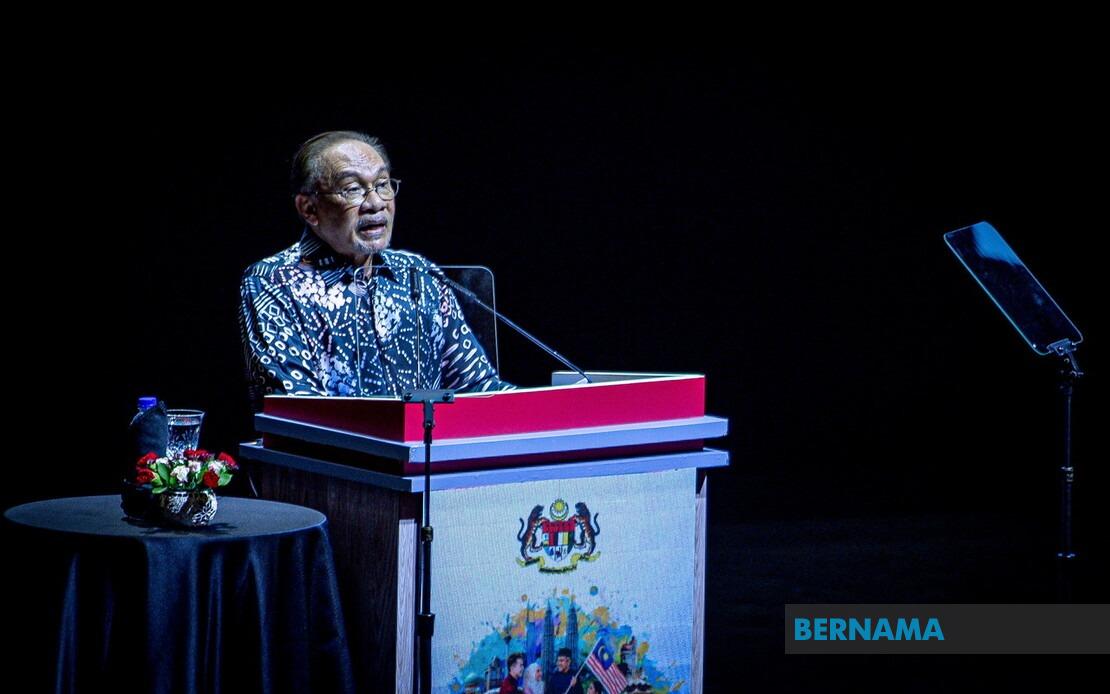
Prime Minister Datuk Seri Anwar Ibrahim has unveiled a six-pronged policy package aimed at easing the financial strain on Malaysian households, with all measures taking effect from September 1. The initiative encompasses fuel subsidies, school maintenance support, artificial intelligence initiatives, digital healthcare services, e-Invoicing implementation and microfinancing programmes—a comprehensive attempt to tackle mounting cost-of-living concerns that continue to preoccupy ordinary Malaysians despite previous government interventions.
Announcing the measures at the Putrajaya International Convention Centre during the 2026 National Day Prime Minister's Address, Anwar acknowledged the persistent economic pressures facing citizens across multiple demographic groups. His remarks underscored a candid recognition that existing policies have not fully resolved the financial difficulties experienced by families struggling with daily expenses. The timing of the announcement, delivered on the eve of Malaysia's National Day, carries symbolic weight as the government seeks to demonstrate responsiveness to public concerns during a period of national reflection and unity.
The Prime Minister's statement reflected a notably frank assessment of the current situation, with Anwar cautioning against complacency or dismissing citizen grievances. He emphasised that the government, working in concert with Deputy Prime Minister Datuk Seri Dr Ahmad Zahid Hamidi and the broader Cabinet, remains acutely aware that comprehensive solutions remain elusive. This candour contrasts with occasional political rhetoric that overstates achievement and suggests a deliberate repositioning toward greater transparency about persistent economic challenges affecting Malaysian society.
Fuel subsidies represent the most visible component of the relief package, addressing one of the most economically sensitive issues in Malaysia. Petroleum price volatility directly influences transportation costs, food prices and general inflation, making fuel support a politically critical intervention that provides immediate, tangible benefits to motorists and commercial operators. The continuation and potential restructuring of subsidy mechanisms reflects government recognition that market-driven fuel pricing remains politically and socially untenable for significant segments of the population.
School maintenance funding targets educational infrastructure, a sector where deteriorating facilities have garnered considerable public criticism. Enhanced maintenance budgets directly improve the learning environment for students whilst reducing the incidental costs that families bear when schools lack adequate resources. This measure addresses both immediate quality-of-life concerns and longer-term human capital development, signalling that cost-of-living relief encompasses investments in future productivity and social wellbeing.
The inclusion of artificial intelligence initiatives alongside immediate relief measures reflects strategic thinking about Malaysia's economic competitiveness. AI development represents an investment in future-ready industries and job creation, addressing structural employment challenges that contribute to sustained cost-of-living pressures. This forward-looking component suggests the government views relief not merely as temporary assistance but as part of broader economic transformation intended to enhance earning capacity and reduce long-term financial vulnerability.
Healthcare digitalisation has emerged as a cost-containment strategy with significant implications for Malaysian public health. Digital systems reduce administrative inefficiencies, minimise treatment delays and enhance disease prevention through better data management. For ordinary Malaysians, particularly lower-income families who depend heavily on public healthcare, digital health infrastructure promises more efficient service delivery and reduced out-of-pocket expenses associated with extended waiting periods and repeated consultations.
The e-Invoicing component addresses the business ecosystem, targeting efficiency gains that could reduce operational costs and complexity for enterprises. By streamlining invoicing processes and improving payment flows, the measure indirectly supports the small and medium-sized business sector that employs substantial portions of the Malaysian workforce. More efficient business operations translate into greater employment stability and potentially improved wage conditions, addressing cost-of-living pressures from the income side rather than merely subsidy-dependent relief.
Microfinancing provisions target entrepreneurship and self-employment opportunities, particularly for lower-income individuals and women seeking economic independence. Access to affordable credit for small-scale business ventures enables wealth creation and income generation beyond traditional employment, offering pathways to reduce economic vulnerability. This measure reflects recognition that sustainable relief requires enhanced income-earning opportunities rather than indefinite dependence on government subsidies or transfers.
The composition of the six-measure package reveals a policy approach balancing immediate palliatives with structural economic interventions. Whilst fuel subsidies and school maintenance provide immediate relief, artificial intelligence development, healthcare digitalisation and e-Invoicing represent medium to long-term productivity enhancements. Microfinancing bridges both categories, offering immediate capital access whilst supporting long-term wealth creation. This layered approach suggests sophisticated policy thinking about cost-of-living complexity requiring simultaneous attention to immediate hardship and underlying economic structures.
Deputy Prime Minister Datuk Seri Dr Ahmad Zahid Hamidi's participation in the announcement, alongside Communications Minister Datuk Seri Fahmi Fadzil and the Cabinet, underscored collective government ownership of the initiative. Chief Secretary to the Government Tan Sri Shamsul Azri Abu Bakar's presence indicated commitment to implementation coordination across bureaucratic structures responsible for translating policy into tangible public benefit.
For Malaysian citizens, the immediate significance lies in September 1 implementation, which will bring measurable changes to household budgets and access to services. The broader context, however, involves sustained economic vulnerability that neither subsidies nor individual measures fully resolve. The package represents the government's acknowledgment that cost-of-living pressures require multifaceted responses addressing immediate relief, systemic efficiency and long-term economic opportunity simultaneously.

