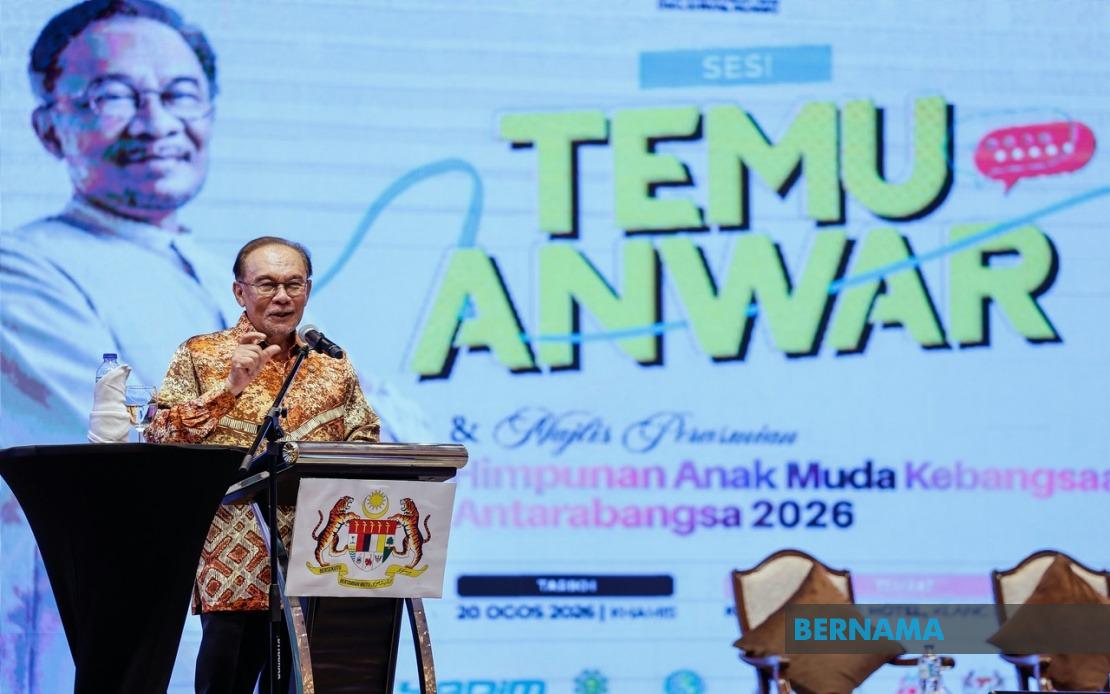
Prime Minister Datuk Seri Anwar Ibrahim has signalled that a series of substantial policy announcements will be rolled out across three separate occasions over the coming weeks, beginning with a declaration on the eve of National Day on Aug 30, followed by another during Malaysia Day festivities on Sept 16, and a third during the budget presentation in early October. Speaking at the Temu Anwar session held alongside the opening of Himpunan Anak Muda Antarabangsa (HAMKA) 2026 in Klang, the Prime Minister deliberately withheld specifics regarding the content of these pronouncements, stating only that he intends to consult widely before finalising his position.
The deliberate timing of these announcements around significant national celebrations suggests the government intends to link policy direction with patriotic observances, a common strategy to generate public enthusiasm for new initiatives. The Aug 30 announcement, coming the day before National Day on Aug 31, would provide a natural platform to frame any new policies within the context of national advancement and collective progress. Similarly, the Sept 16 announcement during Malaysia Day, which commemorates the formation of the Malaysian federation, offers an opportunity to position initiatives as strengthening national unity and shared prosperity across all states.
While declining to elaborate on the substance of these announcements, Anwar provided insight into one area of government concern: the financial security and welfare of young workers engaged in the gig economy. This focus reflects mounting pressure from civil society groups and labour advocates who argue that gig workers—comprising delivery riders, online platform workers, and freelancers—operate in a regulatory vacuum with minimal protections compared to traditional employees. The fact that a young person raised this issue directly during the Temu Anwar session underscores how significantly this matter resonates with Malaysian youth, who increasingly rely on flexible work arrangements to supplement income or build alternative careers.
The government's existing response to gig economy challenges centres on the Malaysian Gig Economy Commission (SEGiM), a relatively recent institutional creation designed to coordinate policy across multiple government agencies. Anwar also referenced forthcoming legislation aimed at small business support, suggesting that the government views gig workers partly through the lens of microentrepreneurship rather than traditional employment relationships. This legislative approach may introduce new regulatory frameworks governing platform operations, worker classification, or dispute resolution mechanisms, though concrete details remain absent.
Anwar's acknowledgement that current assistance measures may fall short of meeting gig workers' actual needs is significant, as it implicitly recognises criticism from youth organisations and labour unions. Rather than defending existing programmes, the Prime Minister adopted a consultative posture, suggesting openness to substantive reform. This rhetorical positioning—promising to "listen and seek other views"—sets expectations that upcoming announcements may address long-standing grievances regarding inadequate income protection, lack of health coverage, and vulnerability to arbitrary deactivation from platforms.
A second dimension of youth welfare addressed during the session concerns entrepreneurship financing. The government currently provides access to business capital through TEKUN (Tabung Ekonomi Kumpulan Usaha Niaga), the National Entrepreneurial Group Economic Fund, which traditionally requires applicants to demonstrate prior business experience. Anwar signalled that this requirement may be reconsidered given rapid changes in labour market dynamics and the emergence of new forms of economic activity. This potential relaxation could significantly expand access for younger Malaysians seeking to launch ventures without established business histories, particularly those transitioning from precarious gig work into self-employment.
The interconnection between gig economy protections and youth entrepreneurship reflects a broader policy challenge facing governments across Southeast Asia. As traditional full-time employment becomes less predictable, policymakers must balance flexibility with security, ensuring young workers can access both immediate livelihood support and pathways toward longer-term economic advancement. Malaysia's approach, as outlined through these various initiatives, appears to recognise that young people increasingly cobble together income from multiple sources rather than relying on single employers, necessitating corresponding shifts in how government structures financial assistance and regulatory oversight.
The budgeting dimension adds further weight to these initiatives. By scheduling an announcement during the tabling of the Budget in early October, the government signals that resources will likely be allocated to implementing whatever policies emerge from the preceding consultations. This sequencing—consultation before Aug 31, Malaysia Day announcement on Sept 16, then budgetary implementation in October—suggests a deliberate effort to build public understanding and buy-in before fiscal commitments are formally legislated.
For Malaysian readers, the significance of these announcements extends beyond immediate gig economy concerns. The willingness of the Prime Minister to consult and adjust course based on input from youth representatives indicates an attempt to restore confidence in government responsiveness following periods of policy volatility and institutional turbulence. Youth unemployment and underemployment remain persistent challenges, particularly among degree holders, making any credible commitment to expanding economic opportunities particularly resonant with younger voters who will define electoral outcomes for decades to come.
Regionally, Malaysia's approach to regulating gig platforms and protecting non-traditional workers may influence how neighbouring countries address similar challenges. Countries such as Indonesia, Thailand, and the Philippines grapple with comparable pressures as their own gig economies expand rapidly. Malaysian policy innovations, particularly if they successfully balance platform innovation with worker protections, could become models for regional adaptation. Conversely, if announcements fail to deliver substantive protections or prove difficult to implement, they may dampen enthusiasm for formalising gig economy regulation across Southeast Asia.
The sequencing and framing of these announcements also reflects political calculation. By distributing major pronouncements across three occasions spanning two months, the government maintains sustained media attention and demonstrates ongoing engagement with pressing concerns. This approach contrasts with the alternative of bundling all announcements into a single moment, which might generate initial headlines but lack sustained impact on public discourse. The strategy suggests sophisticated political management aimed at demonstrating competence and responsiveness to youth constituencies.
Ultimately, the true measure of these announcements will depend not merely on their rhetorical content but on whether government agencies possess the administrative capacity and budgetary resources to translate commitments into tangible improvements in workers' lives. Gig economy regulation is notoriously complex, requiring coordination across labour, taxation, social security, and technology regulatory bodies. The existence of SEGiM provides institutional infrastructure, yet genuine transformation requires sustained political commitment and considerable financial investment. Coming weeks will reveal whether Anwar's consultative positioning translates into boldly reformist policy or represents more modest adjustments to existing frameworks.

