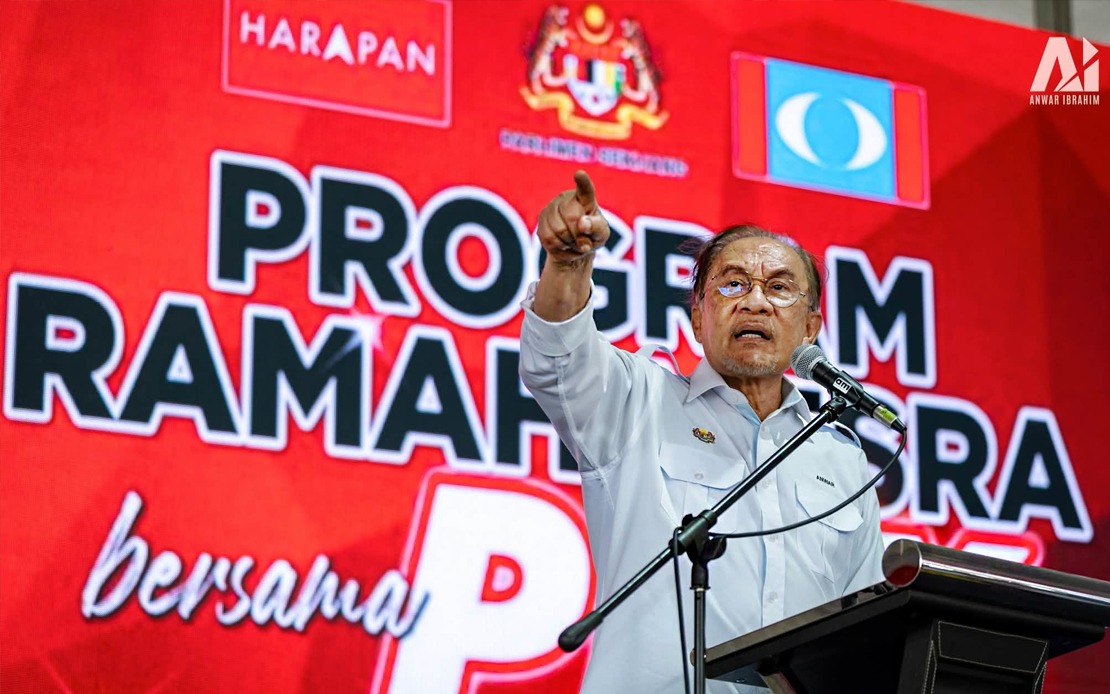
Prime Minister Datuk Seri Anwar Ibrahim has thrown his political weight behind Malaysia's embattled durian farmers, pledging direct intervention at the highest diplomatic level to combat a severe price collapse afflicting growers across Peninsular Malaysia. The crisis stems from an unusually synchronised peak harvest season that has glutted domestic and regional markets, depressing prices and threatening rural incomes at a critical time for agricultural communities. Anwar made his commitment during a constituency gathering in Gambir, Johor, signalling that the government recognises the urgency of the situation and is prepared to mobilise state-to-state relations to forge a solution.
The Prime Minister's strategy hinges on leveraging Malaysia's diplomatic relationship with Beijing to negotiate improved market access for Malaysian durian into China, a market that has emerged as crucial for price stability and volume absorption. Anwar indicated he would raise the matter directly with Chinese Premier Li Qiang during a planned visit next month, framing the discussion as an opportunity to exploit existing bilateral goodwill. His remarks suggested optimism about China's receptiveness, though he acknowledged that Chinese import standards are notoriously stringent and will require careful negotiation. The approach reflects a growing recognition within government circles that resolving agricultural crises increasingly demands bilateral engagement rather than domestic intervention alone.
The durian market downturn represents a particularly acute challenge for Malaysia's agricultural sector, which has invested heavily in expanding production and building brand reputation internationally. Farmers have expanded acreage and improved quality in response to rising global demand, especially from China, where Malaysian durian commands premium prices. However, the simultaneous maturation of plantations across multiple states has created unprecedented supply pressure, with prices falling sharply from peak levels earlier in the season. Without intervention to expand export channels or absorb excess supply, many smallholder and medium-scale growers face significant financial losses that could discourage future investment in the sector.
Anwar's emphasis on trade opportunities reflects a broader philosophy that regional agricultural challenges require multilateral solutions rather than protectionist measures. By positioning Malaysia-China cooperation as mutually beneficial, he suggests that expanded durian imports would serve Chinese consumers' interests while simultaneously stabilising Malaysian farm incomes. This framing appeals to Beijing's own food security considerations and growing demand from urban Chinese consumers for premium imported fruits. The diplomatic approach also sidesteps more contentious domestic agricultural reform debates and positions the government as a proactive problem-solver capable of addressing rural constituencies' concerns through high-level engagement.
The Prime Minister's involvement signals recognition that durian farming, while representing only a fraction of Malaysia's agricultural output, carries outsized political significance. Durian-growing regions span multiple states including Johor, Pahang, and Perak, representing substantial voter blocs that have traditionally supported government candidates. Visible advocacy for farmers' welfare during commodity crises strengthens Pakatan Harapan's electoral positioning ahead of anticipated state-level contests. The decision to raise the matter at a grassroots meet-the-people session rather than simply through diplomatic channels demonstrates Anwar's understanding that affected farmers require tangible evidence of government responsiveness to their predicament.
Beyond durian-specific interventions, Anwar used the Gambir gathering to highlight broader government economic management, particularly regarding fuel subsidies. The Prime Minister emphasised Malaysia's distinction as one of the world's few remaining countries maintaining below-market fuel prices through direct government intervention, a policy requiring substantial budget allocations amid volatile global oil markets. Current arrangements provide consumers subsidised rates of RM1.99 per litre for RON95 petrol and RM2.10 per litre for diesel under the BUDI MADANI initiative, effectively masking retail prices significantly below international levels. The actual market prices from July 1 to 8 stood at RM3.37 per litre for RON95 and RM3.97 per litre for diesel, illustrating the substantial gap between what consumers pay and genuine market costs.
Anwar framed Malaysia's fuel subsidy policy as an expression of social solidarity during periods of global economic uncertainty, particularly citing Middle Eastern geopolitical tensions as pressure points affecting international oil markets. The Prime Minister's assertion that Malaysia remains unique in reducing fuel prices rather than merely restraining increases appears designed to counter perceptions of government fiscal mismanagement and demonstrate commitment to protecting living standards amid external economic shocks. This rhetoric appeals particularly to urban and middle-class voters concerned about cost-of-living pressures, though it also obscures difficult questions about long-term fiscal sustainability and the opportunity costs of such extensive subsidisation.
The simultaneous elevation of two distinct economic grievances—agricultural commodity prices and consumer fuel costs—reflects government strategy of positioning itself as responsive to multiple constituencies experiencing financial strain. By addressing both farmer welfare and consumer purchasing power in a single public appearance, Anwar signals comprehensive engagement with economic challenges affecting different segments of Malaysian society. However, the underlying tensions between these priorities deserve scrutiny; fuel subsidies benefit primarily urban consumers and vehicle owners, while agricultural support requires different policy instruments and often carries smaller fiscal implications. The government's apparent capacity to champion both reflects political balancing rather than systematic economic prioritisation.
The durian crisis also illuminates structural vulnerabilities in Malaysia's agricultural export model, where dependency on single markets or limited channels concentrates price risk and leaves growers exposed to demand fluctuations. While China represents an attractive destination for premium durian, overconcentration of export flows into any single market creates systemic fragility. Government intervention beyond market access negotiation—potentially including coordinated supply management, producer consolidation, or value-addition initiatives—might offer more durable solutions. Nevertheless, Anwar's diplomatic approach reflects realistic acknowledgement that direct domestic agricultural restructuring faces substantial political obstacles and implementation challenges.
The effectiveness of Anwar's proposed China negotiations remains uncertain, contingent upon Beijing's willingness to absorb additional Malaysian durian imports and Chinese consumers' demand conditions. Even if expanded market access materialises, achieving meaningful price stabilisation may require months of increased export volumes, during which growers continue facing depressed income. Additionally, successful penetration of Chinese markets typically demands compliance with increasingly rigorous food safety standards and certification requirements that smaller producers may struggle to meet. Government support for facilitating such compliance—through subsidised certification programmes or infrastructure improvements at ports and distribution centres—may prove as important as headline diplomatic commitments.
For Malaysian policymakers and agricultural stakeholders, the durian price crisis and Anwar's response underscore the mounting importance of regional trade relationships in managing agricultural volatility. As Malaysia's population urbanises and farmland compresses, rural incomes increasingly depend on export channels and international market access rather than domestic consumption. This structural reality necessitates sustained diplomatic engagement with key trading partners alongside conventional agricultural policy. The durian case study also demonstrates how commodity price collapses, while ostensibly technical economic issues, acquire substantial political salience and demand high-level government attention to maintain rural constituencies' confidence and support.

