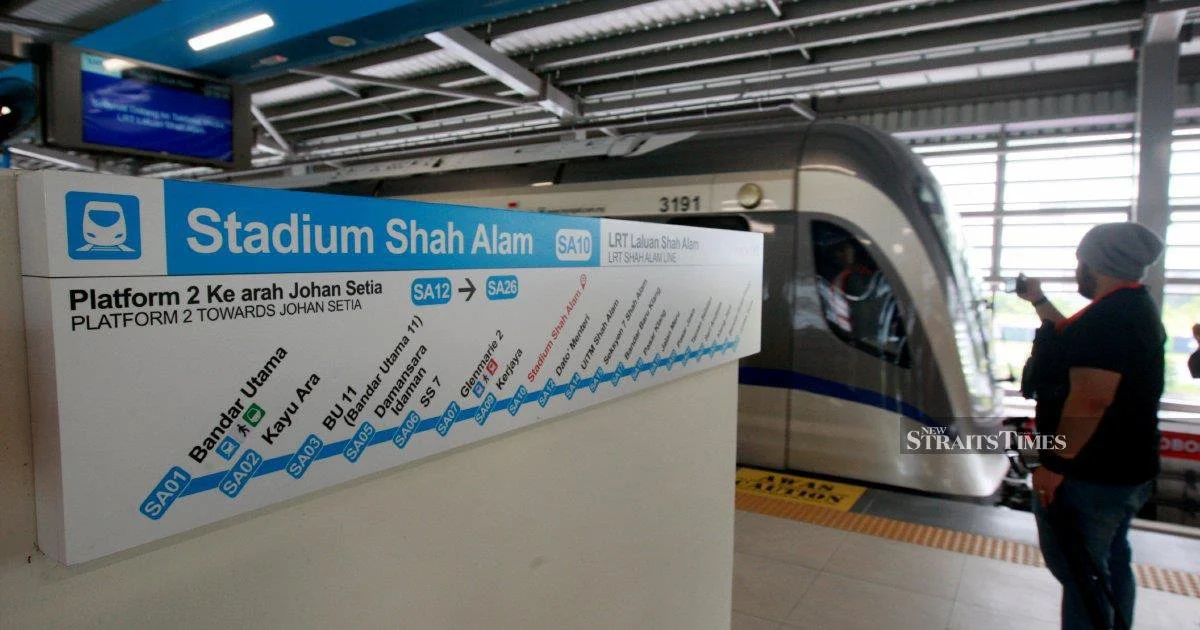
Prime Minister Datuk Seri Anwar Ibrahim is set to conduct the official ceremony launching the Light Rail Transit Line 3 (LRT3) Shah Alam extension this Sunday, marking a significant milestone for Malaysia's public transportation infrastructure. The formal handover will precede the commencement of commercial services scheduled for Monday, signalling the readiness of the system for commuters across the Klang Valley region.
The LRT3 Shah Alam line represents an expansion of the existing LRT3 network, designed to enhance connectivity in the western corridor of the Klang Valley and serve the dense residential and commercial zones along the Shah Alam corridor. This extension forms part of the broader infrastructure development strategy aimed at reducing traffic congestion and providing viable alternatives to private vehicle use in Malaysia's most congested urban region.
The timing of the launch reflects the government's commitment to advancing public transportation projects that have been in development for several years. The Shah Alam extension addresses long-standing transportation challenges in this growing suburb, which has experienced rapid residential and industrial expansion over the past decade. By linking Shah Alam more directly to the greater Klang Valley rail network, the government hopes to facilitate smoother commuter flows and reduce pressure on the increasingly congested road corridors.
For residents and workers in Shah Alam, the opening of LRT3 offers a transformative change in mobility options. Commuters previously reliant on buses or personal vehicles will gain access to a faster, more predictable rail service, potentially reducing travel times significantly during peak hours. The extension is expected to serve tens of thousands of daily passengers, particularly those working in the industrial parks and commercial districts of Shah Alam and neighbouring areas.
The project carries broader implications for the government's urban development vision. By improving public transportation infrastructure, policymakers aim to influence settlement patterns and economic development away from Kuala Lumpur's congested core toward emerging nodes like Shah Alam. This decentralisation strategy, if successful, could support more balanced metropolitan growth across the Klang Valley.
From an investment perspective, the LRT3 expansion demonstrates continued confidence in rail-based solutions for Southeast Asia's transportation challenges despite rising project costs and completion timelines that frequently exceed initial projections. The project's realisation also signals government commitment to following through on infrastructure pledges, a factor that influences public confidence in announced development initiatives.
The launch comes as Malaysia faces intensifying pressure to modernise its public transport systems to compete with regional peers. Cities across Southeast Asia have invested heavily in expanding metro and light rail networks, and Malaysia's continued development of LRT infrastructure helps maintain the region's competitive positioning. The Shah Alam extension, therefore, carries symbolic importance beyond its immediate regional transport function.
Operationally, the system's integration with existing LRT3 infrastructure requires careful coordination and testing to ensure seamless service delivery. The Monday start of commercial operations provides opportunities for early operational feedback, allowing operators to identify and address any technical issues before the system reaches full capacity. Initial service reliability will be critical in establishing user confidence and determining ridership adoption rates.
For stakeholders in the Klang Valley, particularly commuters frustrated by congestion and businesses seeking to attract talented workers, this infrastructure investment addresses a critical pain point. The availability of efficient rail transport influences location decisions for both residents and corporations, making public transportation quality a competitive factor in regional economic development.
Looking forward, the LRT3 Shah Alam launch provides a proving ground for future transit expansion concepts in Malaysia. Project learnings regarding construction efficiency, ridership patterns, and operational sustainability will inform planning for additional network extensions planned across the peninsula. Success here could accelerate timelines for other announced rail projects and influence government investment priorities across the transportation sector.
The formal inauguration ceremony on Sunday will provide the government with a platform to highlight infrastructure achievements and reinforce its public transportation modernisation agenda. Such ceremonies serve important political functions in demonstrating governance effectiveness and tangible progress on development commitments made to voters in major urban centres. The event underscores transportation infrastructure as a continuing priority within the government's broader economic and social policy framework.