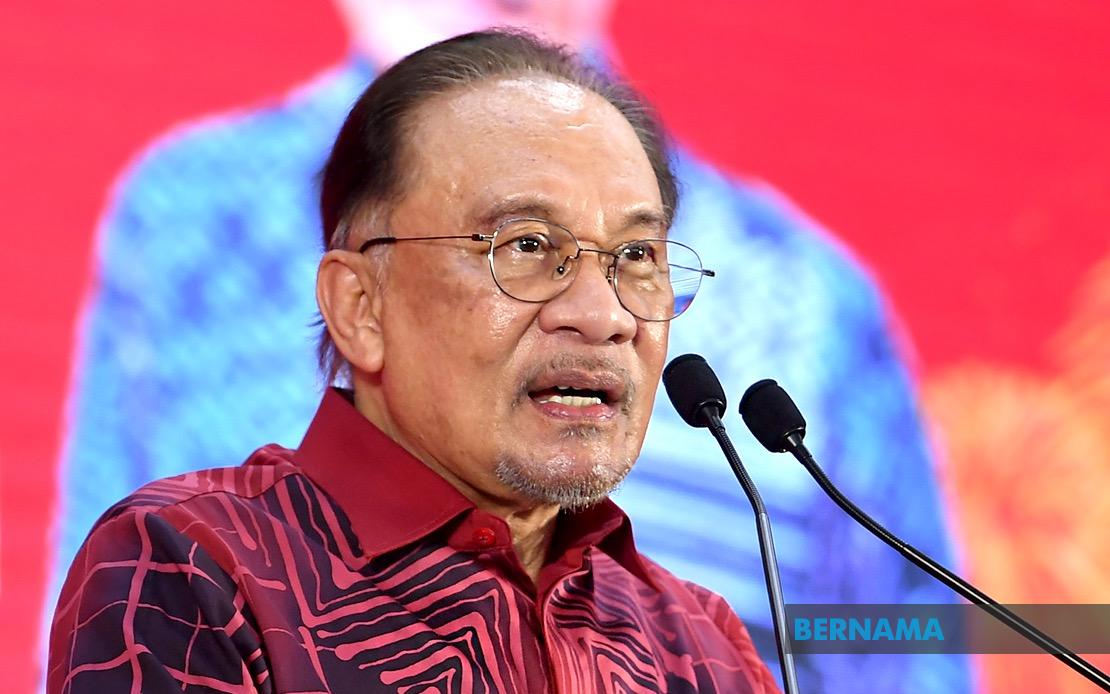
The PKR National Congress 2026 commenced in Melaka on Thursday with Prime Minister Datuk Seri Anwar Ibrahim positioned to deliver a landmark policy address that will crystallise the party's strategic priorities and long-term direction. Convening under the banner "Memugar Reformasi, Membina MADANI" (Revitalising Reformasi, Building MADANI), the two-day assembly represents one of the largest gatherings of the party faithful in recent years, drawing approximately 2,500 voting delegates alongside at least 3,000 observers from every state in the federation.
The congress reflects PKR's effort to consolidate its identity and messaging at a critical juncture in Malaysian politics. With Anwar now in the highest office, the party faces the dual imperative of maintaining its grassroots reformist credentials while steering the machinery of government through mounting economic and social pressures. The thematic framing—anchoring the nation's development agenda (MADANI) to the party's foundational commitment to reform—signals an attempt to bridge ideological continuity with pragmatic governance. This messaging resonates particularly in Southeast Asia, where populist and reform-minded movements must constantly negotiate between revolutionary rhetoric and practical administration.
The two-day programme began with dedicated sessions from PKR's youth wing, Angkatan Muda Keadilan (AMK), and its women's division, Wanita PKR, both officially opened by deputy president Nurul Izzah Anwar. These parallel proceedings allow the party's subsidiary organisations to articulate their own concerns and policy positions before the broader membership. The deliberate inclusion of these wings underscores PKR's internal democracy and the importance it places on generational and gender representation within its decision-making structures—a governance model that neighbouring Southeast Asian parties have increasingly sought to emulate.
The international dimension of the congress carries particular weight. Diplomatic representatives from the United States, China, Japan and Australia are attending, alongside leaders from local political parties. This multilateral presence transforms the event beyond a domestic party gathering into a quasi-diplomatic occasion, signalling to the global community that PKR operates within Malaysia's broader foreign policy framework. For Malaysian political observers, the attendance of major power representatives underscores the international scrutiny under which domestic politics now operates, especially given Malaysia's strategic position in regional geopolitics and its role within ASEAN.
Debate sessions have been structured around three pillars deemed essential to national wellbeing: the economy, education and political stability. Sixteen speakers representing various states and party wings will address these themes, creating space for regional voices and departmental expertise to feed into the party's collective deliberations. This decentralised approach to policy formulation distinguishes PKR from more hierarchically rigid parties and reflects the coalition's broader commitment to consultation, even if implementation sometimes lags behind intent.
Beyond policy positioning, the congress functions as a ritualistic affirmation of party unity and values. The presentation of the Bill Kayong Award to five families honours deceased members who devoted their lives to the PKR cause, binding contemporary members to the party's historical narrative and sacrificial tradition. Such ceremonial elements ground the party's contemporary agenda in accumulated collective memory, essential for maintaining cohesion within any large political organisation navigating internal factional tensions and generational change.
The congress agenda encompasses broader service provision to delegates and the public. Multiple government agencies, including the National Registration Department (JPN), Immigration Department, Royal Malaysia Police (PDRM) and Registrar of Societies (ROS), are present to offer information and administrative assistance. Simultaneously, the Domestic Trade and Cost of Living Ministry is operating the "Karnival Rahmah Mega" alongside the congress, blending party activities with government service delivery. This integration of administrative apparatus reflects the governing coalition's strategy of leveraging political events for public outreach and service accessibility, particularly on cost-of-living concerns that animate contemporary Malaysian electoral politics.
Anwar's winding-up address scheduled for Friday will encapsulate the congress's deliberations and set the party's strategic direction for the coming period. As both Prime Minister and party president, his remarks carry amplified significance—they simultaneously constitute party instruction and implicit government policy. This convergence of roles, while conferring considerable authority, also creates vulnerabilities should party and government agendas diverge, a tension increasingly visible in multi-party coalitions managing disparate constituencies and ideological bases.
The scale and composition of the congress—involving thousands of delegates from across the country plus international observers—indicates PKR's maturation as an institutionalised political force rather than a protest movement. Yet this institutionalisation carries inherent risks, particularly the potential calcification of structures and dilution of reformist zeal through bureaucratic processes. The congress's thematic emphasis on revitalising reformasi suggests party leadership recognises this tension and seeks to consciously recharge the movement's ideological foundations, a crucial task for any long-governing reform party confronting the inevitable compromises and disappointments of power.

