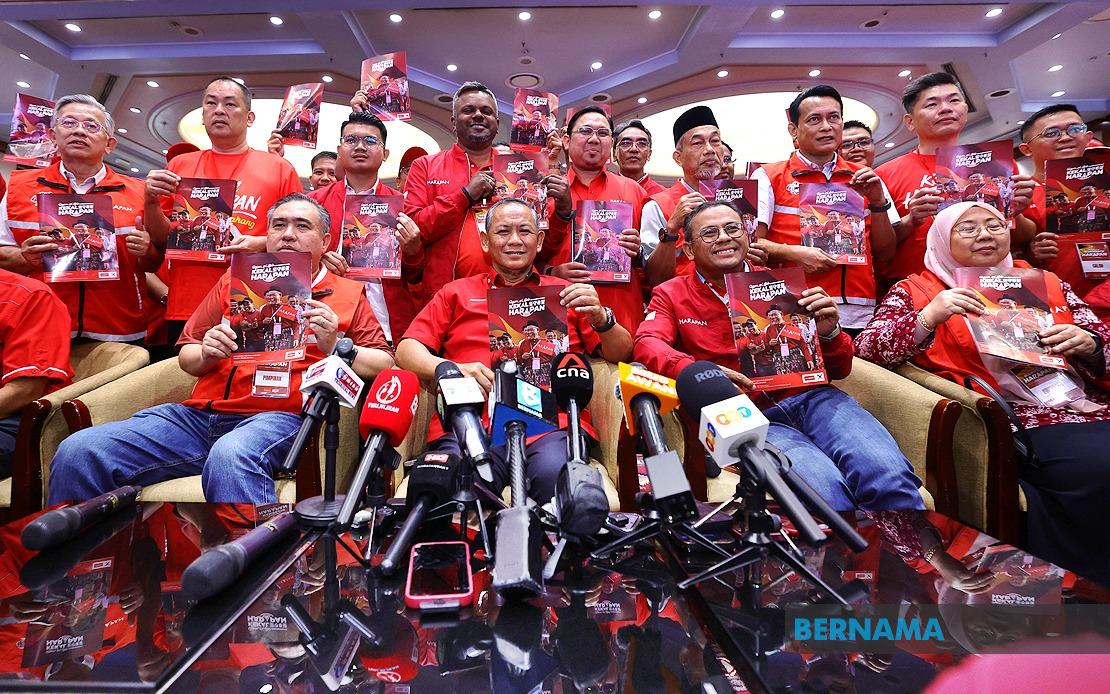
Prime Minister Datuk Seri Anwar Ibrahim is poised to take the campaign trail in Negeri Sembilan this Wednesday, stepping up Pakatan Harapan's push ahead of the 16th state election. Datuk Seri Aminuddin Harun, the PH coalition's state chairman and Linggi seat candidate, confirmed the schedule following the coalition's manifesto launch in Seremban on Wednesday evening. Anwar will participate in several major campaign events across Sikamat and Paroi constituencies alongside PH party leaders and ground organisers, underscoring the coalition's push to consolidate support in the key swing state.
Aminuddin addressed questions about Anwar's absence from the manifesto launch itself, emphasising that his participation midweek represents a stronger commitment to active campaigning. The Prime Minister's presence in the state carries symbolic weight beyond conventional campaign messaging—it signals confidence in PH's electoral prospects and the priority placed on retaining or expanding the coalition's foothold in Negeri Sembilan, a battleground with unpredictable voting patterns. The timing of his Wednesday visit allows PH to build momentum just days before early voting commences on July 28, with general polling scheduled for August 1.
The manifesto unveiled on Wednesday night encapsulates PH's governing platform across multiple policy domains critical to voters in the state. Administrative stability and institutional credibility remain front-and-centre concerns for Negeri Sembilan residents, particularly given the state's previous political volatility. The coalition's emphasis on people's well-being signals a focus on cost-of-living pressures and social safety nets—pressing concerns across Malaysia as inflation and economic uncertainty persist. Alongside this, PH has positioned itself as the guarantor of a competitive economy, an appeal likely directed at middle-income voters and small business owners wary of protectionist or unstable policies.
Education ranks prominently in the manifesto, reflecting nationwide anxiety about schooling standards and accessibility. Housing commitments address the perennial challenge of affordability in urban and semi-urban areas, while youth development speaks to demographic concerns about job creation and skill alignment with market demands. The inclusion of women and family empowerment plank indicates PH's attempt to broaden its appeal across household demographics, particularly important given women's significant voting participation. Tourism and customary heritage acknowledgments cater to Negeri Sembilan's identity and economic interests, especially given the state's cultural significance and tourism potential centred on sites like the Minangkabau heritage landmarks.
Modern agriculture and strategic infrastructure feature prominently in the manifesto—reflecting recognition that Negeri Sembilan, whilst increasingly urbanised, retains meaningful agricultural communities and faces infrastructure demands from its geographic position bridging the Klang Valley and southern regions. Social unity and harmony messaging carries particular resonance in a state with mixed demographic composition and historical electoral sensitivities around communal relations. These thematic choices suggest sophisticated targeting of different voter segments rather than one-size-fits-all messaging.
The coalition's campaign machinery reflects broad-based participation across PH's member parties. DAP secretary-general Anthony Loke, contesting the Chennah seat, represents the coalition's Malaysian Chinese Association equivalent within PH's framework. Selangor Menteri Besar and PH election director Datuk Seri Amirudin Shari brings organisational authority and experience from administering Malaysia's most economically significant state, lending operational credibility to the campaign. PKR secretary-general Datuk Dr Fuziah Salleh and Amanah vice-president Datuk Dr Mohd Hatta Md Ramli ensure participation from PH's key partner parties, demonstrating unity ahead of what could be a closely contested election.
Negeri Sembilan occupies a strategic position in Malaysian politics beyond its own state dynamics. As a relatively wealthy state with educated voters and unpredictable electoral behaviour, it serves as a bellwether for broader national sentiment. PH's performance here will signal whether the coalition can sustain voter confidence post-2022 general elections or whether erosion has begun setting in. Victory or significant gains would strengthen PH's narrative heading into other state elections and the eventual next general election, whilst losses would feed opposition narratives about declining coalition support.
The calendar pressure—early voting within a week—necessitates intensive campaigning during this critical phase. Anwar's presence in the state amplifies PH's campaign visibility and provides media hooks beyond standard candidate appearances. Presidential-level participation in state campaigns typically occurs when national leadership perceives strategic importance, suggesting PH views Negeri Sembilan as contested territory rather than safely secured ground. The coalition's willingness to deploy its premier asset underscores competitive dynamics that may not be immediately apparent from public polling or commentary.
For Malaysian voters and political observers, this Negeri Sembilan election functions as a mid-term check on PH governance and broader electoral trends. The state's size and complexity—rural agricultural areas, suburban sprawl, and urban centres with distinct political cultures—provide a microcosm of nationwide voting patterns. Results will inform strategists from all coalitions about evolving voter priorities, demographic shifts, and the effectiveness of particular messaging strategies. Anwar's Wednesday campaign events will be closely watched for tone, themes emphasised, and energy levels, providing diagnostic clues about PH's internal confidence and strategic focus areas as the coalition prepares for future electoral challenges.

