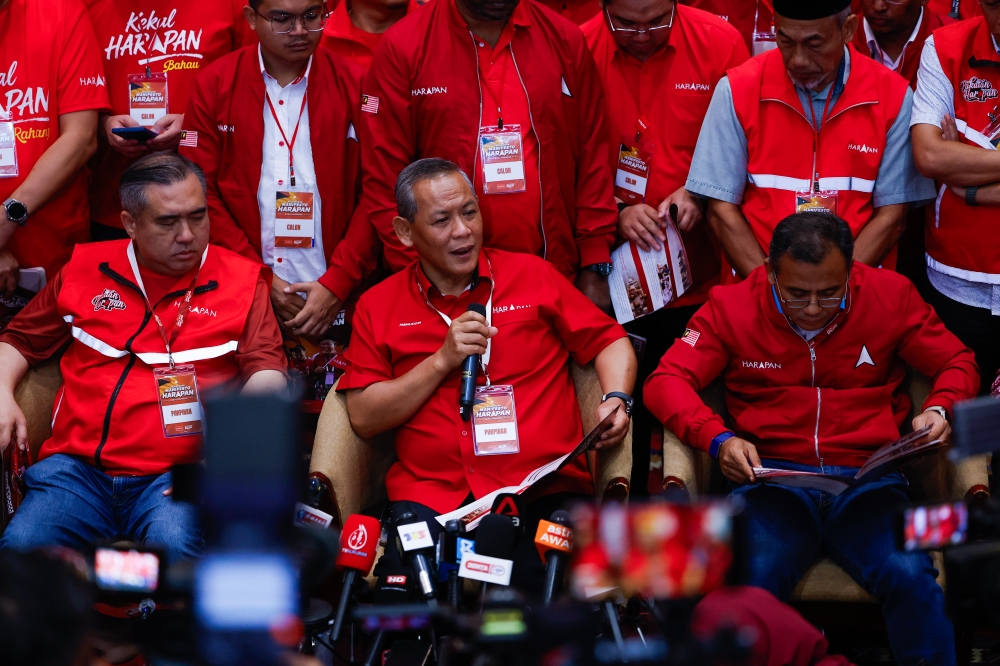
Prime Minister Datuk Seri Anwar Ibrahim is set to make an appearance at Pakatan Harapan's campaign activities in Negeri Sembilan on Wednesday, according to Negeri Sembilan PH chairman Aminuddin Harun, marking a significant escalation in the coalition's ground operations ahead of crucial electoral contests in the state.
The planned visit underscores the strategic importance that the federal government and Pakatan leadership attach to Negeri Sembilan, a traditionally competitive political territory where control of state machinery remains contested between major coalitions. Anwar's direct involvement in campaign activities signals both the coalition's confidence in its prospects and recognition that senior-level engagement may prove decisive in mobilising support among key voting constituencies.
Aminutddin's announcement of the Prime Minister's participation reflects the coordinated approach Pakatan Harapan has adopted for its electoral strategy. Such high-profile interventions by federal leaders typically serve multiple purposes: they generate media attention, energise party machinery at grassroots level, and project an image of national leadership backing local efforts. For voters in Negeri Sembilan, the appearance of the Prime Minister himself validates the coalition's claim to possess the competence and resources necessary to govern effectively.
Negeri Sembilan occupies a pivotal position within Malaysia's political landscape. The state's electoral dynamics influence broader national sentiment, and performance here often presages outcomes in other competitive states. Pakatan Harapan's commitment to resource deployment in Negeri Sembilan suggests the coalition recognises the territory as either genuinely contested or strategically valuable for demonstrating momentum heading into subsequent political contests.
The timing of Anwar's visit, announced several days in advance, allows campaign machinery adequate opportunity to organise public events, arrange media coverage, and coordinate supporters. This advance notification also grants opposition parties time to respond, typically through counter-programming or aggressive media messaging, intensifying the overall campaign atmosphere throughout the state.
Anwar's role as both Prime Minister and chairman of Pakatan Harapan positions him uniquely to articulate the coalition's vision for Negeri Sembilan's future. His campaign interventions customarily emphasise the federal government's economic initiatives, infrastructure projects, and policy positions designed to appeal to middle-income and aspirational voter segments. Such messaging resonates particularly powerfully when delivered directly by the nation's chief executive.
The campaign push in Negeri Sembilan occurs amid broader political activity across Malaysia, where various coalitions compete for voter support and state-level influence. Negeri Sembilan's particular significance lies in its swing-state characteristics—the state contains constituencies capable of shifting electoral outcomes based on voter sentiment, and neither the government nor opposition possesses overwhelming structural advantages.
For Malaysians following political developments, Anwar's campaign appearance represents more than routine political engagement. It illustrates how federal leaders actively campaign for subnational elections, deploying their credibility and profile to influence voter preferences at state level. This practice reflects Malaysia's integrated political system, where national and state contests remain intimately connected despite formal separation of responsibilities.
Packatan Harapan's organisation in Negeri Sembilan encompasses multiple component parties, each bringing distinct constituencies and local networks. The coalition's strategy necessarily accommodates these diverse elements while projecting unified messaging and coordinated campaign effort. Anwar's participation serves as a unifying symbol, bringing federal-level legitimacy and resources to support state-based party operations.
The state government's policies and development priorities will likely feature prominently during campaign activities, with Pakatan spokespeople highlighting initiatives addressing local concerns. Such emphasis on concrete governance issues serves to differentiate the coalition's platform from competitors and provides voters with substantive reasons for supporting their candidates beyond personality-based or historical political attachments.
For Malaysian businesses and investors monitoring political stability, Pakatan Harapan's renewed campaign intensity in Negeri Sembilan signals confidence in governance continuity. States governed by the coalition have generally implemented pro-business policies, and businesses operating there will view campaign success as positive for continued policy predictability and infrastructure investment.
As the campaign progresses, Negeri Sembilan will likely witness intensified activity from all major coalitions, with competing visions for the state's economic development, social services, and administrative governance. Anwar's participation represents a significant commitment of federal leadership attention, reflecting the state's importance within Pakatan Harapan's broader electoral calculus and political strategy.

