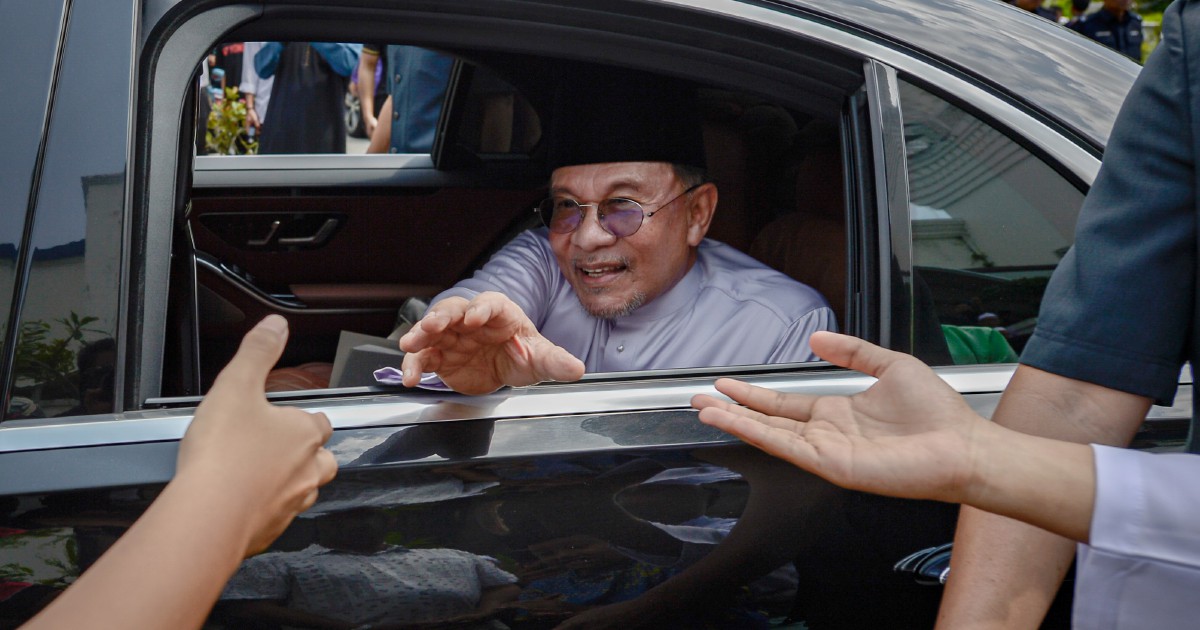
Prime Minister Datuk Seri Anwar Ibrahim is taking his message directly to Negri Sembilan voters today, with a concentrated campaign effort designed to sustain Pakatan Harapan's competitive position in the state election battle. The high-profile visit underscores the federal leadership's commitment to turning out support across the peninsula's smaller but politically significant states, where coalition fortunes have shown considerable volatility in recent years.
Negri Sembilan represents strategically important electoral terrain for Pakatan Harapan, sitting as it does between more heavily populated urban centres and rural strongholds where the coalition has historically struggled. The state's diverse demographic composition—spanning industrial zones around Seremban, agricultural regions, and suburban communities—makes it a microcosm of the broader electoral coalitions that determine national political outcomes. Local observers note that performance here often signals broader trends in middle-Malaysia voting behaviour.
Anwar's personal intervention in the campaign reflects a broader strategic calculation within Pakatan Harapan leadership. Rather than relying entirely on component party machinery, the Prime Minister has increasingly adopted a role as the coalition's principal vote-getter, leveraging his national profile and executive authority to generate enthusiasm among supporters. This approach acknowledges the reality that state elections no longer operate purely as local contests but rather as referendums on federal government performance and leadership credibility.
The timing of the Negri Sembilan campaign swing arrives amid a period when Pakatan Harapan faces persistent challenges in maintaining the coalition unity that has proven fragile at various pressure points. Competition between component parties for candidate nomination and resources remains a constant source of internal friction, particularly in states where multiple PKR, DAP, and Amanah divisions vie for prominence. Anwar's visible support for the coalition slate sends a message that he expects disciplined unity from all participating parties.
Negeri Sembilan's recent political history demonstrates both the opportunities and risks facing Pakatan Harapan in state contests. The state has swung between different political alignments, with local issues often dominating national considerations. Voters here respond particularly to bread-and-butter concerns: employment in the industrial sector, agricultural support programmes, and infrastructure development. Anwar's campaign messaging likely emphasises federal government initiatives on economic recovery and job creation that carry direct bearing on Negri Sembilan communities.
The state's electoral dynamics also involve complex interplay between Seremban's relatively urban character and the more conservative rural constituencies that stretch toward Pahang and Selangor. Managing this geographic and demographic complexity requires the type of political capital and organisational bandwidth that only federal-level intervention can reliably provide. Anwar's presence signals to both urban progressives and rural traditionalists within the coalition tent that Pakatan Harapan takes their respective concerns seriously.
Economic messaging forms a critical component of Pakatan Harapan's pitch in industrialised states like Negri Sembilan. The federal government's investment in manufacturing corridors, technology zones, and small-and-medium enterprise support programmes directly affect voter pocketbooks. Anwar has framed these initiatives as essential to Malaysia's competitive positioning within Southeast Asia's evolving economic landscape, a narrative that resonates particularly in states heavily dependent on manufacturing employment and industrial competitiveness.
The campaign effort also reflects Pakatan Harapan's recognition that state elections increasingly function as building blocks for federal political dominance. Victories in Negri Sembilan and other Peninsular states translate directly into enlarged parliamentary majorities and enhanced government legitimacy for future federal contests. Conversely, defeats or narrowed margins create momentum for opposition parties and raise questions about whether the federal coalition retains genuine grassroots support or merely benefits from transitional political shifts.
Opposition parties will certainly seek to counter Anwar's campaign presence with their own high-profile visits and messaging. The competitive nature of contemporary Malaysian state elections means that federal leaders from across the political spectrum increasingly treat these contests as essential opportunities to maintain and expand their voter bases. What distinguishes Pakatan Harapan's approach is the degree to which central party leadership directly participates in campaign activities rather than delegating such work entirely to state-level operatives.
Local Negri Sembilan political observers anticipate that Anwar's campaign visit will focus substantially on federally-administered programmes and initiatives with tangible benefits for state constituents. Road infrastructure projects, education and health facility improvements, and targeted assistance for smallholder farmers represent the types of concrete achievements that federal campaigns typically highlight. These messages prove particularly effective when delivered by someone commanding both executive authority and national prominence.
For Pakatan Harapan supporters and swing voters in Negri Sembilan, Anwar's appearance carries symbolic weight beyond the immediate campaign message. It signals that the federal Prime Minister views their state as important enough to warrant personal campaigning time, a consideration that matters substantially in political cultures where proximity to power and recognition correlate closely with voter motivation. This symbolic dimension complements the substantive messaging about government performance and policy direction.
The broader context surrounding Pakatan Harapan's state election efforts reveals an organisation acutely aware that political majorities require constant maintenance and expansion. Complacency about voter support or neglect of particular states creates openings for opposition parties to recapture lost ground or mobilise previously dormant constituencies. Anwar's Negri Sembilan campaign represents precisely this kind of preventive political investment, designed to sustain coalition dominance before opposition challenges can take meaningful hold.

