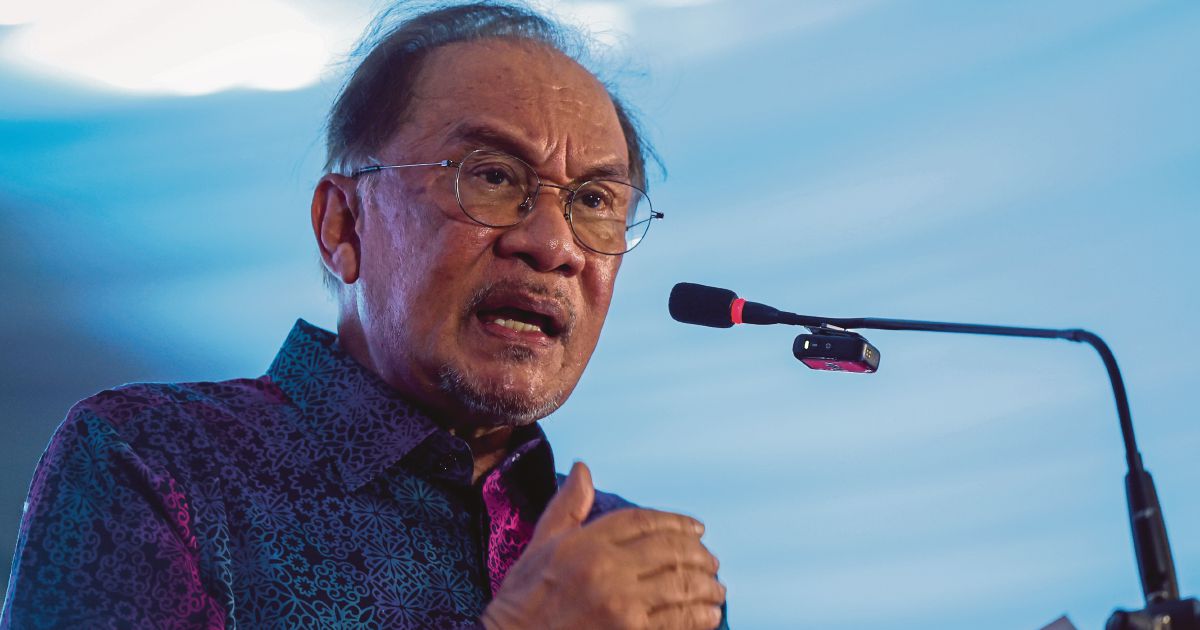
Prime Minister Datuk Seri Anwar Ibrahim has challenged the Opposition's choice to emphasise his parliamentary absence, asserting instead that national discourse should pivot toward examining claims of wrongdoing at Tabung Haji and safeguarding the financial interests of millions of Muslim depositors. The disagreement crystallises a broader tension over parliamentary accountability and priorities as Malaysia navigates questions about institutional integrity and leadership conduct.
Anwar's rebuttal signals his determination to control the narrative around recent parliamentary absences by reframing the terms of debate. Rather than engaging directly with concerns about his attendance record, the Prime Minister has attempted to elevate the conversation to what he characterises as matters of greater national consequence: the alleged misappropriation or mismanagement of funds at Tabung Haji, the statutory body responsible for managing savings for Malaysian pilgrims undertaking the Hajj. By shifting emphasis to the pilgrim fund's depositors—who represent a substantial cross-section of Malaysia's Muslim population—Anwar has positioned his government's investigation and response as protecting ordinary Malaysians' livelihoods.
Tabung Haji occupies unique significance in Malaysian society, holding the savings of millions of citizens who set aside funds over years or decades for their religious obligation to perform Hajj. The integrity of this institution carries both financial and spiritual weight for depositors, making allegations of mismanagement particularly sensitive. A Royal Commission of Inquiry (RCI) was established to examine circumstances surrounding the fund's operations, and the publication and discussion of its findings have become a focal point for parliamentary debate and public concern. Anwar's framing positions scrutiny of Tabung Haji's governance as transcending routine political criticism, elevating it to a matter affecting the welfare of pilgrims and their families.
The Prime Minister's response reveals calculated political positioning. By declining to address Opposition points about parliamentary attendance directly, Anwar avoids defensive posturing while simultaneously delegitimising what he suggests are petty partisan concerns. This approach assumes that voters and the public will prioritise alleged institutional fraud and protection of citizen savings over parliamentary procedural matters. The tactic reflects confidence that his government's handling of the Tabung Haji investigation will ultimately outweigh concerns about his own presence in Parliament.
However, the Opposition's focus on parliamentary attendance speaks to distinct accountability concerns. Regular Prime Ministerial presence in Parliament remains a cornerstone of Westminster-derived parliamentary systems, permitting direct questioning, government responsiveness, and visible accountability. Absences, whether frequent or justified, can be interpreted as diminished engagement with parliamentary oversight. The Opposition's emphasis on this dimension suggests they view parliamentary attendance as fundamental to institutional health, separate from any particular policy investigation. This disagreement reflects differing constitutional philosophies about leadership visibility and direct accountability.
For Malaysian observers, the dispute underscores ongoing tensions between executive authority and legislative oversight. Anwar's government has emphasised delivering on policy objectives and investigations into past mismanagement, sometimes at the apparent expense of traditional parliamentary engagement. The Opposition, conversely, has seized upon parliamentary dynamics as leverage for challenging government credibility. Both positions carry merit within competing visions of democratic governance: one privileging results and protection of citizen interests, the other emphasising procedural integrity and executive accessibility.
The Tabung Haji controversy itself carries historical weight in Malaysian politics. Previous governance failures at the fund have prompted public outcry and calls for reform. The current RCI represents governmental acknowledgment of systemic problems requiring investigation and correction. Anwar's emphasis on this dimension suggests his administration views transparent examination and remediation of Tabung Haji's issues as central to its legitimacy, particularly among Muslim voters who depend on the institution.
Yet the Prime Minister's deflection strategy may contain inherent risks. Consistently redirecting scrutiny toward other issues, even legitimate ones, could foster perceptions of evasiveness among parliamentary peers and public observers. The Opposition may persist in raising attendance questions as a means of highlighting what they frame as selective engagement with parliamentary processes. This dynamic could evolve into a sustained debate about governmental accountability structures, potentially complicating Anwar's ability to control political narrative.
For Southeast Asian observers, Malaysia's parliamentary dynamics reflect broader regional patterns. Many governments in the region balance executive efficiency with legislative oversight, often tilting toward decisive action over procedural regularity. Anwar's framing aligns with this inclination, positioning results-oriented governance—investigating institutional failures, protecting citizen savings—as superseding parliamentary aesthetics. Whether this calculation ultimately strengthens or weakens his political standing remains an open question.
The intersection of these issues will likely persist as a focal point for parliamentary debate and public discussion. How effectively Anwar's government addresses Tabung Haji reform while managing parliamentary relations may determine whether his reframing strategy succeeds in redirecting political conversation, or whether Opposition persistence forces sustained engagement with questions of parliamentary presence and executive accountability.

