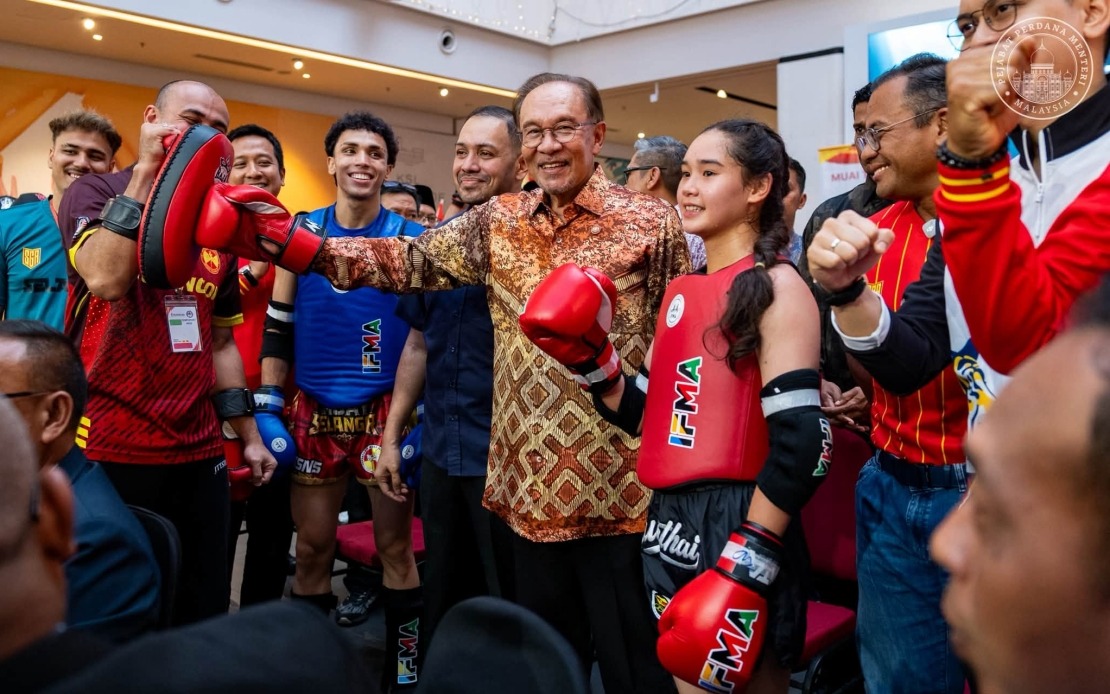
Prime Minister Datuk Seri Anwar Ibrahim has expressed considerable enthusiasm about the calibre of young talent on display at the 2026 Selangor Malaysia Games, declaring his confidence that many of these athletes possess the potential to become future representatives of Malaysia at global sporting competitions. During a visit to observe events at the biennial tournament, Anwar took time to interact with competitors and witness Muay Thai competitions, experiences that left a strong impression on the nation's leader regarding the standard of athletic preparation and mental fortitude evident among the participating youth.
Selangor's decision to host SUKMA for a second time in nearly three decades has brought together an impressive gathering of sporting talent. The current edition of the games, which runs through August 24, features more than 5,000 young athletes representing all regions of Malaysia, competing across 37 different sporting disciplines for a combined prize pool of 468 gold medals. This scale of competition provides a significant platform for identifying and nurturing emerging talent that may later transition to senior national teams and international competition circuits.
Anwar's observations about the athletes he encountered highlight the multifaceted qualities that he believes will serve them well in future endeavours. Beyond raw athletic ability, the Prime Minister specifically drew attention to the discipline and courage demonstrated by the young competitors, suggesting that these character attributes may prove equally important as physical prowess in their potential progression through elite sporting pathways. The combination of rigorous training, mental resilience, and competitive spirit that characterises these emerging athletes reflects years of development work by coaches and sporting organisations across the country.
The significance of SUKMA extends beyond medal tallies and individual athletic records. The games function as a crucial filtering mechanism within Malaysia's sports development pipeline, serving as a proving ground where young athletes can be evaluated, refined, and potentially identified for inclusion in age-group or senior national teams. For Malaysian sports federations and performance management systems, events like SUKMA provide invaluable opportunities to monitor the progression of athletes and make strategic decisions about resource allocation and long-term planning for international representation.
Selangor's hosting of the games carries particular weight given the 28-year interval since the state last undertook this responsibility. The logistics and infrastructure required to accommodate such a large competition, coupled with the coordination necessary among multiple sporting bodies and regional authorities, underscore the commitment required to maintain and develop Malaysia's grassroots sports ecosystem. Investments made in facilities and organisation for SUKMA contribute to broader sporting infrastructure that can benefit communities and future competitions throughout the state.
The Prime Minister's explicit hope that these young athletes will eventually represent Malaysia internationally reflects a broader strategic perspective on national sporting development. Rather than viewing SUKMA merely as an end in itself, Anwar frames the competition as a stepping stone within a larger talent development continuum. This vision acknowledges that while success at the domestic level is valuable, the ultimate measure of the national sports system's effectiveness lies in its capacity to produce world-class competitors capable of achieving distinction at Olympic Games, Commonwealth Games, Asian Games, and world championships across various sports.
For young athletes competing at SUKMA, endorsement from the nation's highest office carries both symbolic and practical significance. Recognition from the Prime Minister may enhance motivation and reinforce the national commitment to supporting athletic development, while also potentially influencing policy and resource decisions affecting sports funding and infrastructure. The visibility accorded to these athletes through high-level attention can contribute to a cultural shift that elevates the status and attractiveness of competitive sports as a viable career pathway.
The diversity of sports represented at SUKMA, spanning 37 different disciplines, means that Malaysia's emerging talent pool extends across a wide range of athletic endeavours. This breadth is crucial for international competitiveness, as it allows the nation to develop medal-winning capabilities across multiple sports rather than concentrating resources narrowly. The exposure young athletes gain through competing in such varied sports environments can also create unexpected opportunities for cross-training benefits and the identification of versatile talents.
Looking forward, the trajectory of SUKMA athletes will depend significantly on the follow-up support structures available to those who excel at the games. National sporting bodies must translate the Prime Minister's optimism into concrete pathways that include coaching development, training grants, sports science support, and opportunities for competition at progressively higher levels. Without these transitional mechanisms, even the most talented athletes identified at SUKMA may struggle to reach their international potential.
Anwar's public articulation of confidence in the next generation of Malaysian athletes serves an important morale-building function for the sporting community. Coming from the top level of government, such statements reinforce the message that national development includes investment in human capital through sports, and that achievement in athletic competition is valued as part of Malaysia's broader national goals. This political backing can influence how resources flow to sporting organisations and how sports development is prioritised within the context of competing demands on the nation's budget.
The 2026 SUKMA games thus represent more than a regional competition decided by medals and records. They constitute a visible manifestation of Malaysia's commitment to identifying, developing, and projecting talented young people onto the international stage. Through competitions like these, the nation builds both the individual athletes who will wear its colours abroad and the institutional knowledge and infrastructure that enable sustained sporting excellence across generations.

