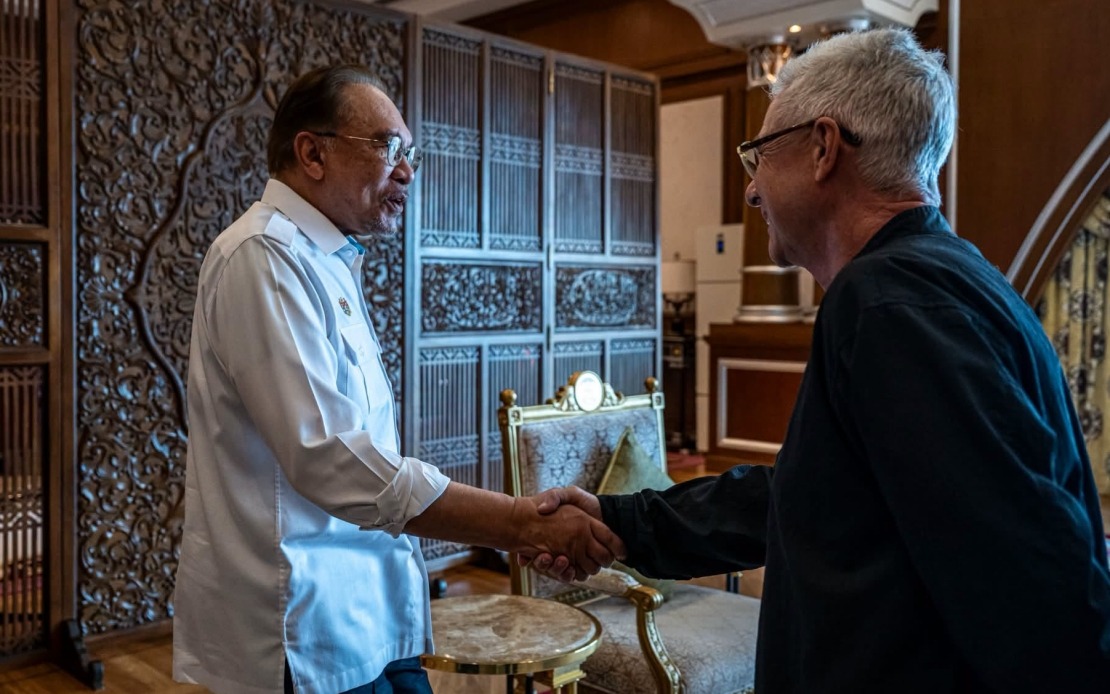
Prime Minister Datuk Seri Anwar Ibrahim has engaged Singapore's Grand Prix leadership to extract operational insights ahead of Malaysia's return to hosting a marquee Formula 1 event this October. The meeting with Singapore Grand Prix Executive Director Michael Roche represents a strategic knowledge-transfer initiative designed to leverage Singapore's sophisticated event management experience for the 2026 Bahrain Grand Prix at Sepang International Circuit (SIC). The conversation reflects a pragmatic approach by Malaysia's government to ensure the high-profile motorsports fixture meets international expectations while maximizing broader economic returns.
The 2026 Bahrain Grand Prix, scheduled to take place at SIC from October 2 to 4, materializes from an unprecedented collaboration between Malaysia and Bahrain that reshapes the traditional geographic configuration of international racing. This arrangement emerged after the original April scheduling at Bahrain International Circuit faced postponement due to escalating geopolitical instability affecting the wider West Asian region. The relocation to Malaysian soil represents a significant diplomatic and economic opportunity, positioning Sepang as a temporary host venue for one of motorsport's most prestigious competitions and signalling Malaysia's renewed prominence within the F1 ecosystem.
The decision to consult Singapore's playbook carries substantial practical weight. Singapore has cultivated world-recognized expertise in executing the Marina Bay Grand Prix, an urban street circuit event that attracts global audiences and generates substantial ancillary economic activity. The city-state's experience encompasses crowd management, infrastructure coordination, sponsor relations, media logistics, and the intricate choreography required to transform a familiar urban landscape into a competitive racing environment while minimizing disruption. By studying Singapore's methodologies, Malaysian planners gain access to tested frameworks that address predictable operational challenges and identify opportunities for innovation within constraints.
Anwar articulated the government's broader vision for the event in his official statement, emphasizing outcomes beyond the race weekend itself. The hosting arrangement is positioned as a catalyst for tourism expansion, employment generation across hospitality and service sectors, business opportunities for local vendors and suppliers, and reinforced investor sentiment regarding Malaysia's capacity to deliver large-scale international undertakings. The event forms a complementary pillar supporting the Visit Malaysia 2026 campaign, a comprehensive initiative designed to attract international leisure and business travel by showcasing the country's capabilities and attractions during a marquee year.
The economic multiplier effects of major sporting events have demonstrated considerable traction in Southeast Asian contexts. Tourism arrivals spike during hosting periods, hotel occupancy rates climb, transportation services experience heightened demand, and ancillary sectors from retail to food services benefit from visitor spending. The Bahrain Grand Prix iteration potentially attracts a demographic skewed toward affluent international spectators, corporate hospitality attendees, and media personnel—segments that typically exhibit higher per-capita spending and longer-term destination engagement compared to mass tourism cohorts.
Malaysia's return to the F1 calendar after a seven-year absence carries symbolic weight beyond commercial considerations. Sepang hosted the Malaysian Grand Prix consecutively from 1999 through 2017, establishing the circuit as a recognized F1 fixture and generating substantial national pride through the motorsport platform. The cessation resulted from escalating operational costs and licensing fee burdens that rendered the traditional annual hosting model economically unsustainable under the commercial terms imposed by Formula 1 management. The 2026 arrangement, operating under a Malaysia-Bahrain partnership framework, potentially mitigates financial exposure through cost-sharing mechanisms and revenue pooling, enabling Malaysia to re-enter the elite motorsports hosting landscape without absorbing the full burden that previously prompted withdrawal.
Anwar's emphasis on positioning Malaysia as a "regional motorsports hub" reflects strategic thinking about sectoral positioning and competitive differentiation. Southeast Asia contains multiple aspiring F1 destinations, and Malaysia seeks to establish itself as the preferred venue for major racing events through demonstrated organizational excellence and infrastructure capability. This positioning extends beyond isolated event hosting to encompass facilities development, technical expertise cultivation, sponsorship attraction, and the creation of competitive advantages that position the country favorably against regional competitors bidding for prestigious motorsport competitions.
The coordination between Malaysian government institutions, Sepang International Circuit management, Formula 1, and the FIA represents a complex stakeholder alignment challenge that successful event delivery requires. Each actor brings distinct priorities—commercial interests, regulatory compliance, local economic benefit, and international reputation—that must be harmonized through transparent communication and mutually beneficial arrangements. The consultation process initiated through Anwar's engagement with Singapore's leadership extends to multiple levels of preparation, encompassing traffic management protocols, security frameworks, environmental impact mitigation, accommodation coordination, and the granular operational details that distinguish successful events from logistically troubled ones.
The October 2026 timeframe provides a compressed preparation window compared to traditional F1 hosting arrangements, which typically involve multi-year lead times for infrastructure upgrades and operational planning. This condensed timeline necessitates accelerated decision-making, rapid resource mobilization, and efficient stakeholder coordination. The comparative advantage of consulting experienced event operators like Singapore cannot be overstated—existing templates and playbooks compress learning curves and reduce the likelihood of preventable execution failures that could undermine Malaysia's event reputation or impose unexpected operational burdens.
International media coverage of Malaysia's motorsports hosting carries spillover effects for broader national branding and tourism positioning. The global Formula 1 audience encompasses hundreds of millions, and associated editorial coverage in travel publications and broadcast outlets generates promotional value difficult to quantify monetarily. Successful event delivery contributes to accumulated national reputation capital, influencing downstream destination selection by corporate travel planners, convention organizers, and leisure travelers evaluating Southeast Asian options.
The geopolitical context surrounding the original Bahrain scheduling displacement warrants noting. The postponement from April to October reflected security concerns and instability in the broader regional environment that affected event viability at the originally planned location. The relocation to Malaysia effectively insulates the event from localized political volatility while offering Bahrain continued participation in a prestigious motorsport platform through the collaborative arrangement. This solution demonstrates pragmatic event management in environments where fixed scheduling proves incompatible with ground realities, and creative solutions enable stakeholder interests to be served despite disrupted assumptions.

