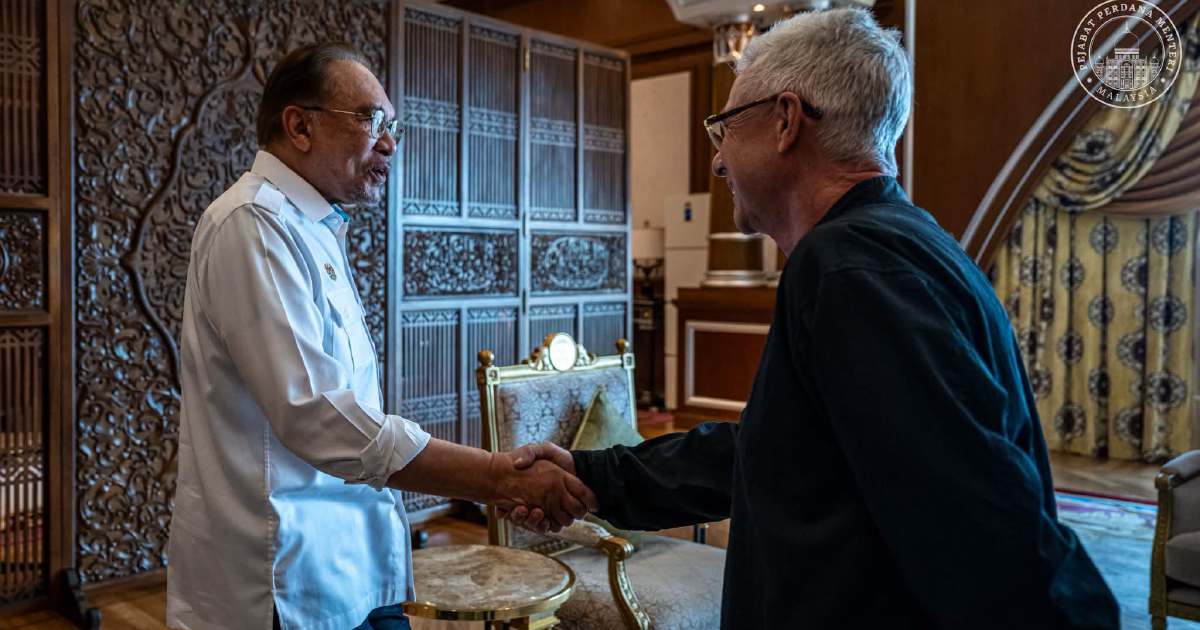
Prime Minister Datuk Seri Anwar Ibrahim has engaged with Singapore Grand Prix executive director Michael Roche to exchange insights on managing large-scale motorsport events, signalling Malaysia's preparedness for hosting Formula 1 racing at the Sepang International Circuit this October. The meeting underscores the nation's determination to execute the Formula 1 Gulf Air Bahrain Grand Prix to international standards whilst learning from one of Asia's most established Grand Prix operations.
Singapore's Grand Prix has earned recognition as a model motorsport event in Southeast Asia, operating since 2008 with a reputation for seamless logistics, crowd management, and integration with urban infrastructure. As a night race through city streets, the Singapore event presents unique operational challenges that differ fundamentally from traditional circuit-based racing. Michael Roche's expertise spans decades of motorsport event management, positioning him as a valuable resource for Malaysian organisers preparing their first Grand Prix at the Sepang circuit.
The Sepang International Circuit, located approximately 40 kilometres south of Kuala Lumpur, has hosted various international motorsport events and possesses modern facilities suited to Formula 1 requirements. However, staging a Grand Prix requires far more than functional racing infrastructure—it demands coordinated planning across security, transportation, medical services, broadcast operations, and fan engagement across multiple days. The consultation with Singapore's leadership reflects Malaysia's pragmatic approach to leveraging regional expertise rather than duplicating trial-and-error processes.
The Formula 1 Gulf Air Bahrain Grand Prix represents a significant milestone for Malaysian motorsport and the broader economy. The October calendar positioning places the event during Malaysia's school holidays, potentially attracting substantial domestic attendance alongside regional and international visitors. Formula 1 events typically generate employment, increase hotel occupancy, boost retail and hospitality sectors, and enhance a nation's global sports profile. For Malaysia, particularly Selangor, the economic multiplier effects could prove substantial across construction, services, and technology sectors involved in event delivery.
Operational best practices encompassing crowd flow, parking infrastructure, public transportation coordination, and emergency response protocols form the backbone of successful Grand Prix execution. Singapore's experience managing 900,000 spectators across three days whilst maintaining safety standards and operational efficiency provides directly applicable lessons. Infrastructure bottlenecks, spectator comfort, food and beverage service capacity, and payment systems represent technical challenges where documented solutions exist. Rather than rediscovering solutions, Malaysia's engagement with proven expertise accelerates preparation and reduces implementation risks.
The October timing creates a compressed preparation window, making knowledge transfer particularly valuable. Finalising broadcast partnerships, securing sponsor agreements, coordinating international television production standards, and aligning with Formula 1's operational requirements all demand precisely choreographed execution. Government agencies, transport authorities, healthcare providers, and private sector operators must synchronise their efforts seamlessly. The consultation with Singapore's executive director provides access to operational frameworks and contingency protocols developed through multiple years of Grand Prix delivery.
Regional motorsport development has traditionally concentrated in Singapore, with Malaysia serving primarily as a secondary venue for testing and lower-tier competitions. Hosting a Formula 1 Grand Prix elevates Malaysia's status within the global motorsport calendar and challenges the perception of Singapore's regional monopoly. This competitive positioning extends beyond motorsports into broader tourism and sports hospitality sectors, where Malaysia seeks to establish itself as a comprehensive regional destination rather than a secondary option.
The meeting also reflects broader diplomatic and economic coordination between Malaysia and Singapore, two nations with intertwined histories and contemporary business relationships. Motorsport events transcend pure sporting competition, serving as platforms for diplomatic engagement, business networking, and soft power projection. The willingness to consult and share expertise demonstrates collaborative regional approaches despite occasional bilateral tensions or competitive positioning.
Preparing for October's Grand Prix whilst drawing on Singapore's playbook positions Malaysia to deliver a world-class event meeting Formula 1's exacting technical and operational standards. The consultation with Michael Roche represents smart governance—recognising that excellence need not mean starting from zero, but rather building upon proven methodologies adapted to Malaysia's context. Success in October could establish Malaysia as a regular Formula 1 venue, opening opportunities for additional motor racing events and supporting the development of a domestic motorsport industry ecosystem.

