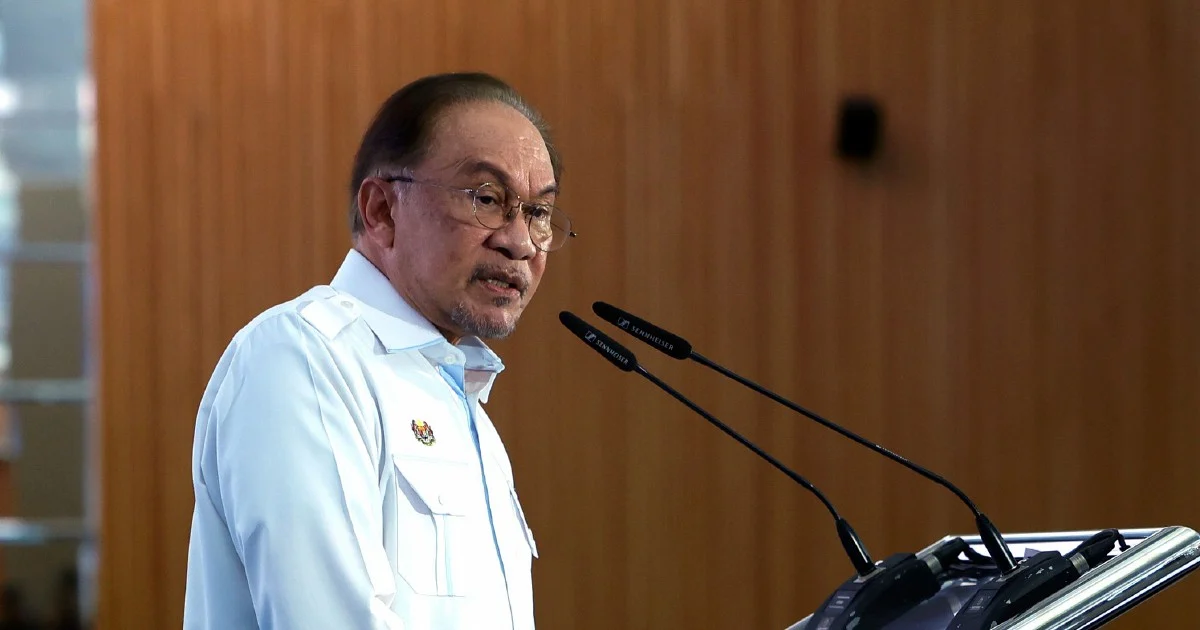
Prime Minister Datuk Seri Anwar Ibrahim has pushed back against claims that the federal government allocates development funds in a manner that disadvantages certain states, signalling the administration's commitment to equitable resource distribution across Malaysia's diverse regions.
The allegations of skewed allocation have long been a point of contention in Malaysian politics, with opposition figures and some state governments periodically raising concerns about whether development projects and funding are disbursed based on merit and constitutional entitlements or influenced by political considerations. These criticisms have gained particular traction in recent years as economic disparities between states have become increasingly visible and politically charged.
Anwar's categorical rejection of these claims reflects the federal government's position that funding mechanisms are guided by standardised criteria and established formulae rather than partisan preferences. The Prime Minister's dismissal underscores a broader narrative from Kuala Lumpur that development allocation processes operate transparently within institutional frameworks designed to ensure fairness across all fourteen states and three federal territories.
The question of equitable development spending remains strategically important for Malaysia's political stability and regional cohesion. States with lower development indicators have occasionally claimed they receive disproportionately smaller allocations relative to their economic needs and population size, fuelling perceptions of federal neglect in less-developed areas. These grievances, if left unaddressed, can strain federal-state relationships and complicate the federal government's ability to build consensus on key policy initiatives.
For Malaysian policymakers and administrators, such disputes carry significant implications for governance. The distribution of development funds through various channels—including federal grants, infrastructure projects, and special purpose allocations—requires careful calibration to maintain both objective fairness and political acceptability across a diverse coalition of state governments. The federal government must demonstrate that allocation decisions reflect published guidelines rather than hidden political calculations.
Anwar's intervention represents an attempt to neutralise a recurring criticism without necessarily providing detailed data breakdowns that might invite further scrutiny. By framing the issue as fundamentally settled—the government distributes fairly—the Prime Minister signals that no systematic review of allocation criteria is contemplated. This approach aims to close down debate rather than engage with underlying concerns about whether existing mechanisms adequately serve all regions.
The backdrop to this statement includes Malaysia's ongoing efforts to balance development priorities across regions with vastly different economic profiles and growth trajectories. Wealthier states with diversified economies and established infrastructure networks may naturally attract private investment, potentially making federal allocation even more critical for less-developed areas attempting to narrow economic gaps. The federal government's role in compensating for regional disparities through targeted allocations thus carries substantial weight.
For Malaysian readers in underperforming states, whether Anwar's assurance addresses their underlying concerns depends largely on whether they perceive existing allocation mechanisms as truly equitable. Public confidence in federal fairness becomes difficult to sustain if visible disparities in infrastructure quality, service provision, and economic opportunity persist despite official claims of impartial distribution. Transparency in allocation decisions and published performance metrics could strengthen confidence beyond mere assertions.
The timing and tone of Anwar's remarks suggest the federal government considers these allegations sufficiently prominent or damaging that direct prime ministerial rebuttal was necessary. Rather than delegating response to cabinet ministers responsible for development or finance, Anwar's personal engagement signals that he regards state allocation practices as falling within his direct responsibility and political purview. This personalisation of the issue reflects how centrally federal-state relations feature in Malaysian governance.
Regionally, the debate over federal allocation practices in Malaysia carries modest relevance for other Southeast Asian nations managing their own federal or devolved systems. How a multiethnic, multireligious federation handles resource distribution while maintaining political cohesion offers practical lessons for neighbouring states wrestling with similar questions about equity and representation.
Moving forward, the credibility of the federal government's position will depend not merely on categorical denials but on concrete evidence that allocation mechanisms serve all states proportionately to their legitimate claims. Any future disputes over specific projects or funding decisions will be interpreted through the lens of Anwar's statement, making consistency and demonstrable fairness increasingly important for maintaining public confidence in federal institutions.

