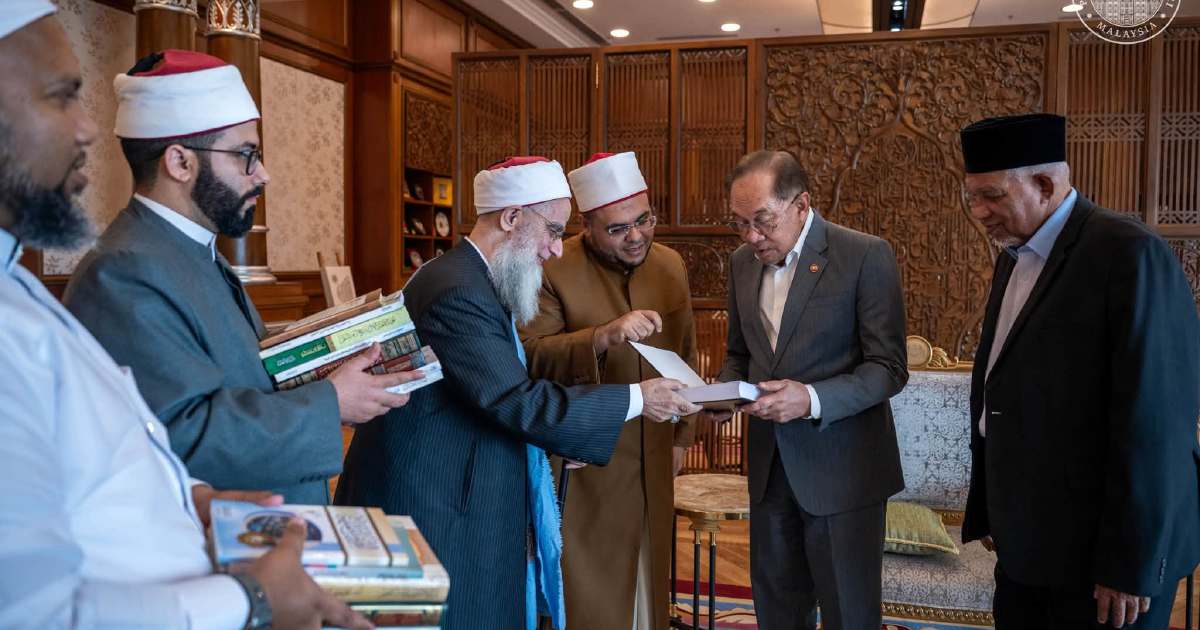
Prime Minister Datuk Seri Anwar Ibrahim held discussions with one of Egypt's most respected Islamic scholars, Sheikh Dr Mustafa An-Nadwi Al-Hasani Mansurah, during an official visit to the prime ministerial office in Putrajaya. The encounter signals Malaysia's continued commitment to fostering intellectual exchange with leading figures in the Islamic world, particularly scholars of regional and international standing.
Sheikh Dr Mustafa An-Nadwi Al-Hasani brings significant credentials within Islamic academic circles. His work spans contemporary Islamic thought, jurisprudence, and the application of traditional Islamic principles to modern challenges—areas of particular relevance as Muslim-majority nations navigate rapid social and technological change. The timing of such high-level engagements underscores the Malaysian government's strategic interest in maintaining dialogue with influential religious intellectuals who shape broader conversations within Muslim communities across the Middle East and beyond.
Anwar Ibrahim's reception of the Egyptian scholar reflects a broader diplomatic pattern established during his tenure as prime minister. Malaysia has positioned itself as an active participant in global Islamic discourse, hosting conferences, establishing academic partnerships, and engaging with thinkers who influence policy conversations in the Muslim world. These interactions extend beyond ceremonial value, often resulting in collaborative initiatives spanning education, interfaith understanding, and religious scholarship.
The visit carries particular significance given the historical ties between Malaysia and Egypt. Both nations maintain longstanding cultural and religious connections, with Egyptian expatriates comprising a notable community in Malaysia and Malaysian students historically studying at prominent Egyptian institutions like Al-Azhar University. Such official engagements help reinforce these people-to-people links and demonstrate governmental interest in sustaining intellectual partnerships across the region.
Sheikh Dr Mustafa An-Nadwi Al-Hasani's prominence within Islamic scholarly networks makes his engagement with Malaysian leadership symbolically important. Scholars of his standing often influence religious discourse at the highest levels, contributing to interpretations of Islamic law, ethics, and governance that resonate across Muslim societies. By hosting such figures, Malaysia positions itself as a serious partner in shaping contemporary Islamic thought rather than merely consuming it.
The meeting also occurs within a context of Malaysia's own efforts to develop sophisticated theological and jurisprudential responses to contemporary issues. The country has invested in Islamic research institutions, hosted major Islamic conferences, and supported scholarship addressing challenges from environmental sustainability to artificial intelligence through an Islamic perspective. Interactions with international scholars facilitate knowledge exchange that strengthens these domestic initiatives.
Regionally, such diplomatic courtesies carry weight in Southeast Asia's Muslim-majority and Muslim-minority contexts. Malaysia's engagement with respected Islamic intellectuals enhances its soft power within Muslim communities across the region, including in Indonesia and Brunei. Simultaneously, it demonstrates to non-Muslim neighbours and the international community Malaysia's commitment to moderate, intellectually rigorous Islamic scholarship as opposed to extremist interpretations.
The visit underscores how Malaysia's approach to Islamic engagement remains multifaceted, balancing formal state mechanisms with grassroots intellectual networks. Rather than limiting religious discourse to official channels, the government actively cultivates relationships with independent scholars whose influence stems from academic reputation and spiritual authority. This approach acknowledges that contemporary Islamic thought extends far beyond traditional government-sponsored theologians.
Such meetings also serve practical purposes beyond diplomatic symbolism. Discussions between Malaysian leadership and prominent Islamic scholars often address shared regional challenges—from combating extremist narratives to promoting sustainable development within Islamic frameworks. These conversations feed into policy considerations, educational curricula, and Malaysia's positioning within broader international initiatives addressing religious extremism and promoting interfaith dialogue.
For Egyptian scholarship specifically, the visit reflects recognition of Cairo's role as a major intellectual centre within the Islamic world. Despite Egypt's significant political and economic challenges, its status as home to Al-Azhar, arguably Islam's most prestigious institution, and as birthplace of numerous influential contemporary Islamic thinkers, ensures continued international engagement with Egyptian scholars. Malaysian interest in hosting such visits signals acknowledgment of this intellectual weight.
Looking forward, such engagements typically lead to substantive collaborations. Previous visits by prominent Islamic scholars to Malaysia have resulted in lecture tours, educational partnerships, joint research initiatives, and contributions to Malaysian Islamic institutions. The Putrajaya meeting therefore potentially represents the beginning of broader cooperation extending beyond the bilateral courtesy itself.
Anwar Ibrahim's willingness to personally receive such visitors also reflects his own intellectual interests and positioning within Malaysian politics. Known for emphasizing Islam's compatibility with democratic values and modern governance, Anwar has consistently sought to engage with Islamic scholars sharing similar reform-oriented perspectives. This meeting thus represents continuity with established patterns of intellectual diplomacy characterizing his leadership approach.

