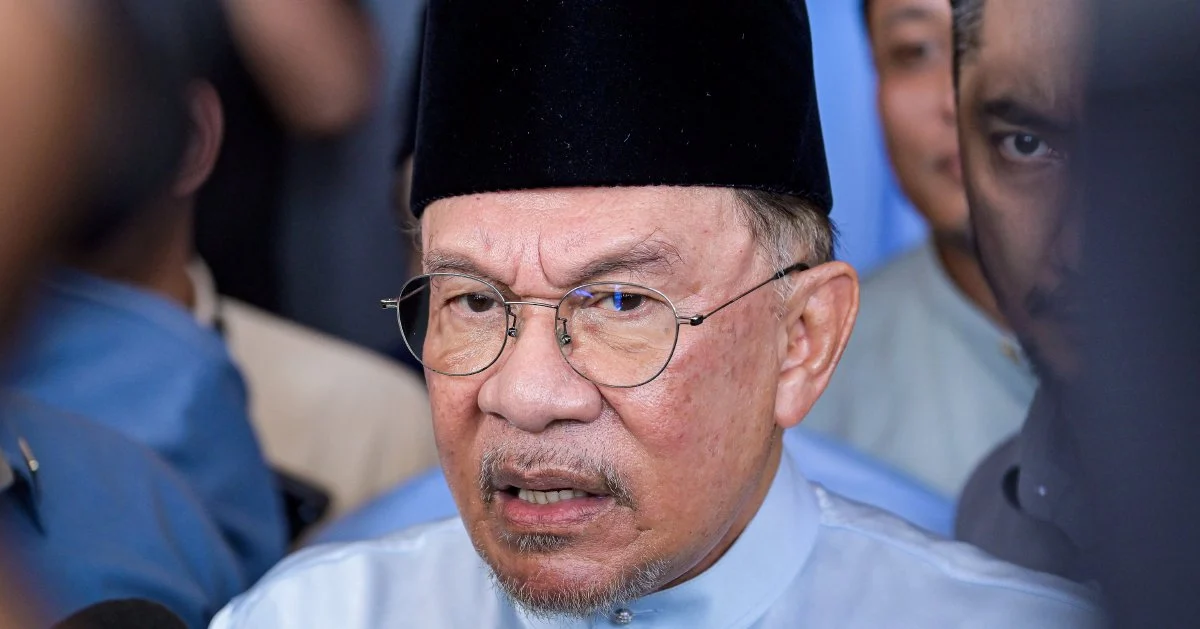
Prime Minister Datuk Seri Anwar Ibrahim moved swiftly to dismiss reports that caretaker Johor Menteri Besar Datuk Onn Hafiz Ghazi had been prevented from attending a gathering at Felda settlements, characterising the allegations as without foundation when addressing reporters at Dengkil.
The denial comes at a particularly sensitive moment in Malaysian politics, as tensions between the federal administration and Johor's interim leadership have occasionally surfaced in recent months. Onn Hafiz, who continues to oversee the southern state's government following the dissolution of the previous administration, has remained a prominent figure despite his caretaker status. Questions about his political positioning and access to key events have periodically attracted public attention, making Anwar's direct intervention noteworthy.
Felda settlements across Malaysia represent crucial constituencies with substantial populations of smallholders and their families. These communities have historically wielded considerable influence in electoral outcomes, and political engagement within these areas remains a priority for federal and state-level politicians. Events at Felda locations typically draw significant crowds and media attention, making any restrictions on participation by senior officials a matter of political consequence. The alleged exclusion, had it occurred, would have signalled a notable shift in political dynamics within Johor's governance.
The Prime Minister's categorical rejection of the exclusion claim underscores the federal government's commitment to maintaining established political protocols and avoiding the appearance of factional discrimination. Such assertions, whether accurate or not, can rapidly escalate partisan tensions and undermine institutional credibility. By publicly contradicting the allegations, Anwar appears to be signalling that no deliberate effort was undertaken to marginalise Onn Hafiz from legitimate state functions or ceremonial appearances.
Onn Hafiz's position as caretaker Menteri Besar carries its own complexities within Malaysia's constitutional framework. Caretaker administrations operate within defined parameters following the dissolution of state assemblies, yet maintaining their operational legitimacy and public representation remains essential. Any attempt to diminish his official standing through informal exclusions from significant gatherings could have raised constitutional and procedural questions, making the Prime Minister's clarification particularly important.
The episode reflects broader patterns in Malaysian political life where speculation about access and influence often circulates rapidly through both traditional and digital media channels. Allegations of marginalisation, whether substantiated or rumour-based, can acquire momentum independently of their factual accuracy, potentially damaging political relationships and public trust. Anwar's prompt intervention suggests an awareness of how such narratives, left unchallenged, might calcify into accepted political wisdom.
Felda's significance extends beyond its constituency base. The Federal Land Development Authority manages extensive land resources and represents a crucial institution for rural economic development. Political stability and cooperative engagement between federal and state authorities concerning Felda matters therefore carries implications for broader development initiatives and stakeholder confidence. Disputes that might affect Felda's operational relationships with political leadership could indirectly impact broader governance effectiveness.
The timing of these allegations and their subsequent denial also warrants consideration within the context of Johor's political calendar and forthcoming electoral processes. The state remains central to national politics, and developments affecting its leadership hierarchy inevitably attract scrutiny beyond the state's boundaries. How federal and state administrations navigate such tensions can influence broader coalition dynamics and political alignments.
Anwar's intervention appears designed to reset expectations regarding political conduct and inter-governmental collaboration. By explicitly denying that any instruction existed to exclude Onn Hafiz, the Prime Minister is reaffirming principles of institutional respect and procedural propriety. This message carries implications not only for Johor but for the broader political culture within Malaysia's federal system, where state and federal authorities must maintain working relationships despite competing political interests.
Moving forward, the clarification may serve to diminish speculation about internal political fractures while reinforcing the narrative that Malaysia's political institutions continue operating according to established norms. However, the very emergence of such allegations suggests underlying sensitivities about access, influence, and political standing remain present within the current administration's ecosystem. Observers monitoring Malaysian politics will likely continue tracking how state-federal relations evolve, particularly as elections draw nearer and political positioning intensifies.

