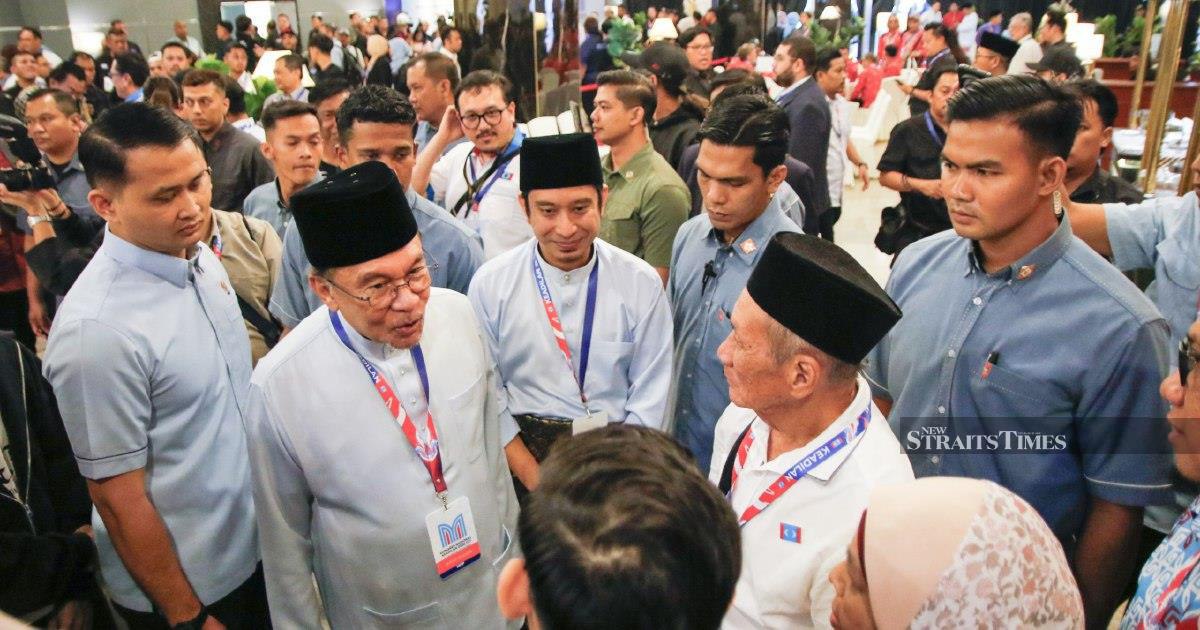
Prime Minister Datuk Seri Anwar Ibrahim moved swiftly to extinguish growing speculation about a deterioration in his partnership with Deputy Prime Minister Datuk Seri Dr Ahmad Zahid Hamidi, characterizing reports of friction as unfounded and reaffirming that the two men continue to work effectively together at the highest levels of government. Speaking in Ayer Keroh, the Prime Minister sought to allay concerns that recent public statements or parliamentary dynamics had created a wedge in their working relationship, which forms a critical pillar of the current coalition government's stability.
The timing of Anwar's clarification reflects broader anxieties within Malaysia's political ecosystem about the durability of the ruling alliance, particularly the balance between Anwar's PKR and Zahid's UMNO—two parties with distinct voter bases and historical tensions. Both leaders occupy positions that require constant coordination on legislative priorities, Cabinet decisions, and party positioning ahead of the next general election, expected within the next few years. Any genuine rupture between them would cascade through government operations and potentially destabilize the parliamentary majority that underpins executive authority.
Anwar's public insistence on the solidity of ties carries weight precisely because Malaysian political cycles have demonstrated how quickly coalitions can fracture when senior figures allow visible daylight between their positions. The coalition government, formed in 2022, succeeded in ending Muhyiddin Yassin's Perikatan Nasional administration but remains a complex arrangement requiring constant management of competing interests, resource allocation, and political face-saving for all parties involved. Both the Prime Minister and Deputy Prime Minister must frequently navigate situations where party loyalty and coalition obligations pull in different directions.
The relationship between Anwar and Zahid holds particular significance because UMNO, through Zahid's leadership at the party level, controls substantial parliamentary seats and ministerial portfolios critical to governance. While PKR forms the backbone of the government's legislative programme, UMNO's numerical strength and organizational machinery in rural constituencies remain essential for maintaining the coalition's viability. Any deterioration in personal relations between the two men at the apex of their respective parties could translate into parliamentary friction, delayed approvals for key initiatives, or even threats to withdraw support—leverage that UMNO could theoretically exercise.
In the broader Malaysian context, perceptions of leadership discord at the Cabinet level inevitably influence investor confidence, economic stability narratives, and international assessments of governmental reliability. Foreign observers frequently cite the coherence and apparent unity of Malaysia's leadership as a factor in stability ratings that affect currency valuations and business investment decisions. When Prime Ministers need to publicly defend the integrity of their working relationships, it signals that scepticism exists and must be actively countered through media engagement and public reassurance.
Zahid's position as Deputy Prime Minister represents a significant return to prominence for the UMNO veteran, who faced multiple legal challenges in previous years. His current standing depends partly on maintaining good terms with Anwar and preserving his value to the coalition as an anchor of UMNO's parliamentary contingent. Conversely, Anwar's authority as Prime Minister rests substantially on his ability to manage coalition partners, prevent defections, and present a government functioning with sufficient internal harmony to execute a legislative agenda. Both men therefore have structural incentives to publicly maintain the appearance of functioning partnership, regardless of underlying tensions.
The specific decision to address the rumours publicly in Ayer Keroh—a location in Melaka with historical political significance—suggests a calculated effort to project normalcy and control the narrative. Malaysian political leaders have grown acutely conscious of how speculation spreads through social media and parliamentary gossip, creating facts on the ground that can become self-fulfilling if unchecked. By confronting the narrative directly, Anwar sought to prevent what might otherwise become an accelerating cycle of doubt, backbench anxiety, and potential coalition instability.
Regional observers note that coalition stability in Malaysia carries implications beyond the immediate domestic context. As the region's third-largest economy and host to significant international trade flows and strategic interests, Malaysian political instability can influence regional confidence, ASEAN decision-making processes, and international engagement with Southeast Asia more broadly. A government perceived as fractious or vulnerable to internal collapse would diminish Malaysia's diplomatic influence and potentially distract from pressing regional challenges including maritime security, trade negotiations, and climate cooperation.
Looking forward, the ultimate test of Anwar and Zahid's partnership will manifest through tangible governance outcomes rather than reassuring statements. Successful passage of contested legislation, coordinated positioning on economic policy, and visible cooperation on Cabinet initiatives would provide stronger evidence of genuine functional alignment than any public denial of rifts. The coalition faces mounting pressure on multiple fronts—economic growth concerns, inflation management, and preparations for electoral campaigns—all requiring seamless coordination between PKR and UMNO leadership at both party and governmental levels.

