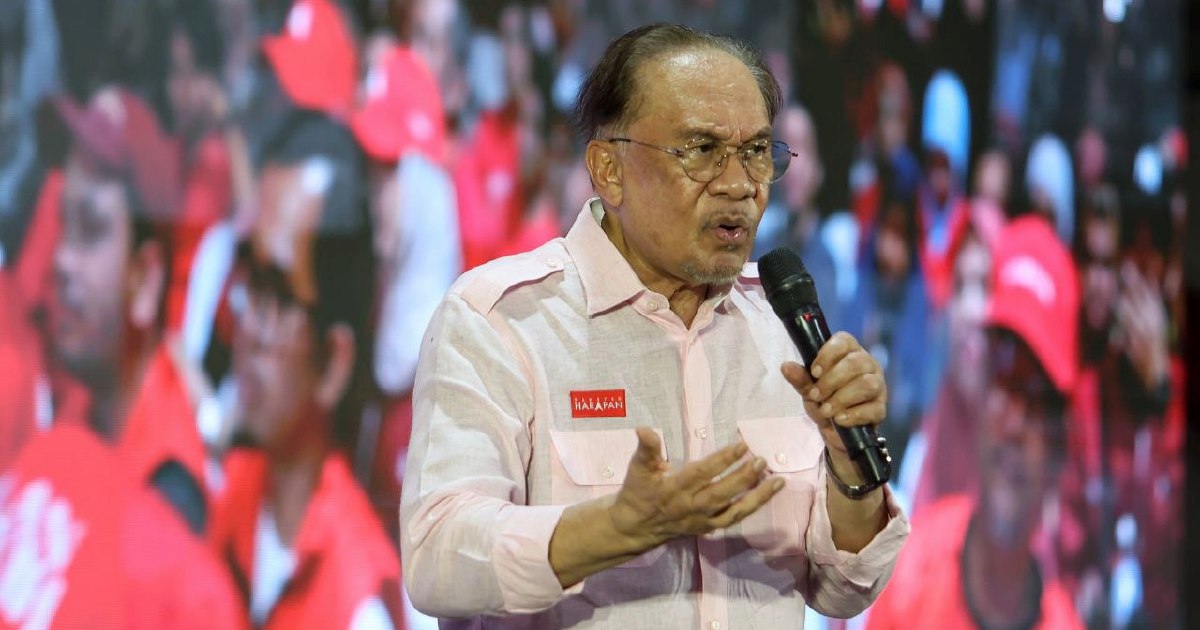
Prime Minister Datuk Seri Anwar Ibrahim has reiterated his determination to safeguard the cohesion of Malaysia's federal unity government, asserting that electoral competition at the state level will not compromise the broader national political settlement. Speaking in Seremban, Anwar emphasised the distinction between contesting elections through separate parties and the imperative of sustaining the coalition framework that underpins Putrajaya's governance architecture.
The Prime Minister's statement comes at a delicate juncture for Malaysian politics, where the balance between electoral competition and coalition solidarity has become increasingly complex. The unity government, established following the 2022 general election, brought together previously antagonistic political blocs to prevent a parliamentary deadlock and institutional gridlock. Anwar's public assurance now signals his intention to prevent the Negri Sembilan state contest from fracturing the federal arrangement, a concern that has grown as individual parties position themselves for competitive advantage ahead of various state polls.
Negri Sembilan represents a particular test case for this balancing act. The state election will pit Anwar's PKR and their federal coalition partners directly against Barisan Nasional in what amounts to a zero-sum electoral contest at the state level. Unlike previous coalition arrangements in Malaysian politics, where coalition members typically refrained from active opposition to one another, the current unity government encompasses parties with fundamentally different ideological moorings and electoral bases. This structural tension means that managing state-level competition without triggering federal-level instability requires explicit political discipline and strategic messaging.
The Malaysian political landscape has historically struggled with maintaining such dual-track approaches. Past coalition experiments, including the original Barisan Nasional alliance, often collapsed when component parties discovered that electoral self-interest ultimately trumped coalition solidarity. Anwar's emphasis on preserving federal stability even amid state-level rivalry thus represents a deliberate attempt to circumvent this historical pattern, suggesting awareness that Malaysia's political system benefits from governmental predictability and institutional continuity.
From a broader governance perspective, Anwar's reaffirmation holds implications for how Malaysia manages its federal system during electoral cycles. The country conducts elections at multiple tiers—federal, state, and local—meaning that the political terrain rarely remains stable for extended periods. Previous administrations have sometimes weaponised state-level results as referendums on federal performance, a dynamic that can destabilise coalition governments when one component party performs poorly. Anwar's statement appears designed to short-circuit this mechanism by establishing that electoral performance at one level should not mechanically translate into coalition reassessment at another.
The Negri Sembilan context carries additional weight because the state has traditionally been a BN stronghold and represents one of the coalition's historical bases of support. If the ruling federal coalition performs unexpectedly well there, it could reshape perceptions about the stability and viability of the unity government arrangement. Conversely, a strong BN showing could embolden calls within BN-aligned quarters for a federal coalition repositioning. Anwar's preemptive insistence on federal stability thus serves to anchor expectations and constrain post-election narrative framing.
Regionally, Malaysia's coalition experiment carries significance for other Southeast Asian democracies grappling with fractious party systems and electoral volatility. Thailand, Indonesia, and the Philippines have all experimented with post-election coalition arrangements, often with limited durability. Malaysia's efforts to maintain a federal unity government despite electoral competition at the state level could provide instructive lessons about the institutional mechanisms and political will required to sustain such arrangements. Anwar's commitment to this framework, therefore, extends beyond domestic political considerations to encompass regional governance dynamics.
The practical implementation of Anwar's pledge will require careful orchestration by the coalition leadership. Party messaging must simultaneously convey competitive ambition in Negri Sembilan while projecting unity at the federal level. This demands sophisticated political communication and voter segmentation strategies that most Malaysian political parties have traditionally lacked. Media coverage will play a crucial role in either amplifying or containing tensions between state-level rivalry and federal coalition imperatives.
Anwar's track record on coalition management will significantly influence whether this pledge translates into sustained stability. His administration has thus far navigated several potential coalition flashpoints, including appointment of senior positions and budget allocations. However, the Negri Sembilan election represents a more direct electoral test where parties have concrete incentives to maximise their individual performance rather than optimise coalition unity. The Prime Minister's ability to maintain discipline across the coalition while permitting genuine electoral competition will ultimately determine whether his vow holds substance.
Looking forward, the Negri Sembilan election should be interpreted not merely as a state-level contest but as a barometer of the federal unity government's resilience. If Anwar can credibly maintain coalition stability despite electoral rivalry, it would represent a significant institutional achievement for Malaysian democracy. Conversely, if state-level results trigger federal coalition reconfiguration, it would suggest that Malaysia's political system continues to struggle with separating electoral competition from governmental stability. The Prime Minister's commitment will be tested most severely in the weeks immediately following the election, when post-result negotiations and sentiment potentially threaten the coalition equilibrium.

