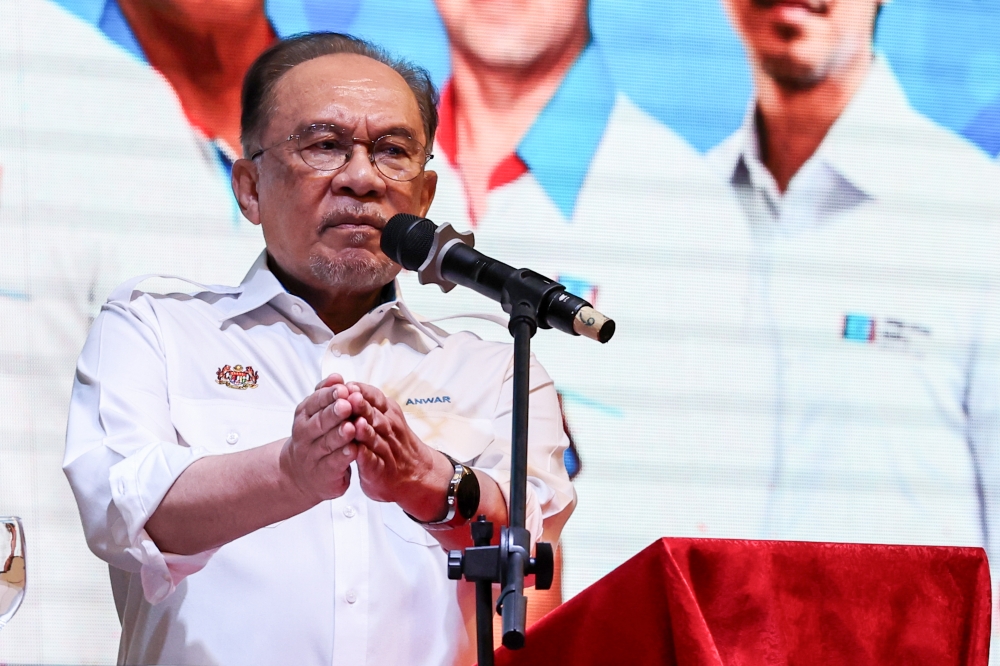
Prime Minister Datuk Seri Anwar Ibrahim has cast sharp scrutiny on the Royal Commission of Inquiry findings into Tabung Haji, the government agency managing funds for Malaysian Muslims undertaking the hajj pilgrimage. Speaking in Melaka on August 15, Anwar underscored the gravity of the RM12 billion loss, using colloquial language to describe what appears to be systematic fund misappropriation, demanding clarity on how such substantial sums vanished from an institution entrusted with the savings of millions of ordinary Malaysians.
The Prime Minister's remarks signal growing impatience within government circles regarding accountability mechanisms at Tabung Haji, an institution established to serve as a secure repository for the pilgrim savings of the nation's Muslim population. The RM12 billion shortfall represents an extraordinary breach of public trust, particularly given the religious and cultural significance of hajj savings for Muslim families across Malaysia. Anwar's pointed questioning suggests that preliminary findings from the RCI have raised more concerns than they have resolved, and that deeper investigations may be warranted to establish the full extent of mismanagement or misconduct.
Tabung Haji has faced mounting scrutiny over recent years as questions emerged about its financial health and investment decisions. The institution, which holds billions of ringgit in deposits from hundreds of thousands of Malaysian Muslims planning to perform the hajj, became the subject of a Royal Commission of Inquiry to investigate the causes of its financial deterioration. The scale of losses now being reported—a sum approaching RM12 billion—indicates a systemic problem that extends well beyond isolated incidents of poor judgment or bad luck in investment decisions.
Anwar's use of the term "sakau," which colloquially refers to siphoning off or embezzling money, reflects his interpretation that the losses may not simply result from failed investments or market downturns, but rather from deliberate extraction of funds. This distinction carries profound implications for how the matter should be investigated and prosecuted. If funds have been systematically siphoned rather than lost through legitimate business failures, it would constitute criminal activity requiring police investigation, asset recovery efforts, and potentially prosecution of individuals responsible.
The revelations about Tabung Haji's financial position come at a sensitive time for Malaysia's faith in public institutions. The country has struggled with various governance and corruption scandals over the past decade, eroding public confidence in mechanisms designed to protect the interests of ordinary citizens. For many Malaysian Muslims, their Tabung Haji accounts represent not just savings for a religious obligation, but a form of forced savings discipline for families of modest means. The loss of such funds strikes at the heart of social trust and institutional integrity.
The government's response to the RCI findings will be closely watched, not only by affected pilgrims but also by civil society organizations monitoring governance standards. Anwar's public questioning of the RCI's conclusions suggests that the Prime Minister views the current findings as incomplete or potentially insufficient in addressing the full scope of what transpired at the institution. This could indicate that additional investigative steps are being considered or that the government intends to scrutinize the RCI's methodology and findings before determining next steps.
For Southeast Asian observers, Malaysia's handling of the Tabung Haji crisis will send important signals about the region's commitment to accountability in managing public funds and protecting citizens' savings. Several other Southeast Asian nations with significant Muslim populations operate similar hajj savings schemes, making the Malaysian experience a cautionary tale about the institutional safeguards necessary to prevent large-scale fund misappropriation. The outcomes of investigations into Tabung Haji could influence how regional governments approach governance and oversight of similar institutions.
The RM12 billion loss also raises questions about the adequacy of auditing, compliance, and internal controls that existed at Tabung Haji prior to the RCI investigation. If such a massive shortfall could accumulate over years without triggering more robust intervention, it suggests that either warning systems failed, or that institutional mechanisms designed to flag irregularities were insufficient. Understanding these systemic weaknesses will be critical to preventing similar incidents at other public institutions.
Anwar's rhetoric emphasizing personal accountability and demanding clear answers reflects a broader government commitment to cleaning up public institutions that have been tainted by mismanagement or misconduct. The Prime Minister's willingness to publicly question the RCI process itself indicates that there may be disagreements within government about how thoroughly the matter has been investigated or whether the preliminary findings adequately explain the magnitude of losses discovered.
As investigations proceed, the focus will likely shift toward identifying specific individuals responsible for decisions that led to the losses, recovering funds where possible, and implementing structural reforms to prevent recurrence. For affected pilgrims awaiting clarity on whether their deposits remain secure, Anwar's public scrutiny of the RCI findings serves notice that the government intends to pursue the matter vigorously, though the timeline for resolution and full accountability remains uncertain.
The Tabung Haji crisis exemplifies the challenges faced by developing democracies in maintaining institutional integrity when managing large public funds over extended periods. Malaysia's handling of this situation will contribute significantly to either restoring or further eroding public confidence in the country's governance structures and commitment to protecting the financial interests of ordinary citizens.

