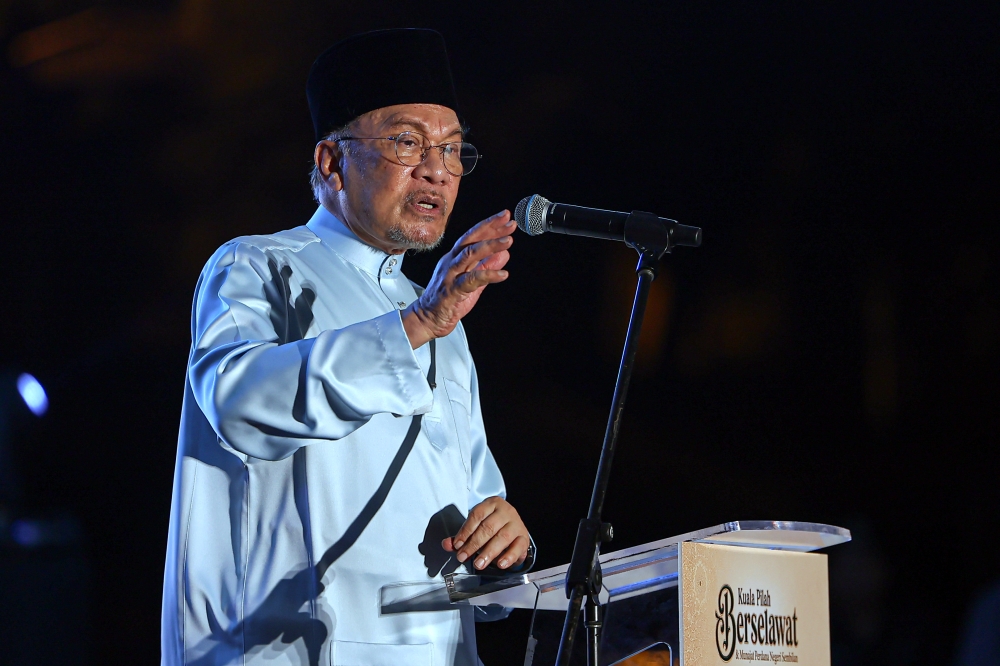
Parti Keadilan Rakyat president Anwar Ibrahim has issued a clarion call for his party to rediscover its identity as a mass movement genuinely committed to serving the public, warning against the creeping tendency to view political parties solely through the lens of electoral victory. Speaking in Kuala Lumpur on August 15, Anwar underscored that PKR's legitimacy and effectiveness flow from its capacity to mobilise grassroots support around shared values, particularly integrity and accountability, rather than from narrow calculations about winning seats and forming governments.
The message carries weight at a critical juncture for Malaysian politics. With general elections approaching within the next two years and the coalition government's popularity facing headwinds, there exists considerable pressure within opposition and ruling parties alike to prioritise short-term tactical advantages over long-term institutional health. Anwar's intervention suggests he sees this tension within PKR itself, where some members may view the party primarily as a vehicle for personal political advancement or as merely another faction in the perennial scramble for ministerial positions.
PKR's own history illuminates why this emphasis matters. Founded in 1998 during the Reformasi movement, the party emerged from a genuine grassroots uprising against perceived injustice and abuse of executive power. That populist energy, channelled through mass rallies and civil society networks, became the foundation for PKR's growth over two decades. If the party were to hollow out that mobilising capacity and reduce itself to a conventional vote-getting machine, it would sacrifice the very distinguishing feature that has allowed it to punch above its weight in Malaysian politics and periodically challenge the political establishment.
Anwar's emphasis on integrity as a core principle warrants particular attention in the Malaysian context. Public trust in institutions has eroded considerably following years of high-profile corruption scandals, abuse-of-power allegations, and partisan weaponisation of law enforcement agencies. A political party that genuinely commits to integrity as both an internal practice and external message could potentially offer voters something substantively different from the traditional pattern of political parties being perceived as instruments for patronage distribution and factional battles. This positioning would also provide PKR with a clear differentiator in an increasingly crowded political marketplace.
The distinction Anwar draws between electoral machinery and mass movement reflects deeper questions about how political parties should function in democratic systems. Mass movements typically organise around ideological principles and sustained citizen engagement in civic life. Electoral machines, by contrast, tend to be dormant between campaigns, springing into action primarily during nomination and voting periods. The former model encourages continuous citizen participation, policy deliberation, and community organising. The latter model tends to reduce citizens to voters and party members to volunteer foot soldiers.
For Southeast Asian readers attuned to political developments across the region, Anwar's message resonates with ongoing debates about party institutionalisation and democratic quality in emerging democracies. Thailand, the Philippines, and Indonesia have all grappled with questions about whether political parties represent genuine constituencies around substantive platforms or merely serve as personalised vehicles for ambitious individuals. Countries that have managed to strengthen genuine party organisations tied to coherent policy agendas and grassroots networks have generally demonstrated greater political stability and institutional resilience than those where parties remain weakly institutionalised.
The practical implications for PKR are significant. Maintaining a genuine mass movement requires sustained investment in local party structures, youth wing development, policy research, and community engagement activities that generate no immediate electoral payoff. It demands discipline in preventing corruption and abuse of power within party ranks, which can be uncomfortable for leaders and members who view office as compensation for political struggle. It necessitates transparency in decision-making and protection of internal democratic processes, even when these slow decision-making or challenge leadership preferences.
Anwar's intervention also suggests he understands that PKR's long-term viability depends on generational renewal and sustaining popular legitimacy beyond any single leader. A party that exists primarily to serve one leader's political ambitions inevitably faces succession crises and loss of direction when that leader departs. A party embedded in broader social movements and organised around institutional principles can survive leadership transitions and even electoral defeats more readily.
The challenge facing Anwar is ensuring his call resonates beyond rhetoric into actual party practice. Opposition parties in Malaysia face particular pressures toward opportunism since they lack access to state resources and patronage that ruling parties employ to cement internal loyalty. PKR members, acutely conscious of their party's external isolation and the advantages available to coalition partners who control government machinery, may struggle to prioritise mass movement building over short-term electoral positioning.
Nevertheless, if PKR can genuinely institutionalise Anwar's vision, it could position itself uniquely in the Malaysian political landscape. A party credibly committed to integrity, grassroots democracy, and policy substance rather than merely factional interest would offer voters a genuinely alternative political model. In a regional context where institutional weakness and democratic erosion remain persistent challenges, even the attempt to sustain such a model carries significance beyond Malaysia.

