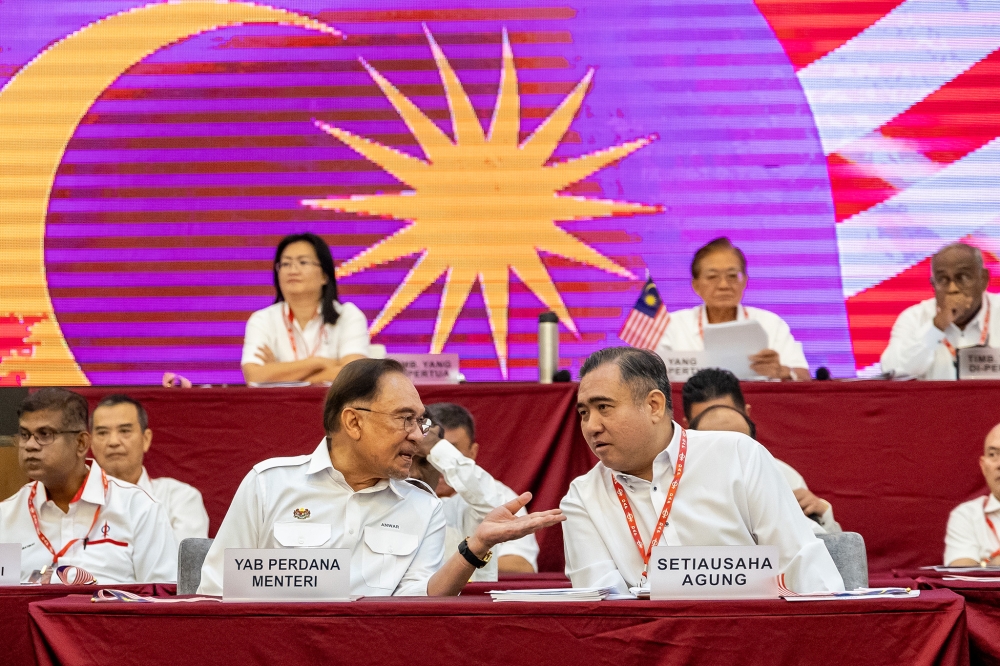
Prime Minister Datuk Seri Anwar Ibrahim has made a direct appeal to the Democratic Action Party's Melaka branch to reconsider plans to exit the state government, arguing instead that the party should sustain its involvement until elections are held. Speaking in Port Dickson on July 14, the premier emphasized the importance of continuity in governance and suggested that abandoning the administration at this juncture would undermine the coalition's broader political objectives in the southern state.
The Melaka DAP had signalled its intention to withdraw from the state administration, a decision that signals underlying tensions within the coalition that governs both the state and federal levels. Such moves, while sometimes driven by specific grievances or strategic repositioning, carry significant implications for the stability of the government and the credibility of the ruling alliance. Anwar's intervention suggests that senior federal leadership views the Melaka situation as concerning enough to warrant direct engagement rather than allowing the matter to resolve through normal party channels.
The Prime Minister's reasoning appears rooted in a pragmatic assessment of the political landscape. By remaining in government until elections materialise, the DAP would maintain its platform for demonstrating achievements and delivering services to constituents. Withdrawal, conversely, risks ceding control of the narrative to rivals and surrendering the tangible benefits of holding office during the crucial period leading up to polling day. This consideration becomes particularly relevant in Melaka, a state with significant historical and symbolic importance in Malaysian politics.
The context of this dispute likely involves resource allocation, ministerial portfolios, or policy differences within the coalition—issues that frequently strain multi-party governing arrangements. When smaller parties feel marginalised or denied adequate recognition for their contributions, exit threats often materialise as negotiating tactics. However, such moves can backfire if they alienate voters who expect stability and consistent governance, particularly in states where coalition partnerships are already fragile.
For Malaysian readers and regional observers, the Melaka situation exemplifies the inherent challenges of coalition politics at the state level. Unlike federal government, where larger parties can more readily dominate, state administrations require careful management of multiple partners with competing interests. The DAP, as a non-Malay party with urban support bases, sometimes finds itself at odds with other coalition members over communal sensitivities or development priorities. Whether this particular dispute stems from such tensions or from personal conflicts between party leaders remains unclear from available information.
Anwar's direct intervention also reflects his role as the acknowledged architect of the federal coalition. Having successfully negotiated the unity government arrangement that brought opposition parties into government following the 2022 general election, the Prime Minister has a vested interest in preventing coalitional partners from imploding. Each state-level crisis that reaches national attention risks weakening the central government's position and emboldens those who argue that coalition arrangements are inherently unstable.
The political calculation for the DAP itself is complex. Remaining in government provides platforms, resources, and the ability to claim credit for development projects and policies that benefit Melaka residents. However, opposition can sometimes be politically advantageous, particularly if the party wishes to rebuild its identity as a critical voice rather than a junior coalition partner. This dynamic becomes more pronounced if the party believes its contributions are being undervalued or if friction with other coalition members has become unbearable.
Historically, Melaka has been a significant electoral battlefield. The state has seen numerous changes in government control, reflecting the volatile nature of Malaysian politics at the subnational level. Coalition arrangements in Melaka have often been fragile, with partners periodically reconsidering their participation. That backdrop makes the current situation particularly delicate, as any perceived instability in state government could trigger voter concerns about effective administration and service delivery.
Looking ahead, whether the DAP heeds Anwar's counsel will depend on resolving the underlying issues that prompted the withdrawal decision. If the party's concerns are primarily about recognition or portfolio allocation, negotiation could yield a face-saving arrangement allowing the DAP to remain in government with its dignity intact. If the grievances are more fundamental—touching on policy direction or autonomy in specific portfolios—a compromise may prove elusive, and Anwar's persuasion may falter.
The implications extend beyond Melaka's borders. Other coalition partners watching this drama will assess how Anwar handles the situation and whether the Prime Minister can successfully mediate disputes while protecting the broader governing coalition. Success in resolving the Melaka matter would strengthen Anwar's credentials as a coalition manager; failure could embolden other parties to pursue their own agenda more assertively, potentially destabilising the federal government's position ahead of the next general election.

