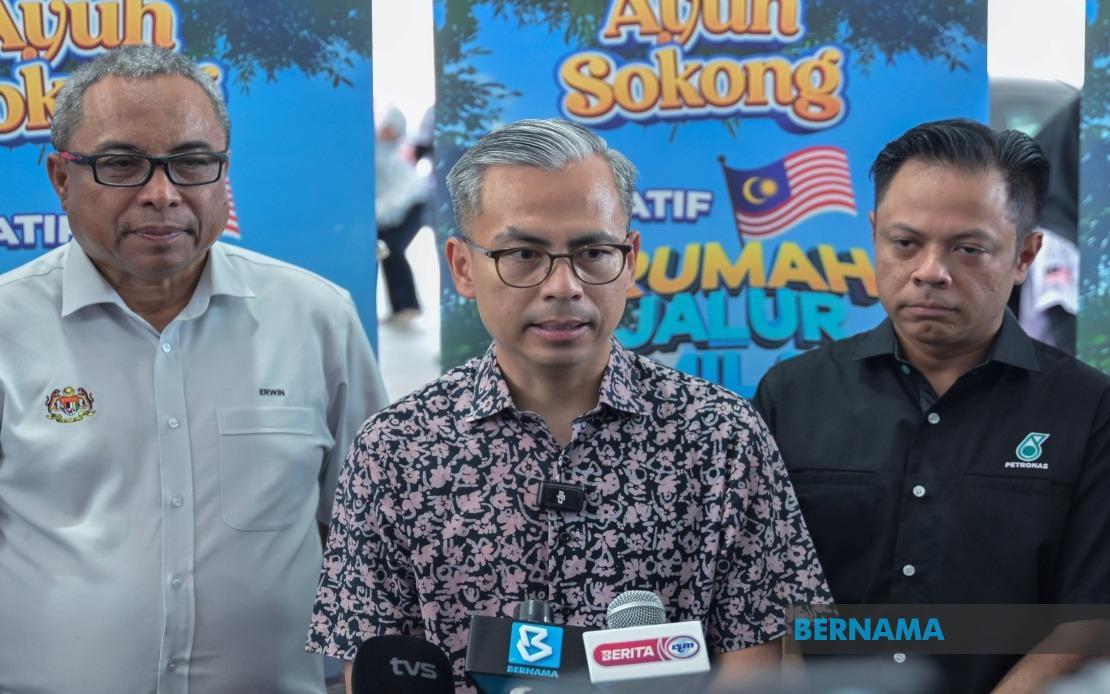
Prime Minister Datuk Seri Anwar Ibrahim has renewed his administration's pledge to proceed with redelineation efforts aimed at increasing the number of Sarawak State Legislative Assembly seats, instructing the Election Commission to deliver a fresh progress report on the initiative. Government spokesman Datuk Seri Fahmi Fadzil disclosed that the proposal surfaced during recent Cabinet deliberations, where Anwar emphasised his determination to move forward with the redistricting exercise. The Electoral Commission will shoulder responsibility for coordinating the technical and administrative aspects of the undertaking, though no concrete timeline has yet been communicated to Cabinet members pending further information from the poll watchdog.
The Sarawak State Legislative Assembly (Composition of Membership) Bill 2025 seeks to augment the chamber by introducing 17 additional legislative seats, thereby raising the total from the current 82 to 99. This expansion represents a significant structural reform for the Borneo state's governance architecture and reflects the federal government's commitment to enhancing democratic representation across Malaysia's constituent states. The measure gained prominence when media outlets reported that Minister of Women, Family and Community Development Datuk Seri Nancy Shukri and Minister of Works Datuk Seri Alexander Nanta Linggi had formally tabled the matter during Cabinet proceedings, underscoring cross-ministerial support for the initiative.
Fahmi stressed that while Anwar has explicitly committed to executing the redelineation plan, the administration remains dependent on the Electoral Commission's delivery of essential documentation and clarifications before proceeding to implementation stages. The spokesman indicated that several procedural prerequisites must be fulfilled before the Cabinet receives notification regarding when the restructuring will commence, reflecting the complexity inherent in redesigning electoral boundaries across a state of Sarawak's geographic and demographic scale. This cautious sequencing demonstrates the government's intention to ensure the exercise adheres to established protocols and electoral standards.
From a broader political perspective, the Sarawak expansion carries implications beyond mere seat augmentation. The enlargement of the assembly reflects demographic shifts within the state and changing patterns of urbanisation and population distribution across Sarawak's diverse districts. Increasing parliamentary representation allows for more granular constituency-level responsiveness and potentially strengthens voice in the state legislature for expanding population centres and emerging economic zones. The initiative thus addresses both representational equity and the practical governance demands arising from socioeconomic evolution across the peninsula and Borneo.
Sarawak holds particular significance within Malaysia's federal architecture as one of only two East Malaysian states and occupies a crucial position within Anwar's MADANI coalition framework. The state's political landscape has traditionally maintained distinctive characteristics, and measures targeting its governance structures carry implications for federal-state dynamics and coalition stability. Demonstrating responsiveness to Sarawak's institutional requirements signals Anwar's administration's commitment to honouring the concerns and developmental aspirations of East Malaysian constituencies within the broader national governance paradigm.
Concurrently, Fahmi outlined preparations underway for the forthcoming Melaka state election, revealing that the communications ministry is coordinating with the Malaysian Communications and Multimedia Commission and the Electoral Commission to ensure adequate internet infrastructure across all polling stations. The government is leveraging lessons acquired during recent electoral exercises in Johor and Negeri Sembilan to establish systematic protocols for digital connectivity at polling facilities throughout Melaka. This proactive infrastructure planning reflects modernisation efforts within Malaysia's electoral administration, enhancing the logistical capacity to manage contemporary voting procedures.
The focus on internet connectivity at polling centres addresses practical necessities arising from Malaysia's increasingly digitalised administrative environment. Reliable connectivity enables efficient processing of voter verification, real-time coordination between polling officials, and transmission of preliminary data, collectively reducing administrative friction during voting operations. By standardising such infrastructure across states, the Electoral Commission and communications authorities aim to establish uniform service levels and minimise potential technical disruptions that could compromise polling day operations or voter experience.
Fahmi's emphasis on media facility preparations for the Melaka election underscores the government's recognition that contemporary electoral contests demand sophisticated media management and transparent information dissemination infrastructure. Identifying appropriate venues for media operations and ensuring journalists possess adequate resources to document proceedings reflects institutional commitment to facilitating press coverage and public engagement with electoral processes. These logistical preparations form essential scaffolding supporting Malaysia's democratic infrastructure, enabling informed citizen participation and institutional accountability.
The dual-track approach evident in Anwar's administration—simultaneously advancing long-term structural reforms affecting Sarawak's governance architecture whilst implementing near-term operational enhancements for the Melaka election—demonstrates multifaceted engagement with Malaysia's electoral framework. The government is addressing both constitutional-level redistribution questions and practical administrative modernisation, suggesting a comprehensive vision for strengthening democratic institutions across multiple jurisdictional levels. This parallel progress on distinct electoral initiatives indicates capacity for managing complex institutional reform alongside immediate operational demands inherent in contemporary governance.
Moving forward, the Electoral Commission's updated report on Sarawak redelineation will prove instrumental in clarifying implementation pathways and establishing realistic timelines for the seat expansion exercise. The commission's assessment of technical feasibility, cost implications, and procedural requirements will inform Cabinet's final decision-making regarding commencement dates and resource allocation. Until that report materialises, the initiative remains in consultative phase, though Anwar's explicit commitment provides assurance that the matter will not languish indefinitely within bureaucratic processes.

