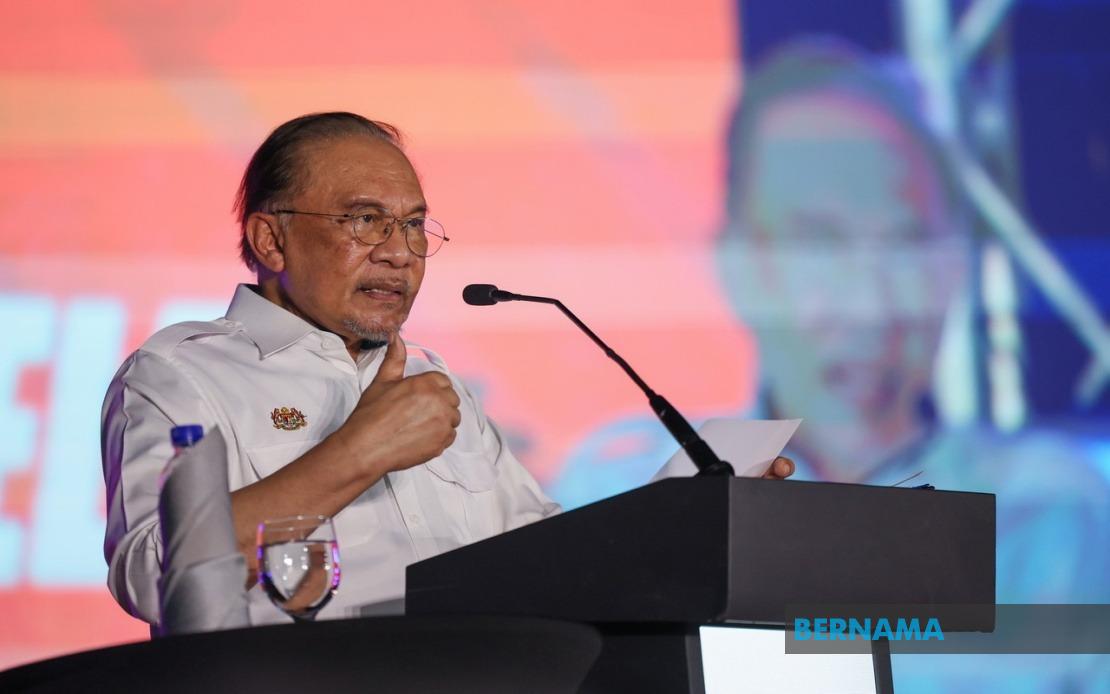
Prime Minister Datuk Seri Anwar Ibrahim has delivered a pointed message to the leadership of the Federal Land Development Authority (FELDA), urging them to maintain rigorous standards of governance while learning from the organisation's troubled past. Speaking at the FELDA Settlers' Day celebration and the agency's 70th anniversary gathering at Stadium Tun Abdul Razak in Jengka, Maran, on July 7, Anwar emphasised that institutional accountability must underpin every decision made by the authority's board and management.
The Prime Minister, who simultaneously holds the Finance portfolio, framed good governance not merely as a bureaucratic requirement but as a foundational principle of the MADANI Government. According to his remarks, sound administrative practices create a beneficial ripple effect across Malaysian society, translating into more transparent decision-making processes, stronger accountability mechanisms, and ultimately more effective service delivery to the communities that FELDA serves.
Anwar drew attention to the significant fiscal burden that FELDA's historical mismanagement continues to impose on the national budget. The government allocates nearly RM1 billion annually simply to service the organisation's accumulated debts—a staggering sum that reflects decades of poor stewardship and misappropriation of public resources. This expenditure represents money that could otherwise be redirected toward infrastructure, healthcare, education, or other pressing developmental priorities.
Crucially, the Prime Minister rejected any suggestion that FELDA settlers themselves bore responsibility for the organisation's financial distress. Instead, he directly attributed the crisis to systemic failures within management and the breach of fiduciary duty by officials who were entrusted with protecting settler interests and public assets. This distinction carries significant weight, as it reframes the narrative around FELDA's challenges away from blaming beneficiaries and toward holding institutional leadership accountable.
The RM1 billion annual debt servicing burden illuminates a broader challenge facing Malaysia's statutory agencies and government-linked enterprises. When organisations fail to maintain internal checks, transparent procurement processes, and merit-based decision-making, the consequences reverberate through public finances for decades. FELDA's experience serves as a cautionary tale about how institutional drift, unchecked authority, and inadequate oversight can transform a well-intentioned development programme into a drain on national resources.
Anwar's intervention at this juncture appears strategic, coinciding with FELDA's 70th anniversary milestone. Rather than celebrating without caveat, the Prime Minister used the occasion to signal that the government demands fundamental reform. This approach demonstrates a willingness to acknowledge institutional failures directly rather than engage in defensive rhetoric—a posture that contrasts with previous administrations' handling of problematic government agencies.
The context of these remarks extends beyond FELDA itself. Malaysia has grappled with numerous corporate governance scandals involving government-linked companies and statutory bodies over the past two decades. The 1Malaysia Development Berhad (1MDB) scandal, various instances of corporate malfeasance within GLCs, and systemic issues within government procurement have eroded public confidence in institutional stewardship. By emphasising accountability at FELDA, Anwar signals a broader commitment to addressing governance weaknesses across the public sector.
For FELDA settlers specifically, this message carries both reassurance and implicit pressure. The settlers, many of whom represent Malaysia's rural constituency and depend on FELDA for land, services, and economic opportunity, have borne the indirect consequences of administrative failures through reduced benefits and delayed development projects. Anwar's statement acknowledges their predicament while positioning governance reform as the pathway to restoring and expanding settler benefits over time.
The challenge facing FELDA's current leadership involves translating the Prime Minister's directives into concrete institutional change. This requires not only policy reforms but also cultural transformation within the organisation—shifting from practices that may have tolerated patronage and non-merit-based advancement toward systems that reward competence, transparency, and ethical conduct. Such transformation typically demands external oversight, internal audit strengthening, and potentially personnel changes at senior levels.
Anwar's emphasis on learning from past mistakes rather than repeating them speaks to a particular vision of institutional reform. Rather than suggesting that FELDA should be dismantled or radically restructured, he proposes that the organisation can serve its original developmental purpose if governance standards are elevated. This reflects confidence that FELDA, with proper stewardship, retains value for rural Malaysia and the settlers who depend upon it.
The fiscal implications of FELDA's debt burden warrant broader public scrutiny. As Malaysia navigates post-pandemic economic recovery and seeks to improve its fiscal position, the annual RM1 billion expended on servicing inherited institutional debt represents a significant opportunity cost. Reducing this burden through improved operational efficiency and asset management could free resources for other priorities, making governance reform not merely an ethical imperative but an economic necessity.
Looking ahead, the effectiveness of Anwar's governance message will depend on demonstrable follow-through. Whether FELDA's board implements substantive reforms, strengthens independent oversight, and improves transparency will ultimately determine whether the organisation can arrest its financial decline and better serve its intended beneficiaries. For Malaysian observers, FELDA's trajectory will serve as a bellwether for the government's broader commitment to institutional accountability.

