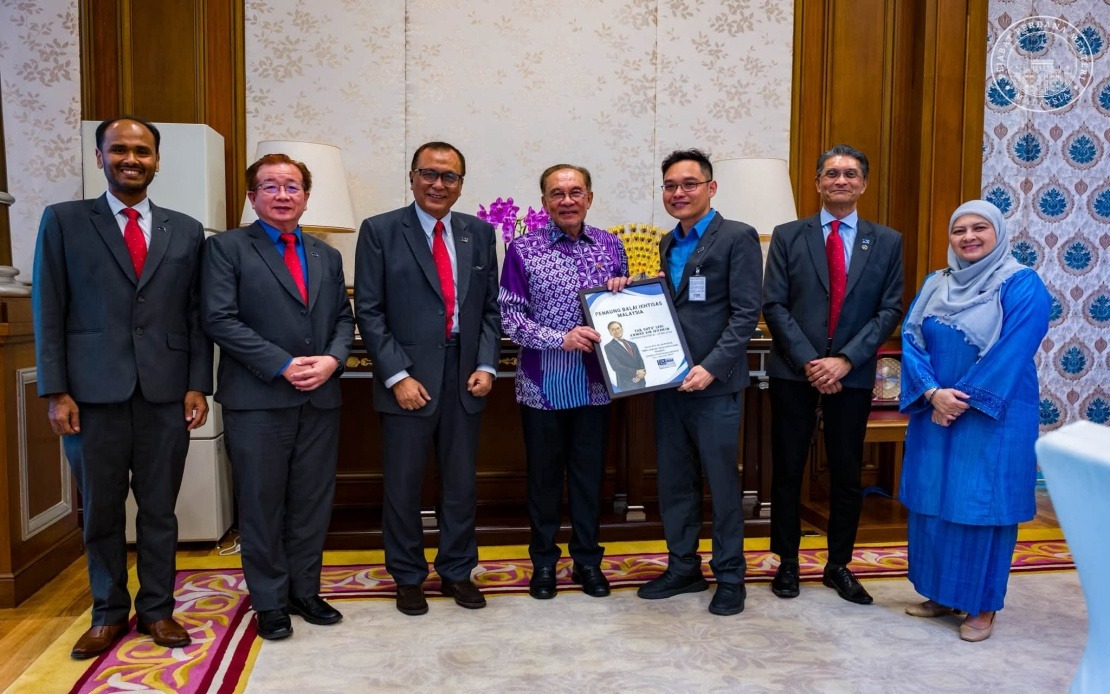
Prime Minister Datuk Seri Anwar Ibrahim has placed artificial intelligence readiness and systematic talent development at the centre of his government's engagement with Malaysia's professional workforce, following a meeting with Balai Ikhtisas Malaysia (BIM), the Malaysian Professional Centre. The discussion, which included BIM president Prof ChM Dr Juan Joon Ching and a delegation from the organisation, signals the administration's determination to harness the expertise of Malaysia's established professional community as the nation navigates rapid technological change and seeks to strengthen its standing as a regional knowledge economy.
During the courtesy visit, Anwar underscored the strategic importance of preparing Malaysia's professional cadre for an artificial intelligence-driven future. The emphasis reflects broader global recognition that as AI technologies reshape industries and professional practice, nations that successfully equip their workforces with relevant capabilities will capture disproportionate economic advantage. For Malaysia, where many professionals operate within regional and international networks, the ability to maintain competitiveness in AI literacy and deployment directly affects individual career prospects and the country's capacity to attract and retain high-value work.
The Prime Minister framed professional development not as a discrete policy area but as integral to Malaysia's wider national agenda. He articulated a vision in which talented and skilled professionals operate as strategic partners in the government's push to boost national competitiveness and drive innovation. This partnership model suggests recognition that policymaking and implementation in knowledge-intensive sectors—from healthcare and engineering to finance and technology—benefit from close alignment between government direction and professional expertise. The MADANI agenda, which prioritises people-centric development, thus gains concrete grounding when supported by a workforce that combines technical capability with professional integrity.
Anwar's comments also reflected appreciation for the specific role that organised professional bodies like BIM play in setting standards, maintaining ethics, and facilitating peer learning within their respective fields. By engaging directly with such organisations and their leadership, the government signals willingness to incorporate professional perspectives into policy development. This approach can enhance policy quality and increase the likelihood of uptake by practitioners who feel consulted rather than merely regulated.
The government's focus on talent development carries particular resonance for Malaysia given demographic realities and migration pressures facing the country. While Malaysia has a substantial base of university-educated professionals, attrition through emigration—driven by perceived better opportunities abroad—remains a structural challenge. By demonstrating commitment to creating pathways for professional advancement and ensuring that Malaysia remains a destination where skilled workers can build rewarding careers, the government may influence decisions about whether to remain in or return to Malaysia.
The AI dimension of Anwar's message also speaks to anxieties in professional communities about technological disruption. Rather than presenting AI as a threat from which workers must be protected, the framing emphasises proactive skill-building and adaptation. This resonates with international evidence suggesting that professionals equipped with AI literacy and capable of working alongside automated systems experience career gains, while those without such capabilities face marginalisation. Malaysia's capacity to provide accessible, high-quality AI training for working professionals could therefore become a competitive advantage in regional talent markets.
Anwar's acceptance of an invitation to Hari Ikhtisas Malaysia, the professional community's commemorative event, carries symbolic weight beyond the ceremonial. It demonstrates sustained governmental attention to the professional sector and willingness to participate in forums where professionals celebrate their collective identity and contribution. Such visibility and validation can strengthen professional morale and reinforce the perception that skilled workers are valued by political leadership.
The meeting also underscores an implicit recognition within government that Malaysia's regional positioning depends not primarily on low-cost manufacturing—an advantage increasingly contested by other Southeast Asian nations—but on fostering world-class professional talent and innovation capacity. This strategic reorientation, evident in government investment in research institutions, tech hubs, and education, requires sustained partnership with established professional bodies that can shape individual career paths and institutional practices.
For Malaysia's broader development trajectory, the emphasis on professional excellence and AI readiness suggests an administration confident that engaging educated, organised constituencies yields policy benefits. It implies recognition that the next phase of national development hinges not on resource extraction or mass production, but on professional expertise, innovation systems, and the ability to move up value chains. Whether this commitment translates into concrete funding, curriculum changes, and institutional support will determine whether such conversations produce meaningful outcomes for Malaysia's professional workforce and national competitiveness.

