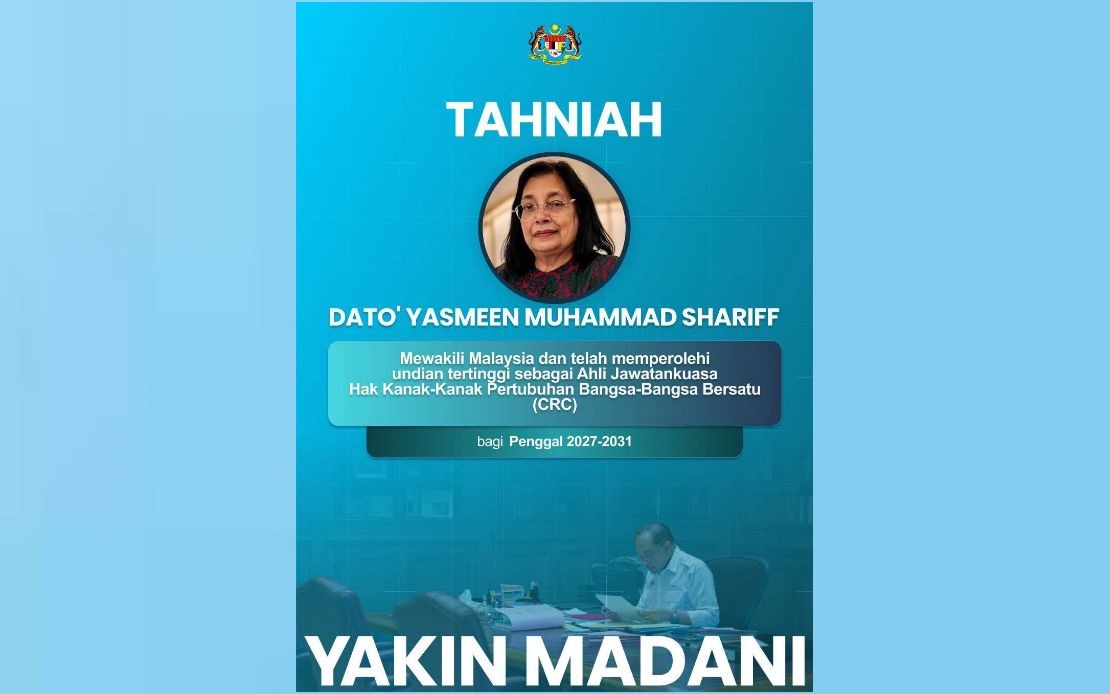
Prime Minister Datuk Seri Anwar Ibrahim has publicly recognised the achievement of Datuk Yasmeen Muhamad Shariff following her election as a member of the United Nations Committee on the Rights of the Child, a prestigious appointment that positions Malaysia prominently within global child protection frameworks for the 2027-2031 term.
Yasmeen's selection represents a significant diplomatic success for Malaysia's human rights credentials. The Ministry of Women, Family and Community Development announced that she received 136 votes from the 189 States Parties present during the 21st Meeting of States Parties to the Convention on the Rights of the Child, held at UN headquarters in New York on Tuesday. This commanding majority underscores the international community's confidence in her expertise and Malaysia's broader commitment to advancing children's welfare on the world stage.
In his congratulatory statement shared on Facebook, Anwar highlighted the symbolic importance of Yasmeen's appointment beyond her individual accomplishment. He framed the election as validation of Malaysia's role within international governance structures and the nation's dedication to upholding global standards on child protection. Such international recognition carries weight in diplomatic circles, where committee memberships signal a country's influence and moral authority within the multilateral system.
Yasmeen's appointment carries particular significance given her track record in this domain. The Ministry noted that this marks her second selection to the committee, having previously served as a member during the 2013-2017 term. Her reappointment after a decade demonstrates sustained recognition of her qualifications and contributions to child rights discourse at the international level, suggesting that her previous term was valued by the global community.
As a committee member, Yasmeen will discharge her duties in her personal capacity as an independent expert rather than as a government representative, a distinction that preserves the committee's integrity and impartiality. The UN Committee on the Rights of the Child serves as the monitoring body for the Convention on the Rights of the Child, reviewing reports from state parties and issuing recommendations on compliance with child protection obligations. Members evaluate how governments implement rights guaranteed under the convention, which Malaysia ratified in 1995.
Anwar's public endorsement extends beyond personal congratulations to articulate a broader strategic vision for Malaysia's international positioning. His statement expressed hope that Yasmeen's success would catalyse further efforts to strengthen Malaysia's standing globally and drive additional accomplishments on the international stage. This framing suggests the government views such appointments as part of a deliberate strategy to enhance Malaysia's soft power and influence within UN organs and specialised agencies.
For Malaysia specifically, Yasmeen's position on the committee offers an opportunity to influence discussions around child protection standards in ways that reflect the country's experience and perspectives. The region faces distinct challenges in child welfare, including trafficking, child labour, and access to education, areas where Malaysian expertise could inform committee deliberations and recommendations to other states. Her participation may also provide insights into emerging child protection issues affecting Southeast Asia.
The appointment arrives amid growing international scrutiny of child rights implementation in developing nations. The UN Committee has issued observations and recommendations to numerous countries regarding gaps between treaty obligations and domestic practice. Malaysian representation on the committee enhances the nation's voice in shaping global standards while subjecting Malaysia itself to closer examination of its child protection mechanisms.
Yasmeen's background and previous experience position her to contribute meaningfully to the committee's work. Her reselection suggests she has built credibility among UN member states regarding child rights advocacy and policy development. The strength of her vote margin—136 out of 189—indicates broad, cross-regional support rather than narrow backing, which typically translates to greater effectiveness within committee structures.
From a Malaysian perspective, this achievement resonates within the Ministry of Women, Family and Community Development's broader mandate. The ministry oversees numerous initiatives addressing child welfare, family support, and social development. Having representation on a major UN committee monitoring child rights implementation globally provides the ministry with valuable international exposure and opportunities to benchmark Malaysia's programmes against international standards and peer experiences.
The timing of Yasmeen's appointment also reflects Malaysia's renewed emphasis on international engagement following recent political transitions. The government has sought to restore Malaysia's multilateral credibility and expand its participation in global governance institutions. Committee memberships contribute tangibly to this objective by demonstrating Malaysia's acceptance within the international community and its capacity to contribute meaningfully to global decision-making processes.
Looking forward, Yasmeen's four-year term will require balancing Malaysia's national interests with the committee's mandate to promote universal child protection standards. Her effectiveness will depend on navigating complex geopolitical dynamics within the committee while advancing consensus on contentious child rights issues. Success in this role could further elevate Malaysia's profile as a serious participant in UN human rights mechanisms, potentially opening doors for additional international appointments in subsequent years.

